Bali Warung Guide: Where & What to Eat Like a Local
By Villa Soleil · Published August 2026 · 7 min read
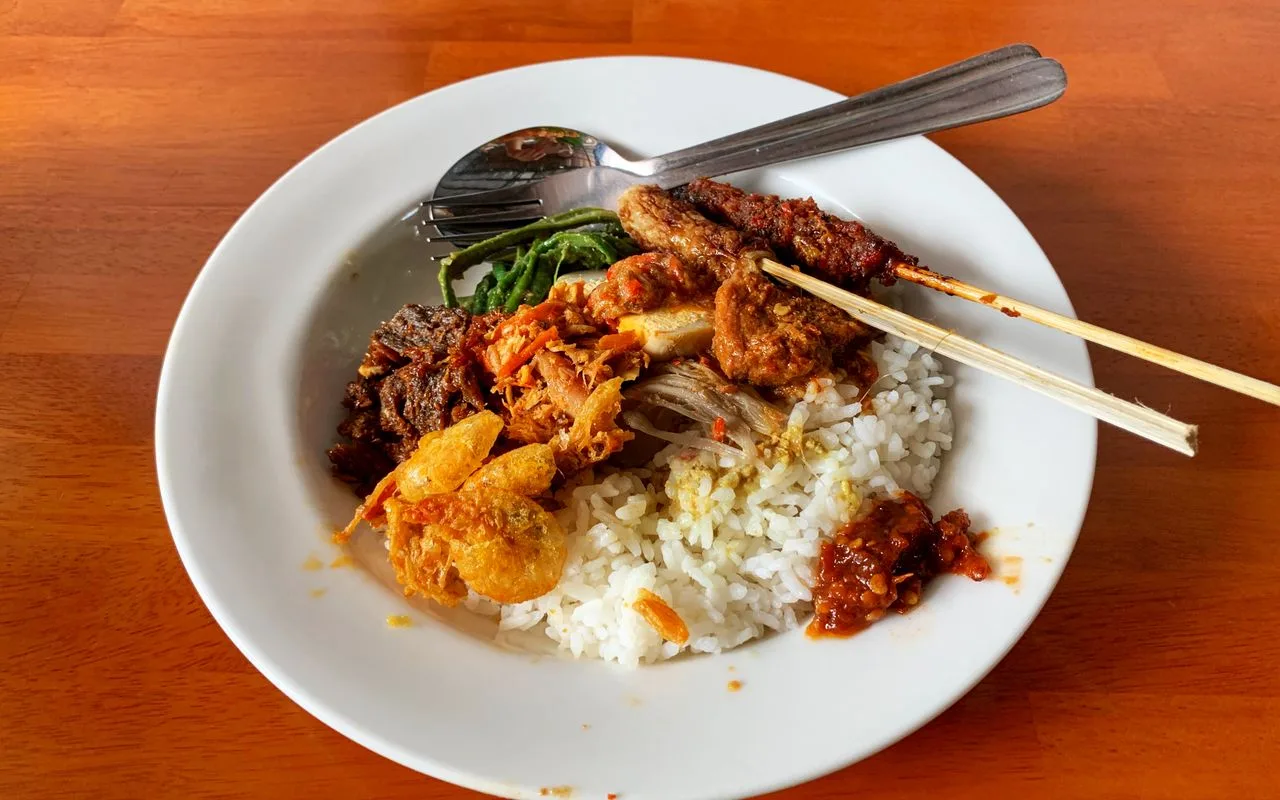
Quick answer: A warung is a small family-run eatery, and it’s where Bali’s best-value, most authentic food lives — expect a full plate of nasi campur for IDR 25,000–55,000. From Villa Soleil in Nusa Dua you have good local warungs minutes away; our host can point you to current favourites and arrange a driver for the famous spots further north.
Ask a long-term resident where they actually eat in Bali and the answer is almost never a beach club. It’s a warung — the small, often family-run eatery on nearly every street corner, from a single plastic table under a tarp to a tidy open-fronted room with a glass display case. This is where the island’s real cooking lives: regional recipes, cooked that morning, for a couple of euros a plate. Staying at Villa Soleil in Nusa Dua puts you in the resort south, where polished restaurants dominate, but good warungs are closer than you think and the famous ones are a planned drive away. This guide explains what a warung is, what to order, what it should cost, and how to eat well without getting sick.
What a Warung Actually Is
“Warung” simply means a small shop or stall. Some sell groceries and petrol in old glass bottles; the ones you care about as a traveller sell cooked food. The classic format is the “warung nasi”: a counter with a row of pots and a glass case holding the day’s dishes — braised chicken, tempeh, long beans, fried eggs, sambals — from which a single plate of rice is assembled. There’s no English menu because there’s often no menu at all. You point at what you want. The food was usually cooked that morning, sells out by mid-afternoon, and the woman running it has been making the same recipes for twenty years.
Warungs sit at the opposite end of the spectrum from the air-conditioned dining at the Nusa Dua restaurants near the resorts. Both have their place. A warung is for daily, unpretentious, deeply flavoured food; the resort restaurants are for a polished night out. If you want to understand the dishes themselves before you go, our guide to Balinese food dishes is a good primer.
The Dishes Worth Ordering
Bali’s warung repertoire is specific and worth learning. A few names will carry you through almost any visit:
- Nasi campur — “mixed rice”, the default warung meal: a mound of rice ringed by small portions of whatever’s in the case. No two plates are the same.
- Babi guling — Balinese suckling pig, spit-roasted and stuffed with spice paste; crisp skin, herb-laced meat. A specialist dish, best from a dedicated warung. (Note: this is pork, so not for halal diners.)
- Ayam betutu — chicken or duck packed with bumbu, wrapped in an areca-palm sheath and banana leaf, then slow-cooked for hours until the meat falls apart.
- Sate lilit — minced fish or chicken mixed with coconut and spices, moulded onto a lemongrass or bamboo stick and grilled.
- Lawar — a finely chopped mix of vegetables, coconut and minced meat, intensely seasoned; ask whether it’s the cooked version if you’re cautious.
- Sambal matah — raw shallot, lemongrass and chilli relish; the condiment that defines Balinese food. Order extra.
Vegetarians eat well too: tempe, tahu, urap (vegetables with grated coconut) and gado-gado appear almost everywhere. If you keep a plant-based diet, our Bali vegan dining guide maps out the dedicated spots, but a warung will happily build you a meat-free plate on request.
What It Should Cost
After a week of resort menus, warung prices come as a relief. A satisfying meal is usually just IDR 25,000–50,000 — a couple of euros — rather than the small fortune a resort restaurant charges. Treat the table below as a rough guide; prices drift upward each year, so the figures you see on the day may run a little higher.
| Item | Typical warung price (IDR) | Notes |
|---|---|---|
| Nasi campur (mixed plate) | 25,000–55,000 | More with extra meat or seafood |
| Babi guling plate | 40,000–75,000 | Specialist warungs; portions vary |
| Ayam/bebek betutu | 50,000–90,000 | Often sold per portion or per half bird |
| Sate lilit (per serve) | 20,000–40,000 | Usually several skewers |
| Mie/nasi goreng | 20,000–40,000 | The reliable all-rounder |
| Es teh / kopi Bali | 5,000–15,000 | Bottled water always available |
Most warungs are cash-only, so carry small notes. For where to draw rupiah safely and avoid skimming machines, see our note on Bali money & ATMs. Tipping isn’t expected at a warung, though rounding up is always welcome.
Eating Safely: The Honest Hygiene Rules
The fear of “Bali belly” keeps many visitors out of warungs, which is a shame, because a busy warung is often safer than a quiet tourist cafe. High turnover means fresh food. A few habits tilt the odds strongly in your favour:
- Choose places with a steady local crowd, especially around lunch when food is freshest.
- Favour dishes that are cooked hot to order or kept genuinely hot, over things sitting lukewarm for hours.
- Be a little cautious with raw lawar, raw sambal and pre-cut fruit if your stomach is sensitive on day one.
- Drink bottled or filtered water only. Most established warungs use commercial ice, which is fine; skip the ice only at the most basic roadside stalls.
None of this is unique to warungs; the same logic applies island-wide. Our fuller Bali food & water safety guide covers it in depth, and the broader Bali health & safety piece is worth a read before you travel.
Warungs Near Villa Soleil in Nusa Dua
Nusa Dua is a planned resort enclave, so it has fewer rough-and-ready warungs than Ubud or Denpasar — but it’s not the food desert some assume. Just outside the resort gates, along the Bualu and Benoa roads, local warungs serve nasi campur, bakso (meatball soup) and grilled fish to staff and residents at honest prices. Bypass the strip closest to the hotels, where everything is marked up, and walk or scoot a few minutes inland. The seafood warungs at Tanjung Benoa, a 10–15 minute drive away, grill the day’s catch right by the water. Denpasar, 30–45 minutes north, is where the density of authentic warungs really opens up. Which places are good shifts from season to season, so a quick WhatsApp to our host before you head out can save you a wasted trip.
The Famous Warungs Are Worth a Day Trip
Some of Bali’s best-known warungs are nowhere near Nusa Dua, and it’s only honest to say so. The babi guling and betutu institutions cluster around Ubud and Gianyar, roughly 1.5–2 hours’ drive north of the villa, and the highland coffee-and-food scene around Kintamani is 2–2.5 hours away. These aren’t casual detours; they’re the centrepiece of a planned day. The sensible approach is to fold a great warung lunch into an itinerary you’re already running — an Ubud day trip or a morning at the Tegallalang rice terrace pairs naturally with a famous warung meal nearby. For the far highlands, treat lunch as the reward at the end of a climb; our Kintamani coffee guide explains how to combine the two.
Warung Etiquette and How to Order
You don’t need Indonesian to eat at a warung, but a little goes a long way. “Nasi campur, satu” (one mixed rice) gets you a plate; pointing at the case fills it. “Tidak pedas” means “not spicy”, though the bar for “not spicy” is high here — sambal still arrives. “Bungkus” means takeaway, wrapped in paper or banana leaf. Pay at the end, usually at the counter, and don’t expect a printed bill; the owner totals it in her head. Eating with your right hand is normal and welcomed; a spoon and fork are always available if you prefer. A genuine “terima kasih” on the way out is the whole tipping culture you need. A quick read of our Bali cultural etiquette guide covers the small courtesies that make you a welcome guest rather than just a customer.
Bringing the Warung Home to the Villa
One of the quiet pleasures of a private villa is that you can bring the warung experience back with you. Order a few takeaway plates of nasi campur and sate lilit, lay them out by the pool, and you have a feast for a fraction of any restaurant bill — and the food tends to be what lingers longest after a Bali trip. If you’d rather not cook, our host can arrange a private chef for a Balinese spread in the villa kitchen or book you into a hands-on Bali cooking class.
For a current list of warungs near Nusa Dua, a driver for a famous-warung lunch up north, or a villa chef, message the Villa Soleil team on WhatsApp to set it up.
Related reading
- A guide to classic Balinese dishes
- Where to eat in Nusa Dua
- Bali food & water safety
- Hire a private chef at the villa
Written by the team at Villa Soleil. Message us to plan your stay in Nusa Dua.