The Soleil Guide — Day Trips
Tegallalang Rice Terrace (2026): What to Expect
By Villa Soleil Team — Updated June 2026
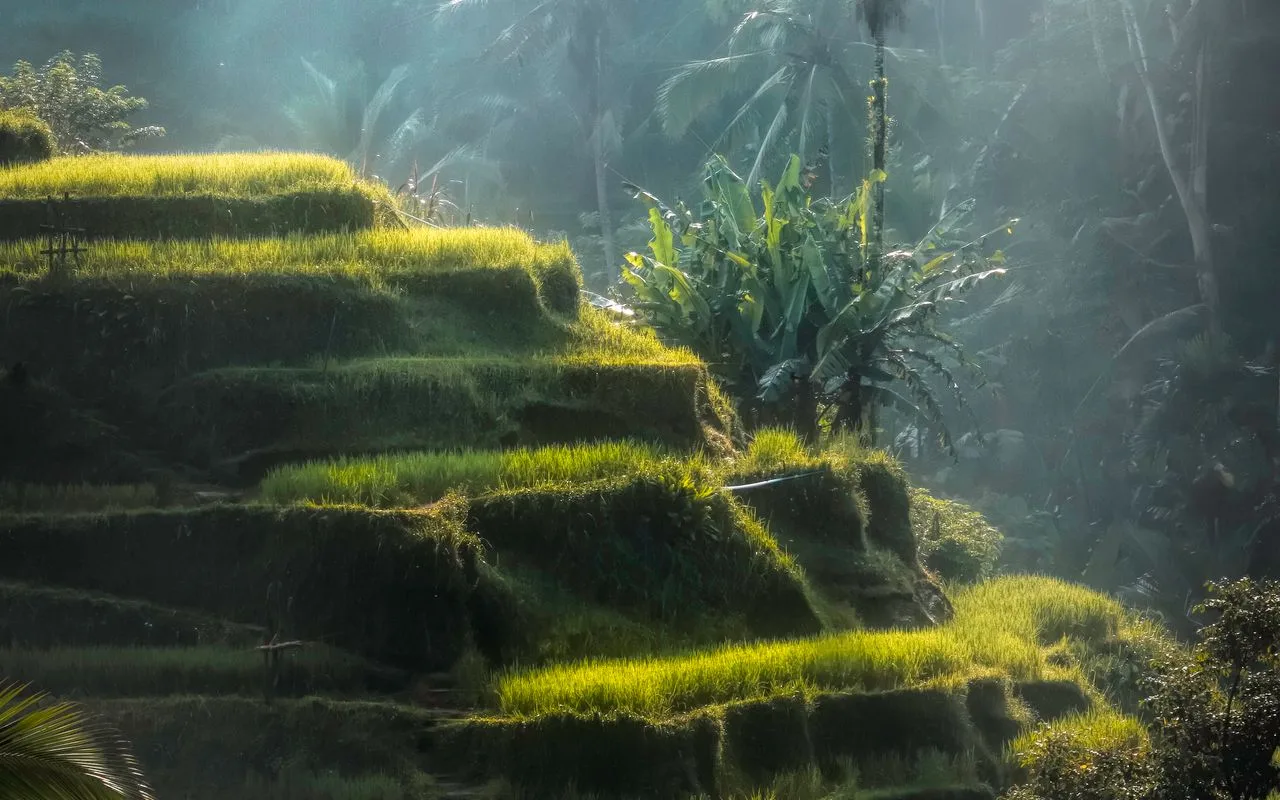
Tegallalang is the rice terrace everyone has seen on Instagram, and it genuinely lives up to the photos. The terraced paddies cascade down a river valley north of Ubud in an unbroken sweep of green and gold depending on the season. From Nusa Dua, it’s about 90 minutes each way — manageable as a half-day trip if you start early.
Getting There from Nusa Dua
Distance: ~55 km · Drive time: 80–100 minutes via the Bypass Ngurah Rai and Jalan Raya Ubud
Most visitors hire a private driver for the day. Grab is theoretically available but unreliable beyond central Ubud. A full-day driver from Nusa Dua (8 hours) costs Rp 500,000–700,000 and lets you combine Tegallalang with the Ubud Market, Sacred Monkey Forest, or Tirta Empul temple.
What to Expect When You Arrive
The Tegallalang terraces are managed by the local rice farming cooperative (subak). There is a small entry donation (typically Rp 20,000–30,000 per person) collected at the top viewing areas. The main viewpoints are lined with cafes and swing operators — more commercial than a decade ago, but still genuinely beautiful.
The famous swing (overwater above the rice fields) costs Rp 100,000–200,000 for a session and requires advance booking on busy days. Skip it if you just want the landscape — the free viewpoints are just as good.
Walking the Terraces
You can walk down into the terraces on narrow dirt paths — it takes about 20–30 minutes to descend to the river and back up. Wear shoes with grip; the paths can be muddy and slippery after rain. The walk gives you a completely different perspective from the valley floor, with the terraces rising around you and farmers working the paddies.
What’s Nearby
- Ubud Market & Palace (20 min south) — handcrafts, clothing, souvenirs. The market is best before 10am before the tour groups arrive.
- Sacred Monkey Forest (25 min south) — a forest temple complex with hundreds of free-roaming macaques. Entry Rp 80,000. Keep food in your bag.
- Tirta Empul (15 min east) — a sacred spring temple where Balinese Hindus come for ritual purification. Culturally one of the most significant sites near Ubud.
Practical Tips
- Arrive before 9am to avoid tour groups and get the best light.
- Wear a sarong over your shorts — not required to enter the terraces, but respectful if visiting any temples nearby.
- The terraces change colour with the growing cycle — bright green when newly planted, gold when ready to harvest, brown stubble between cycles. All versions are beautiful.
- Have cash (Rp) for the entrance donation, swing, and lunch at the terrace-view cafes above.
Cultural & Historical Significance
Tegallalang’s terraces are more than a photo backdrop — they’re a 1,000-year-old engineering marvel still in active agricultural use. The system that maintains them is called subak, a UNESCO-recognised cooperative irrigation system unique to Bali. Each subak community manages water distribution from a single mountain spring down through dozens of paddy levels, ensuring every farmer gets a fair share even in dry months.
Subak isn’t just an irrigation method; it’s a social and spiritual organisation. Decisions about planting calendars, water timing, and field maintenance are made collectively by farmers in a small temple called pura subak attached to the rice fields. The Tri Hita Karana philosophy underpins it — balancing relationships between humans, nature, and the divine. When you walk the Tegallalang trail, you’re walking through a living spiritual landscape, not just farmland.
If you visit early enough, you may see farmers performing small offerings at the pura subak or making the daily canang sari (small leaf trays of flowers and incense) placed at irrigation gates. These are gestures of gratitude, not tourist performance, and worth observing quietly from a respectful distance.
Combining Tegallalang with Nearby Attractions
Tegallalang sits roughly 75 minutes from Nusa Dua, and most of our guests build a half-day or full-day trip around it rather than driving up and back for the terraces alone. The most efficient circuit pairs Tegallalang with three other stops on the same Ubud road: Tegenungan Waterfall (40 min south of Tegallalang), Sacred Monkey Forest (in central Ubud, 20 min south), and Pura Tirta Empul (the holy water temple, 25 min north).
A popular order: leave Villa Soleil at 7am, arrive at Tegallalang by 8:30am before tour buses, walk the terraces for 90 minutes, then drive north to Tirta Empul for a late-morning visit. Lunch in central Ubud (we love Locavore, Hujan Locale, or the more casual Warung Bodag Maliah), then Sacred Monkey Forest at 3pm when the heat is fading. Back at the villa by 6pm. Total: about 11 hours including drive time.
For a slower pace, drop one stop and add a coffee plantation visit instead — Bali Pulina or Alas Harum offer plantation tours, coffee tastings, and views of the rice terraces from elevated platforms. Our concierge can arrange the full day with a driver and recommend stops based on your interests.
Photography & Best Times to Visit
Tegallalang photographs best in two distinct windows. Golden hour morning (6:30–8am) gives you soft, warm light streaming across the eastern face of the terraces. The crowds haven’t arrived yet and you’ll often see mist still clinging to the lower paddies. This is the time most professional photos are taken.
The late afternoon window (4:30–5:30pm) offers a different mood: lower sun, longer shadows, and farmers returning to homes after the day’s work. The crowds have thinned out by then. Avoid the midday hours (11am–2pm) — flat light, peak heat, and the largest tour bus crowds.
Seasonally, Tegallalang looks dramatically different depending on the rice cycle. Recently planted paddies (the bright electric green of new shoots) photograph best March–May and September–November. Just-harvested terraces (golden stubble) appear briefly in February and August. Flooded paddies with no rice — reflective like mirrors — appear right before planting, January and July.
Tegallalang Visiting Conditions by Time
The same terraces feel very different depending on when you arrive. Use this to pick your window:
| Time | Crowd Level | Lighting | Best For |
|---|---|---|---|
| 6:30–8:00 AM | Light | Soft golden, possible mist | Photography, peaceful walks |
| 8:00–11:00 AM | Moderate | Bright clear | Casual visits, swing experience |
| 11:00 AM–2:00 PM | Peak (tour buses) | Harsh flat | Avoid if possible |
| 2:00–4:00 PM | Moderate | Bright with shadows | Cafe stops, light walks |
| 4:30–5:30 PM | Light | Warm golden, long shadows | Sunset photography, atmospheric walks |