The Bali Tourist Levy: A Practical Guide for Villa Guests
By Villa Soleil · Published September 2026 · 9 min read
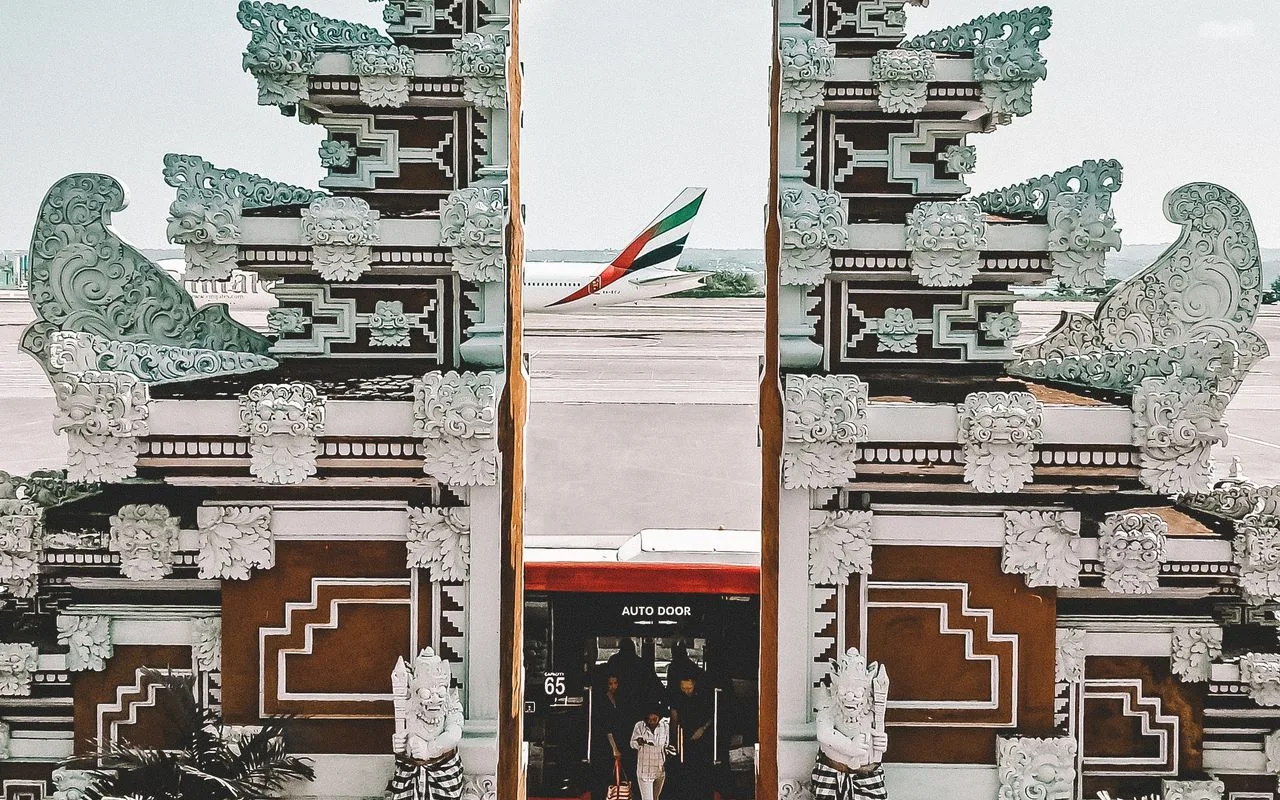
Quick answer: Foreign tourists pay IDR 150,000 per person, per visit (all ages) at lovebali.baliprov.go.id or the Love Bali app, ideally before flying. Keep the emailed QR voucher; it is separate from your visa and villa rate. KITAS/KITAP, diplomatic, student, family-visa holders and crew are exempt automatically (carry your permit); Golden Visa holders must apply for exemption in advance. No fine applies if checked without proof, but you pay on the spot.
Since February 2024, every foreign visitor to Bali has been asked to pay a one-off tourist levy of IDR 150,000 per person — roughly USD 9–10 at current rates — on top of the national visa. It is a provincial charge, collected through the government’s Love Bali system, and it funds culture, environment and infrastructure programmes across the island. It is also widely misunderstood: guests arriving at Villa Soleil regularly ask whether their driver paid it, whether it was in the accommodation bill, or whether the fee is even real. This guide covers what the levy is, how to pay it in five minutes from your phone, who is exempt, what a check looks like, and how to fold it into a smooth arrival at Ngurah Rai.
What the Bali tourist levy is (and what it is not)
The levy — in Indonesian, Pungutan Wisatawan Asing or PWA — was created by Bali Provincial Regulation 6 of 2023 and amended by Regulation 2 of 2025. It applies to foreign nationals entering Bali for tourism, whether you fly in directly or arrive from Jakarta, Lombok or Java by domestic flight or ferry. The amount is a flat IDR 150,000 per person, per visit. There is no age discount: a family of four with two small children pays four times.
What it is not: it is not the visa. Indonesia’s Visa on Arrival is a separate national fee (around IDR 500,000; confirm current rates in our Bali visa guide) paid at immigration. It is also not the hotel tax. The 10 percent regional accommodation tax is built into your nightly rate and remitted by the property. The levy is a third, entirely separate line, and no hotel, villa or driver pays it on your behalf unless you have explicitly arranged that.
How much, and will it go up?
IDR 150,000 is the rate as of September 2026. The provincial government has floated higher figures more than once — IDR 300,000 and beyond have been discussed publicly — and there has been talk of extending a smaller charge to domestic visitors. None of that has been enacted at the time of writing. Treat any site quoting a different figure with suspicion; the amount shown on the official portal is the amount.
Two other numbers are worth knowing. According to provincial figures, the levy raised about IDR 369 billion in 2025 and around IDR 235 billion in the first eight months of 2026, but compliance sat at only around 43 percent of foreign arrivals. That gap explains why enforcement is tightening gradually. Since late August 2026, airlines flying into Bali have been asked to announce the levy on board, and spot checks at temples and attractions are more frequent than they were a year ago.
Where to pay: the official Love Bali channels
There is one legitimate system, run by the Bali Provincial Government, and every genuine channel feeds into it.
- The website: lovebali.baliprov.go.id. Any address that does not end in .baliprov.go.id is not official, however convincing it looks.
- The Love Bali app: on Google Play and the App Store. Check that the developer is listed as the Bali Provincial Government before you install; imitation apps have circulated.
- Airport counters: desks in the international and domestic arrival halls at Ngurah Rai, plus a bank counter in the international hall for card payments. A fallback only; nobody wants to type passport numbers in a queue after a long-haul flight.
- Authorised partners: some tour operators and travel agents can process the levy through the official gateway. If someone offers to handle it, ask for the QR voucher in your name as proof; without it, you have not paid.
The website is the easiest route. You enter first and last names exactly as they appear in your passport, passport number, nationality, email and arrival date, then pay by Visa, Mastercard, JCB, American Express or UnionPay, by QRIS if you already have an Indonesian e-wallet, or by virtual account or bank transfer. There is a Group option that lets one person pay for a whole party in one transaction — handy for a villa booking of eight, as long as everyone’s passport details are to hand. The system also flags duplicates if the same name, passport number and arrival date have already been paid.
| Question | Answer (as of September 2026) |
|---|---|
| Amount | IDR 150,000 per person, per visit, all ages |
| Who pays | Foreign nationals visiting Bali for tourism |
| Official channel | lovebali.baliprov.go.id or the Love Bali app; airport counters as a fallback |
| Payment methods | Visa, Mastercard, JCB, Amex, QRIS, virtual account / bank transfer |
| Proof | QR voucher emailed after payment; keep a screenshot |
| Exempt | KITAS/KITAP, diplomatic, student, family-reunification visa holders and crew (automatic, show your permit); Golden Visa and other non-tourist visas on application |
| If checked without proof | Pay on the spot via an officer-issued QR; no fine currently applies |
| Separate from | Visa on Arrival (national) and hotel/villa tax (already in your rate) |
Step by step: paying before you fly
Our host’s advice to guests is simple: pay it at home, a few days before departure, when you are sitting at a desk with the passports in front of you. The process takes five to ten minutes for a family.
- Open lovebali.baliprov.go.id and choose Single or Group.
- Enter each traveller’s details. Spelling matters: the QR is matched to passport data.
- Select your arrival date in Bali, not your departure date from home.
- Pay. Cards work well for most foreign visitors; QRIS suits anyone with a local wallet.
- Check your inbox — and spam folder — for the QR Code Levy Voucher. Screenshot it and drop a copy in the family group chat.
Then forget about it. Nobody at immigration will ask for it; passport control is a national process unrelated to the provincial levy. The voucher only matters if you are checked later, or at a temple or attraction where staff scan at the entrance.
Who is exempt, and how to apply
Indonesian citizens never pay. Among foreigners, the exempt categories are holders of diplomatic and official visas; KITAS and KITAP residents, including investor and remote-worker permits; student and family-reunification visa holders; Golden Visa holders; and aircraft and ship crew. Ordinary tourists on a Visa on Arrival, an e-VoA, a visa-free entry or a C1 tourist visa are not exempt, however short the stay.
For most of these categories the exemption is automatic: KITAS/KITAP, diplomatic and official, student, family-reunification and crew visa holders simply show their permit if checked. Golden Visa holders and anyone on another non-tourist visa must apply through the “Apply Exemption” link on the same portal, upload the visa, and wait for approval. Some applicants report a decision within a day, while official guidance requires the application to be lodged at least five days before you arrive; submit it later and you are liable for the levy, so apply as soon as your dates are fixed. Once approved, carry your KITAS or visa on the island; showing it settles any spot check immediately.
What a check actually looks like
Bali’s approach has been deliberately soft. The governor has said publicly that enforcement must move slowly to avoid being counterproductive, and there is no fine, detention or refusal of entry to Indonesia attached to non-payment — although Governor’s Circular 7/2025 does allow temples and attractions to refuse service to visitors who cannot show proof of payment. In practice you may meet a levy check in three places: at the entrance to major temples and attractions, where staff increasingly scan QR vouchers alongside tickets; at popular beaches and sights, where uniformed tourism task-force officers do random rounds; and occasionally in the airport arrival hall. If you cannot show a voucher, the officer issues a QR code and you pay the IDR 150,000 there and then, by card. In practice that is usually the whole consequence, though a gate can legitimately hold you at the entrance until you have paid.
So why pay in advance? Partly because it is the law of the place you are visiting, and the money does go towards the temples and ceremonies you came to see. Partly because a check at a temple gate, with a queue behind you and a sarong half-tied, is a poor way to lose ten minutes of a day trip. Our temple etiquette guide covers what else to expect at the gate.
Scams and things to avoid
Because the levy is small and the process is online, it has attracted the usual parasites. Three patterns recur. Fake payment sites use .com, .net or .org domains, copy the official design and add a “service fee”; you receive nothing valid in return. Unsolicited WhatsApp or email messages claim your levy is unpaid and link to a payment page; the government does not chase individuals this way. And some drivers or touts offer to “sort it” for a markup, which at best means paying extra for a five-minute task. Pay only through the .baliprov.go.id domain, and never hand card details to a third party for this.
Practical tips for Villa Soleil guests
The levy fits neatly into the same pre-departure checklist as your visa and your airport transfer. A few things we have learned from guests arriving at Nusa Dua:
- Pay for the whole party in one Group transaction and forward the vouchers to whoever will be leading the day trips; that is who gets asked at the temple gate.
- If you are arriving on the e-VoA, do that first, then the levy; they are different systems and the levy form never asks for a visa number.
- Arriving without having paid? Do not queue at the counter. Clear immigration, collect bags, get in the car, and pay from your phone on the 12–20 minute drive to the villa. Our Ngurah Rai airport guide walks through the arrival hall step by step.
- Keep a screenshot rather than relying on patchy signal to reopen an email at a clifftop temple.
- Re-entering Bali on the same trip — say, after a few nights in the Gilis — does not mean paying again. The official rule is one payment per stay, valid until you leave Indonesia, so a hop to Lombok or the Gilis is covered by your existing voucher. Keep it with you.
If anything is unclear, message the Villa Soleil team on WhatsApp before you fly. We will not pay it for you, but we can confirm the current amount and send the official link, and your driver will know if anything has changed at the airport that week. Handled at home, it is the last time you will think about the levy until a temple gate scans your phone and waves you through. Details for the transfer itself are in getting to Villa Soleil.
Related reading
- Bali visa guide: Visa on Arrival, e-VoA and extensions
- Ngurah Rai airport guide: arrivals, SIM cards and transfers
- Getting to Villa Soleil from the airport
- Money, ATMs and cards in Bali
Written by the team at Villa Soleil. Message us to plan your stay in Nusa Dua.