Bali Temple Guide: Beyond the Sunset Temples
By Villa Soleil · Published June 2026 · 9 min read
- Why look beyond the sunset temples
- The five temples at a glance
- Besakih — the mother temple
- Lempuyang — the Gates of Heaven
- Tirta Empul — the holy spring
- Ulun Danu Beratan — the lake temple
- Goa Gajah — the Elephant Cave
- Dress code, etiquette & photography
- How to combine them as day trips from Nusa Dua
- What we arrange at Villa Soleil
Why look beyond the sunset temples
Most first-time visitors meet Bali’s temples at golden hour — the surf-battered cliffs of Uluwatu, the offshore silhouette of Tanah Lot. They are unforgettable, and we send our guests to both. But the island’s spiritual heart sits inland and uphill, in five temples that reward an early start far more than a sunset crowd does. These are the places where you sense that Bali is, first and foremost, a living Hindu island rather than a beach destination.
This guide is written from where we sit — Villa Soleil in Nusa Dua — so every distance and timing assumes you are starting your day in Benoa. The five temples here are Pura Besakih (the mother temple on Mount Agung), Pura Lempuyang (the famous “Gates of Heaven”), Tirta Empul (the holy-water purification springs), Pura Ulun Danu Beratan (the serene lake temple), and Goa Gajah (the ancient Elephant Cave near Ubud). Each is genuinely worth the drive, and with a little planning two of them can share a single day.
If you are still deciding which sunset temples to pair with these, our companions on Uluwatu temple at sunset and Tanah Lot cover the coastal side of the story.
The five temples at a glance
Distances below are one-way driving times from Nusa Dua in ordinary traffic. Treat the high end as realistic on weekends and during ceremony season. Entrance fees are per adult and change periodically, so we list honest ranges rather than promise exact rupiah.
| Temple | From Nusa Dua | Entrance (adult) | Best for | Arrive by |
|---|---|---|---|---|
| Tirta Empul | 1.5–2 hrs | IDR 75,000 | Holy-water purification | 8:00am |
| Goa Gajah | 1.5–2 hrs | IDR 50,000 | Ancient cave & carvings | 9:00am |
| Ulun Danu Beratan | 2–2.5 hrs | IDR 75,000 | Lake & mountain scenery | 9:00am |
| Besakih | 2–2.5 hrs | IDR 150,000+ | Scale & Mount Agung | 8:00am |
| Lempuyang | 2–2.5 hrs | IDR 100,000+ | The “Gates of Heaven” photo | 6:30am |
A pattern emerges quickly: the dramatic temples are far, and the quiet ones close early in the day. The single most important decision you will make is what time you leave Nusa Dua, and the answer for all five is “earlier than feels comfortable.”
Besakih — the mother temple
Pura Besakih is the largest and holiest temple complex in Bali, a sprawl of more than 20 temples climbing the southwestern slope of Mount Agung at around 1,000 metres. On a clear morning the volcano rises directly behind the highest shrines, and the scale is humbling — this is the spiritual axis of the entire island. A modern visitor centre and shuttle system was added in recent years, so expect a IDR 150,000-and-up ticket that typically bundles the buggy ride up to the main complex.
Besakih is a working temple, not a museum. The inner courtyards are reserved for worshippers, and you view the most sacred areas from the steps and pathways. Local guides will offer their services at the entrance; one is useful for context, but agree on a price before you start walking. Go early — the mountain clouds over by late morning and the magic of seeing Agung clear behind the gates is worth the 6am departure from Villa Soleil.
Lempuyang — the Gates of Heaven
You have seen the photograph: two split-gate pillars framing Mount Agung, the temple-goer reflected in what looks like a mirror lake. The “lake” is in fact a small piece of glass a staff member holds under a phone, and the queue for that single shot can run two to three hours by mid-morning. Pura Lempuyang Luhur is one of Bali’s oldest and most revered temples, far more than its viral gate, but the photo is why most people come.
- Arrive by 6:30am to be near the front of the photo queue, or skip the photo entirely and simply enjoy the temple in peace.
- You collect a numbered ticket for the photo, then wait — bring patience and water.
- The truly devout climb to the upper temple, a steep 1.5–2 hour ascent through forest; most visitors stay at the first gate.
- Sarong and sash rental is included in the entrance area; modest dress is strictly enforced here.
Because Lempuyang sits in Bali’s far east, it is the toughest of the five to reach from Nusa Dua. We are honest with our guests: this is a long day for one photograph, and worth it only if the image matters to you.
Tirta Empul — the holy spring
Tirta Empul, near Tampaksiring, is where Balinese Hindus come to perform melukat — ritual purification under a row of carved stone water spouts fed by a sacred spring. Visitors are welcome to take part respectfully, and it is one of the most moving experiences on the island when done with the right spirit rather than as a photo op.
If you wish to bathe, you must wear a sarong specifically for the springs (rented on site, separate from your walking sarong) and follow the order of the spouts, skipping the final two which are reserved for funeral rites. Move from left to right, duck your head under each spout, and keep your hands together in prayer. Lockers are available for valuables. Even if you only watch, the green-walled bathing pools and the clarity of the spring water make this a highlight, and it pairs naturally with the rice-terrace and Ubud sights described in our Ubud day trip guide.
Ulun Danu Beratan — the lake temple
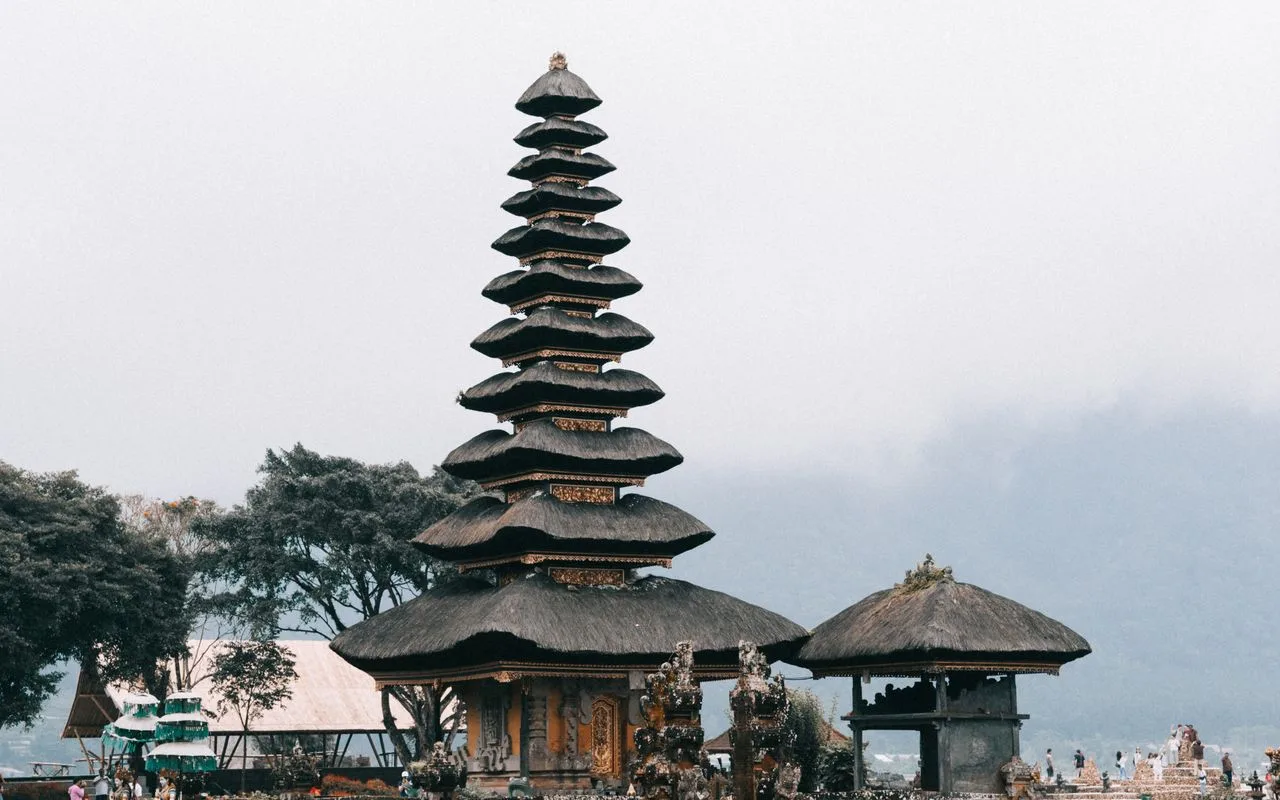
If you have seen the old IDR 50,000 banknote, you have seen Pura Ulun Danu Beratan: a multi-tiered meru shrine appearing to float on Lake Beratan in the cool highlands of Bedugul. At around 1,200 metres the air is genuinely chilly, mist drifts across the water, and the temperature is a welcome change from coastal Nusa Dua. The temple honours Dewi Danu, goddess of the lake and of the irrigation that feeds Bali’s rice.
This is the gentlest of the five to visit — the grounds are flat, landscaped like a park, and the iconic shrine is best photographed in the calm of early morning before the water ruffles and the tour buses arrive around 10am. Bring a light layer; guests who pack only beachwear regret it here, which is exactly why we put highland temples on our Bali packing list.
Goa Gajah — the Elephant Cave
Just outside Ubud, Goa Gajah dates to roughly the 11th century and is one of Bali’s most atmospheric archaeological sites. The entrance is a menacing carved face you step through into a small T-shaped cave; below sit bathing pools rediscovered in the 1950s, and a path leads down through jungle to ancient Buddhist relics by a stream. It is compact — an hour is plenty — which makes it an easy add-on to a Tirta Empul or Ubud day rather than a destination on its own.
As at every temple, you will need a sarong (rentals at the gate) and modest shoulders. Touts sometimes claim a “donation” on top of the ticket; the official fee is the one printed at the booth.
Dress code, etiquette & photography
The rules are simple and apply at all five temples. A sarong covering the legs and a sash tied at the waist are required for everyone; most temples rent or include them, but bringing your own is more comfortable. Shoulders should be covered. Anyone who is menstruating is traditionally asked not to enter the inner temple, a custom worth respecting quietly. Never climb on shrines or gates for a photo, never point your feet at an altar or sit higher than a priest, and step around — never over — the small palm-leaf offerings (canang sari) on the ground.
- Lower your voice in courtyards; these are places of active worship.
- If a ceremony is underway, watch from the edge and follow your guide or a local’s lead on where you may stand.
- Ask before photographing people in prayer, and never use flash near worshippers.
- Drones are prohibited at most temple complexes without a permit.
For a fuller grounding in the customs that make these visits respectful, our Bali cultural etiquette guide is the natural companion to this one, and it covers the small gestures — the right hand, the half-smile, the patient pause — that locals notice and appreciate.
How to combine them as day trips from Nusa Dua
Geography does most of the planning for you. Tirta Empul and Goa Gajah sit on the same Ubud-and-Tampaksiring axis, so they form a natural pair, often with a rice terrace in between. Besakih and Lempuyang both lie to the east and can be chained by determined early risers, though it makes for a 12-hour day. Ulun Danu Beratan stands alone to the north and works beautifully combined with the Bedugul markets or a waterfall on the way back — see our Bali waterfalls guide for nearby options.
Three things make these days work from Nusa Dua: leaving before 7am, using a private driver rather than a rideshare you cannot hold for the day, and accepting that two temples is a comfortable maximum while three is a marathon. Public transport simply does not reach these sites, and a self-driven scooter over two hours of mountain road is not something we recommend to our guests. For the wider picture on getting around, our Bali transportation guide lays out the realistic options.
What we arrange at Villa Soleil
Temple days live or die on logistics, and that is exactly where staying at Villa Soleil pays off. Our concierge keeps a small roster of trusted English-speaking drivers who know these routes — they will have the car at the villa gate in Nusa Dua at whatever hour the temple demands, carry spare sarongs, advise on the genuine ticket prices, and wait through your visit so you are never stranded. We can build you a sensible two-temple itinerary, fold in a rice terrace or a lunch with a view, and adjust for ceremony days when certain temples close to visitors.
We also brief you on the etiquette before you go, so you arrive feeling like a respectful guest rather than a tourist guessing the rules. If you would like us to plan a temple day around your stay, message the Villa Soleil team on WhatsApp — our host usually replies within the hour, and we will have a driver and a route ready before your first morning in Bali.
Related reading
Written by the team at Villa Soleil. Message us to plan your stay in Nusa Dua.