Jimbaran Seafood Prices 2026: Market vs Beachfront Costs
By Villa Soleil · Published November 2026 · 9 min read
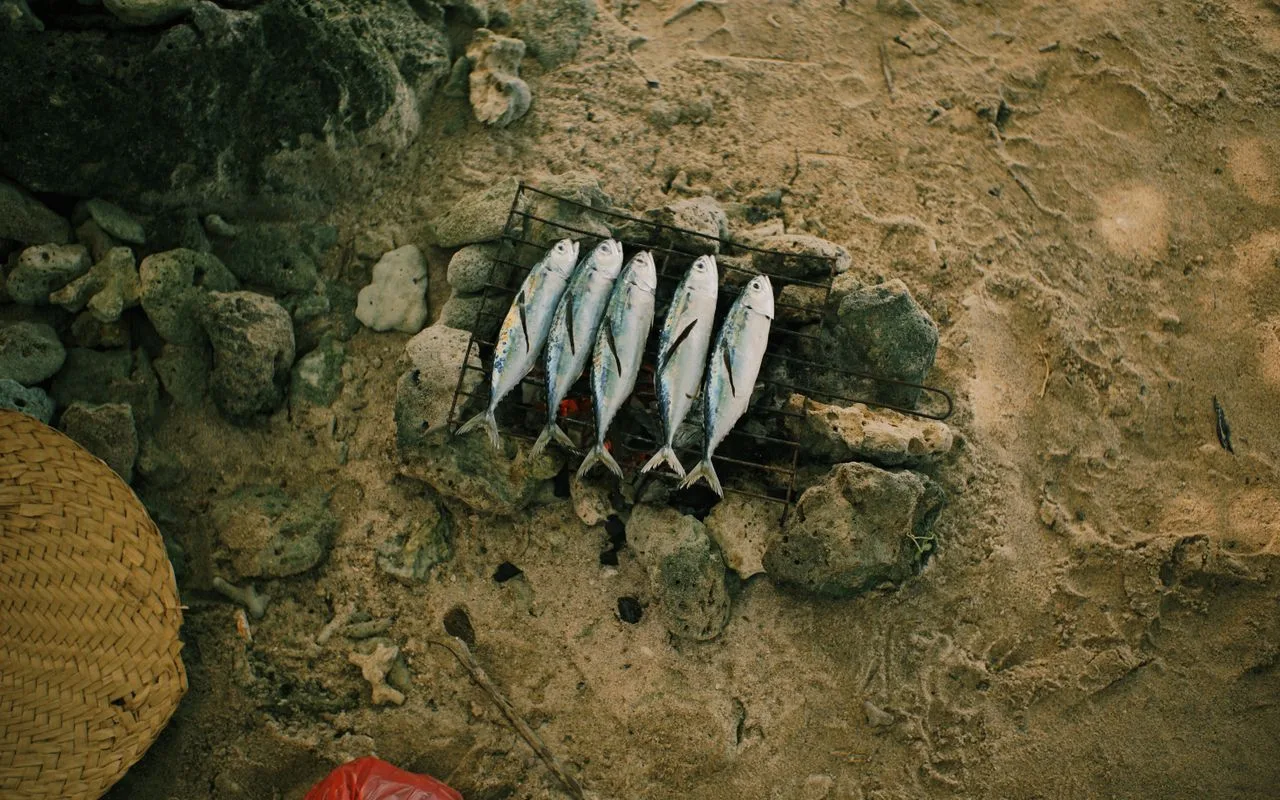
Quick answer: Jimbaran has two price levels. At Pasar Ikan Kedonganan you buy raw fish by weight, then pay a warung about Rp 20.000/kg to grill it with two sambals; a June 2025 visit logged clams at Rp 15.000/kg and small pelagics near Rp 30.000–35.000/kg, which are not 2026 figures. On the beachfront, the one list we could verify is Bawang Merah’s, updated 13 August 2026, which prices snapper or grouper at Rp 500.000/kg, about Rp 583.000 once 10% tax and 6% service compound — but that restaurant sits at Pantai Kelan near the airport, not on the Muaya strip, so read it as an anchor rather than the Jimbaran rate.
- Two price levels in one bay, and no official rate
- Route one: Pasar Ikan Kedonganan and the grilling fee
- Route two: what a beachfront per-kilo menu adds up to
- Price table: market, beachfront and booking agent
- How to check the weight and the bill
- Three strips, and who built each one
- Timing your table, and what the drive back costs you
- What can spoil the evening
Jimbaran is the dinner our guests ask about most, and the one where the bill varies most. Two people can eat grilled fish 300 metres apart on the same evening and pay many times apart, because the market route weighs out small pelagics while the beachfront menu prices snapper and grouper. That is two businesses sharing one bay: a fish market with grill warungs behind it, and beachfront cafes selling tables on the sand. From Villa Soleil in Benoa the drive is much the same either way, so the only decision is which bill you want.
This is a price page, not a romance. For atmosphere, read our Jimbaran Bay sunset dinner guide. Here we stay with the numbers, and with the date each one was checked.
Two price levels in one bay, and no official rate
Route one is the market: buy raw fish by weight at Pasar Ikan Kedonganan, carry it to a warung behind, pay a grilling fee per kilo. Route two is the beachfront cafe, priced per kilogram of fresh or live seafood with tax and service on top. Before any number, though: we found no government or trade-association price list for Jimbaran or Kedonganan seafood, and none for the grilling fee. Badung regency’s own releases about the beach carry no tariff at all, so there is no official rate to demand. Market prices are trader-set and bargaining is normal; cafe prices are venue-set and printed.
Route one: Pasar Ikan Kedonganan and the grilling fee
The market sits at Jl. Pantai Kedonganan No. 1100, Kedonganan, Kec. Kuta, Kabupaten Badung 80361, a short drive south of the airport and about 4 km north of the Muaya cafe strip. We publish no opening hours: we counted seven contradictory sets online, one a scraped table claiming it shuts on Saturdays. Go in daylight for choice.
The grilling fee is the most reliable number here. Three independent sources put jasa bakar at about Rp 20.000 per kilogram, and detikTravel in September 2023 recorded a wider vendor spread of Rp 15.000–35.000/kg, calling it variable. Agree the figure before you hand over the fish. It definitely includes two sambals, terasi and matah. Rice is less certain: the one first-hand account we trust says both that white rice comes with it and that guests wanting rice pay a little extra, so ask before the fish goes on the coals.
Raw fish prices are where most articles mislead, quoting old numbers as current. Honest version: a visit logged in June 2025 found clams at Rp 15.000/kg and small pelagics, ikan layang or slungsung, at Rp 18.000 for a little over half a kilo, roughly Rp 30.000–35.000/kg. detikTravel in 2023 put average fresh fish near Rp 25.000/kg. Those are not 2026 figures, and neither covers kakap or kerapu, the species you would order at a cafe. Each trader sets their own, and holidays and New Year push them up.
Sourced tactics: walk the stalls and compare, then negotiate — detikTravel advises both. Loosely under half an hour on the grill is a fair hope, not a promise. Bring cash, because the market runs on it — our money and ATM notes cover that.
The arithmetic, honestly dated: a kilo of small fish at June 2025 prices plus about Rp 20.000 grilling lands near Rp 50.000–55.000/kg with two sambals, rice either inside or just outside that. Even if raw prices have drifted up since, the gap to the beachfront stays enormous.
Route two: what a beachfront per-kilo menu adds up to
For the beachfront we use one anchor, the single list we could verify as current. Bawang Merah publishes its own per-kilo prices and marks that page last updated 13 August 2026, with a homepage stamp of 30 October 2026; its site also displays a Travellers’ Choice 2026 badge, which we report as displayed, not independently verified. One thing almost nobody says: Bawang Merah is on Pantai Kelan in Tuban, the far northern end of the bay near the airport, not the Muaya cafe row and not Kedonganan. Its own site puts it 10–15 minutes from Ngurah Rai. Treat the list as an anchor for beachfront seafood in this area, not as the Jimbaran rate; Muaya and Kedonganan cafes set their own prices and may differ. Booking is by WhatsApp on +62 877 3844 9169, marked text only, and the site states four different opening times, so confirm by message.
The list: fresh red or white snapper and grouper Rp 500.000/kg, with live red snapper and grouper at Rp 600.000/kg. King prawn (size 28–30) Rp 500.000/kg, jumbo prawn (15–20) Rp 700.000/kg, tiger jumbo (6–14) Rp 900.000/kg. Calamari Rp 500.000/kg, live clam Rp 150.000/kg. Live crab Rp 600.000/kg at 300–450 g, Rp 700.000/kg at 500–900 g, Rp 900.000/kg above 900 g. Fresh lobster Rp 1.500.000/kg, live lobster Rp 1.700.000/kg.
Then the part people forget. The menu states prices carry 10% government tax and 6% service, both on top. Because the tax normally applies to the subtotal including service, a Rp 500.000/kg fish lands near Rp 583.000/kg — call it Rp 580.000–585.000. Budget per kilo shared, not per person: one 800-gram snapper between two is most of half a million rupiah before rice, vegetables or drinks. Do not plan on Rp 150.000–300.000 a head here. That is warung money.
A second published list is worth understanding rather than trusting. seafoodjimbaran.com looks like a restaurant, but its own footer calls it a dinner reservation service run by a local tour operator, naming no partner restaurant and no address. Its prices sit lower: red snapper Rp 300.000/kg; white snapper, grouper, king fish, barracuda, baronang and tuna Rp 275.000/kg; king prawn Rp 520.000/kg; squid Rp 240.000/kg; clam Rp 100.000/kg; fresh lobster Rp 1.250.000/kg; live crab Rp 450.000/kg; live lobster Rp 1.600.000/kg. It states 21% tax and service. Read that as added on top, like the 16% above, and ask which band applies before ordering.
For the older cafes we publish no per-kilo prices at all, because no current verified menu exists for them. Lia Cafe, on Jl. Pemelisan Agung, still has a live site carrying a 2022 copyright line and no prices or hours; among the classic cafes it has the best reputation in traveller reviews, which is as far as we go. A 2026 roundup updated in July lists Wr Mang Ayu, formerly Waroenk Djadoel, with a set meal around USD 19 covering a lobster, a fish, four grilled prawns, clams, squid skewers, rice and water. If you want that certainty, our fine dining guide fits better than a beach cafe.
Price table: market, beachfront and booking agent
Everything below is attributed and dated: the market column is historical, Bawang Merah is a current list for Pantai Kelan, and the agent column belongs to a booking service with no named venue.
| Item | Pasar Ikan Kedonganan (dated) | Bawang Merah, Pantai Kelan (list of 13 Aug 2026) | Booking agent list (no named venue) |
|---|---|---|---|
| Snapper, grouper | Not observed on the June 2025 visit | Rp 500.000/kg fresh, Rp 600.000/kg live | Rp 275.000–300.000/kg |
| Small pelagics (layang) | About Rp 30.000–35.000/kg, June 2025 | Not listed | Not listed |
| Clams | Rp 15.000/kg, June 2025 | Rp 150.000/kg live | Rp 100.000/kg |
| King prawn | No verified figure | Rp 500.000/kg (size 28–30) | Rp 520.000/kg |
| Squid | No verified figure | Rp 500.000/kg | Rp 240.000/kg |
| Live crab | No verified figure | Rp 600.000/kg at 300–450 g | Rp 450.000/kg |
| Lobster | We publish none | Rp 1.500.000/kg fresh, Rp 1.700.000/kg live | Rp 1.250.000/kg fresh, Rp 1.600.000/kg live |
| Grilling fee | About Rp 20.000/kg (2023 spread Rp 15.000–35.000) | Inside the menu price | Inside the menu price |
| Tax and service | None; trader-set, bargaining normal | 10% tax plus 6% service on top, about +16% | 21% on top |
How to check the weight and the bill
These are standard precautions, not accusations. They answer what travellers complain about most on review sites, complaints we cannot verify case by case and will not repeat as incidents.
Watch the fish go on the scale and agree the weight before it reaches the kitchen: on a Rp 500.000/kg menu, every 100 grams is another Rp 50.000. Photograph the priced menu when it arrives. Ask whether an item is fresh or live before you point at a tank, because that one word is Rp 100.000/kg on fish and Rp 200.000/kg on lobster. Ask whether tax and service are 16% or 21%. Pay at the cashier rather than handing cash to a server, and ask about a card surcharge before you produce a card.
One more, from a 2026 guide updated in July: some vendors bring out a dearer menu when they hear English. Ask for the menu as soon as you sit down, glance at the place next door, and use a translation app if the wording is unclear. None of that licenses bargaining on the beachfront, where menu prices are menu prices. Haggling belongs at the market, and our notes on tourist traps apply the same logic elsewhere.
Three strips, and who built each one
Jimbaran is not one row of cafes, and knowing which strip you are on explains a lot about price and style. A local account published in August 2026 counts 19 cafes at Pantai Muaya, built by the lessees of the krama ngarep of Desa Adat Jimbaran, and 9 more on Jalan Pemelisan built by the Badung regency government. Kedonganan, further north, has dozens at Pasih Kauh with no reliable count. The strips are about 4 km apart, each venue sets its own price, and distance claims online disagree wildly because writers mix up Muaya with Kedonganan.
Timing your table, and what the drive back costs you
Crowds build around 17:30 according to that same 2026 guide, so arrive before then for a front-row table. The light window you can work out yourself. On 1 November 2026, sunset at Jimbaran is 18:16 and civil twilight ends at 18:37, so usable light runs about twenty minutes past sunset. Bali has no daylight saving, and across 2026 sunset moves only from 18:06 at the end of May to 18:48 in late January. Check your own date, but plan on being seated well before six.
From Villa Soleil in Benoa, and from the Nusa Dua resort strip, allow about 20–30 minutes by car depending on traffic and on whether you want Muaya or Kedonganan. The honest catch is the return: you drive back along the bypass in the evening, exactly when it is busy, so build in slack if you have a show or a flight. We suggest keeping a driver waiting — our private driver guide covers the pricing.
What can spoil the evening
Monsoon debris is the big one. In January 2026, Badung regency reported a clean-up at Pantai Muaya that needed a loader to clear large logs, branches and plastic. The Bendesa Adat Jimbaran said volume rises with the west monsoon, recurs every year in unpredictable quantity, and generally only eases as Nyepi approaches; he expected clean-ups to become routine, possibly twice a week, which was stated as likely, not confirmed. If you are booking between December and March, ask how the beach looks that week, and read our rainy season notes first.
Building works are second. In July 2024 a local report put phase one as finished from Cafe 9 to in front of Villa Hanani, with a Cafe 9 renovation planned that year and the walkway to extend toward the InterContinental or Pantai Muaya. It also said Cafe 19 sits on state land and would be shifted back once consultation with the traditional village concluded, with no date given, news now over two years old. By January 2026, Badung’s own release still described added sand, pedestrian development and a reorganisation of the cafes as designed rather than delivered, per the regent. A 2024 target undelivered in 2026 is the honest summary, so ask the cafe or your driver whether any stretch is fenced off the week you go.
Third, stale information. Opening hours for the market and for individual cafes are genuinely unpublishable, and price articles get recycled under fresh dates. If you would rather have one local dish with a checkable price, our warung guide is a more dependable starting point than any Jimbaran listing we read.
Related reading
- Jimbaran Bay sunset dinner
- Bali warung guide
- Nusa Dua restaurants
- Balinese dishes to try
- Puja Mandala Nusa Dua: Mosque, Prayer Times and Access — Masjid Agung Ibnu Batutah at Puja Mandala is about 10 minutes by car
- Nusa Dua Postcode: 80363 for Benoa and All of Kuta Selatan — Nusa Dua sits inside Kelurahan Benoa
Written by the team at Villa Soleil. Message us to plan your stay in Nusa Dua.