Bali Scams to Avoid: Money Changers, Taxis, Temples and ATMs
By Villa Soleil · Published September 2026 · 9 min read
- Money changers: the fold, the count and the calculator
- ATM skimming and the “helpful stranger”
- Taxis: meters, lookalike blue cars and the “no drivers” zone
- Fake tickets, fake “tourist tax” websites and gate touts
- Temple “guides”, sarong sellers and the donation book
- Timeshare scratch cards and the “you have won” approach
- Quick reference: what each scam looks like and what stops it
- The Nusa Dua advantage, and what to do if something goes wrong
Bali is not a dangerous place, and Nusa Dua in particular is about as gentle as the island gets: gated resort roads, security posts, and a beach where the biggest hazard is falling asleep in the sun. But a handful of well-rehearsed tricks do circulate around the south of the island, and most of them rely on the same thing: a tourist in a hurry, holding cash, who does not yet know what “normal” looks like. This guide walks through the ones our guests actually ask about, how each one plays out, and the low-effort habits that make you a poor target. None of it requires paranoia. It mostly requires slowing down for thirty seconds at the right moments.
Money changers: the fold, the count and the calculator
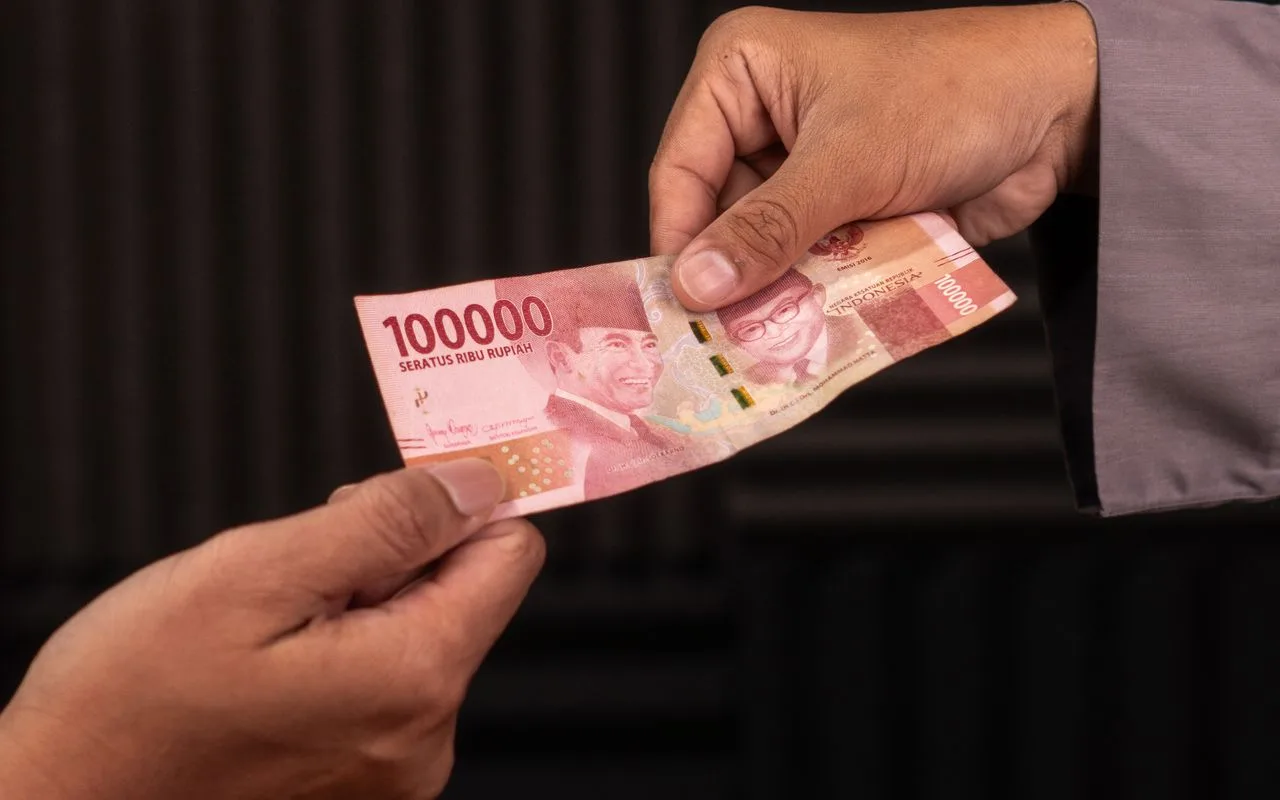
The money-changer sleight of hand is the oldest scam in Bali and still the most common, because it is genuinely hard to catch. A small kiosk on a busy street advertises a rate noticeably better than the bank next door. You hand over your dollars or euros, the cashier counts out a thick stack of rupiah in front of you, fast and fluently, then folds it and passes it across. Somewhere in the fold, a few notes have gone back under the counter. A variant uses a calculator with a pre-set “commission” that appears only after you agree, or quietly swaps 100,000 notes for 10,000 notes of a similar colour in the middle of the pile.
The defence is structural rather than clever. Bank Indonesia licenses legitimate changers as PVA Berizin (Authorised Money Changers); they display Bank Indonesia’s licence certificate and the official KUPVA Berizin logo (newer versions carry a QR code you can scan to verify), usually with the words “Authorized Money Changer” beside the company name, and Bank Indonesia’s Bali office runs a public site (moneychangerbali.com) that maps licensed changers near you and lets you report illegal ones. If the rate on the board is far better than everyone else’s, the difference is the trick. Then, however reputable the counter looks, count the notes yourself, slowly, on the counter, before you put them away, and never let the cashier take the stack back “to recount”. Around Nusa Dua the practical answer is simpler still: use the changers inside Bali Collection or a bank branch, or skip cash exchange entirely and withdraw from a bank ATM. Our guide to money and ATMs in Bali covers rates and daily limits in more detail.
ATM skimming and the “helpful stranger”
Skimming devices on stand-alone ATMs have been a recurring problem in south Bali for over a decade, and police continue to make arrests for it. The device sits over the card slot, a pinhole camera or fake keypad records your PIN, and the withdrawals start a few days later, often after you have flown home. The other version is a person who appears at your shoulder to “help” when the machine seems to jam, and leaves with your card or your PIN.
- Use ATMs inside or attached to bank branches (BCA, Mandiri, BNI, BRI), inside the airport terminal or in shopping malls, ideally with a security guard nearby. Avoid lone machines on the roadside or outside minimarts late at night.
- Tug the card slot and keypad before inserting your card; loose or bulky fittings are a warning sign.
- Cover the keypad with your hand, decline any help, and if the machine swallows your card, phone your bank to block it before you do anything else.
- Decline “dynamic currency conversion” if the screen offers to charge you in your home currency; let your own bank do the conversion.
- Withdraw in larger, less frequent amounts, and keep a second card somewhere other than your wallet.
Taxis: meters, lookalike blue cars and the “no drivers” zone
Bali’s taxi trade has improved enormously with ride-hailing apps, but the old tricks survive around tourist hotspots. The classic is the unmetered “fixed price” quoted at three or four times the going rate, followed by a meter that runs suspiciously fast when you insist on one. Then there are the lookalike cabs: cars painted a similar shade of blue to Bluebird, with names like “Blue Bird Taxi” or “Bali Bird” on the door, trading on the real company’s reputation. The genuine operator is Blue Bird Group, whose cars carry the bird logo and can be booked and paid through the MyBluebird app.
The dependable approach is to book through an app (Grab, Gojek or MyBluebird) so that the fare is agreed before the car arrives. In a few tourist areas, local transport cooperatives discourage app pickups, so your app may show “no drivers available” or a driver may ask you to walk a short distance to a pickup point; that is an inconvenience rather than a scam, and it rarely applies in Nusa Dua itself. For anything longer than a quick hop, a private driver by the day is better value and removes the question entirely; our host can arrange one, and our Bali transport guide explains typical day rates.
Fake tickets, fake “tourist tax” websites and gate touts
Bali charges foreign visitors a one-off tourist levy of IDR 150,000, payable through the official Love Bali portal at lovebali.baliprov.go.id (a .go.id government domain). Copycat sites with .com or .org endings have appeared that charge double or more and sometimes harvest card details, so type the address yourself rather than following a search advert. The same logic applies to visa extensions: the official immigration site ends in imigrasi.go.id; anything else is an agent, legitimate or otherwise, adding a margin.
Fast-boat tickets to Nusa Penida or the Gilis are a second area where fakes appear: a street vendor sells a “ticket” for an operator that does not exist, or a departure that is already full. Book with a named operator directly or through a known agent, and get a confirmation with the vessel name and departure port (Sanur, Serangan or Padang Bai). At attractions, buy tickets only at the official counter; if a friendly man outside the gate offers to “sort your ticket”, he is usually selling a guide service, not a ticket.
Temple “guides”, sarong sellers and the donation book
Temple scams are mostly small money, but they sour a visit. At popular temples (Uluwatu, Tanah Lot, Besakih, Tirta Empul) someone may attach themselves to you at the car park, walk you around, and then request a fee that was never discussed. Others tell you the temple is “closed for ceremony” and only accessible with their help, or insist that you must buy a sarong from their stall even though most larger temples now lend a sarong and sash with the entrance ticket. At the shrine you may be shown a donation book listing improbably generous previous gifts; a donation is genuinely voluntary and IDR 10,000–20,000 is perfectly respectable.
Ask the ticket office whether a guide is included, agree a price up front if you want one (IDR 100,000–200,000 for an hour at a large complex is a reasonable range; confirm current expectations locally), and follow the dress code so nobody has an excuse to intercept you. Our temple etiquette guide lists what to wear and how to behave inside.
Timeshare scratch cards and the “you have won” approach
In Kuta, Legian, Seminyak and outside some malls, a pleasant young person may hand you a scratch card that, by an astonishing coincidence, is a winner. The prize (a free dinner, a resort stay, a spa package) is real in the sense that it exists; the catch is a “short presentation” at a holiday club that in practice lasts two to three hours and is built around high-pressure selling of a membership costing several thousand US dollars, usually with a same-day “special price”. Nobody is in physical danger, but plenty of people sign under pressure and regret it. A polite “no, thank you” and walking on costs nothing.
Quick reference: what each scam looks like and what stops it
The table also includes the scooter-rental damage claim, which is less a scam than a dispute you can prevent by photographing the bike at pickup.
| Scam | Where you meet it | Tell-tale sign | Simple defence |
|---|---|---|---|
| Money changer short-count | Small kiosks in Kuta, Seminyak, Ubud | Rate far better than the bank next door | PVA Berizin logo, count it yourself, or use an ATM |
| ATM skimming | Stand-alone roadside ATMs | Loose card slot, bulky keypad | Bank-branch or mall ATMs only, cover your PIN |
| Taxi meter / lookalike cab | Airport, Kuta, beach car parks | “Meter broken”, unfamiliar bird logo | Book via Grab, Gojek or MyBluebird |
| Fake tourist-levy site | Search adverts before you travel | .com address, fee above IDR 150,000 | Pay only at lovebali.baliprov.go.id |
| Temple “guide” | Car parks at big temples | Unrequested company, “temple closed” | Ask the ticket office, agree fees first |
| Timeshare scratch card | Kuta, Legian, Seminyak streets | “You have won!” | Decline, keep walking |
| Scooter damage claim | Rental returns | No photos taken at pickup | Photograph the bike, use a reputable renter |
The Nusa Dua advantage, and what to do if something goes wrong
Staying in Benoa or Nusa Dua puts you in the calmest corner of south Bali. The ITDC resort zone has security at the gates, Bali Collection has bank ATMs and licensed changers under one roof, and there is almost no street hustle. Most of the tricks above are things you would meet on a day out in Kuta or Ubud, not on the walk to the beach. From Villa Soleil, our host can book airport transfers and drivers, which quietly removes the airport taxi question on arrival; read our airport guide for the official taxi counter if you prefer to go it alone.
If you are caught by one of these, report it. The national police emergency number is 110, tourist police posts operate in Kuta and at the airport, and your bank’s fraud line should be your first call for any card problem. Keep copies of your passport and cards somewhere separate, carry only the cash you need for the day, and treat any deal that arrives faster than you can think about it as one you can safely walk away from. That is the whole method: slow down, verify, then enjoy an island that overwhelmingly deserves its reputation for warmth.
Related reading
- Money, ATMs and currency in Bali
- Getting around Bali: taxis, apps and drivers
- Bali health and safety guide
- Ngurah Rai airport guide
Written by the team at Villa Soleil. Message us to plan your stay in Nusa Dua.