Nyepi: The Balinese Day of Silence, and How to Experience It from Nusa Dua
By Villa Soleil · Published July 2026 · 7 min read
- What Nyepi actually is
- The days before: Melasti and the great cleansing
- Ogoh-ogoh: the parade before the silence
- The 24 hours of silence: what really happens
- How our guests actually spend the day
- Planning your trip around Nyepi: timing and dates
- Respectful behaviour: the short version
- What we arrange at Villa Soleil
From 6am on Nyepi day until 6am the next, Bali switches itself off. Ngurah Rai airport closes completely, the streets empty out, no light shows after dark, and mobile data is often cut island-wide. It is the Balinese Saka New Year, and for a full 24 hours the island belongs only to the stars and the sound of the wind. For many of our guests it becomes the quiet highlight of the whole trip.
At Villa Soleil in Nusa Dua, we have hosted many guests through Nyepi, and the lesson is the same each time: the day is not something to work around but something to lean into. This guide explains what Nyepi actually is, what happens in the days surrounding it, the rules you genuinely must follow, and how a stay with us turns the Day of Silence into a highlight rather than an inconvenience.
What Nyepi actually is
Nyepi marks the start of a new year in the Balinese Saka calendar, a lunar-solar system roughly 78 years behind the Gregorian count. The word comes from sepi, meaning silent or still. The philosophy behind it is beautiful: after the noise and cleansing rituals of the preceding days, the island falls completely silent so that any lingering evil spirits, passing overhead, will believe Bali is uninhabited and move on. It is also a day of genuine self-reflection — a collective pause the rest of the world could learn from.
The day is governed by four abstentions known as the Catur Brata Penyepian: amati geni (no fire or light, including electric lights), amati karya (no work), amati lelungan (no travel or going out), and amati lelanguan (no entertainment or indulgence). Devout Balinese observe all four; visitors are asked to respect the spirit of them, which mainly means staying inside and keeping quiet.
The days before: Melasti and the great cleansing
Nyepi is not a single day but the centrepiece of a week of ceremony. Three or four days beforehand comes Melasti, when entire villages process to the sea carrying sacred temple objects to be purified in the ocean. If you are staying with us, the beaches near Nusa Dua — including the stretch you can reach on our 10-minute walk to Geger Beach — often host these processions of white-and-gold clad worshippers. It is a striking sight, and entirely respectful to watch quietly from a distance.
The day before Nyepi is Tawur Kesanga (also called Pengerupukan), a day of exorcism rituals to drive out negative forces — and the night everyone waits for.
Ogoh-ogoh: the parade before the silence
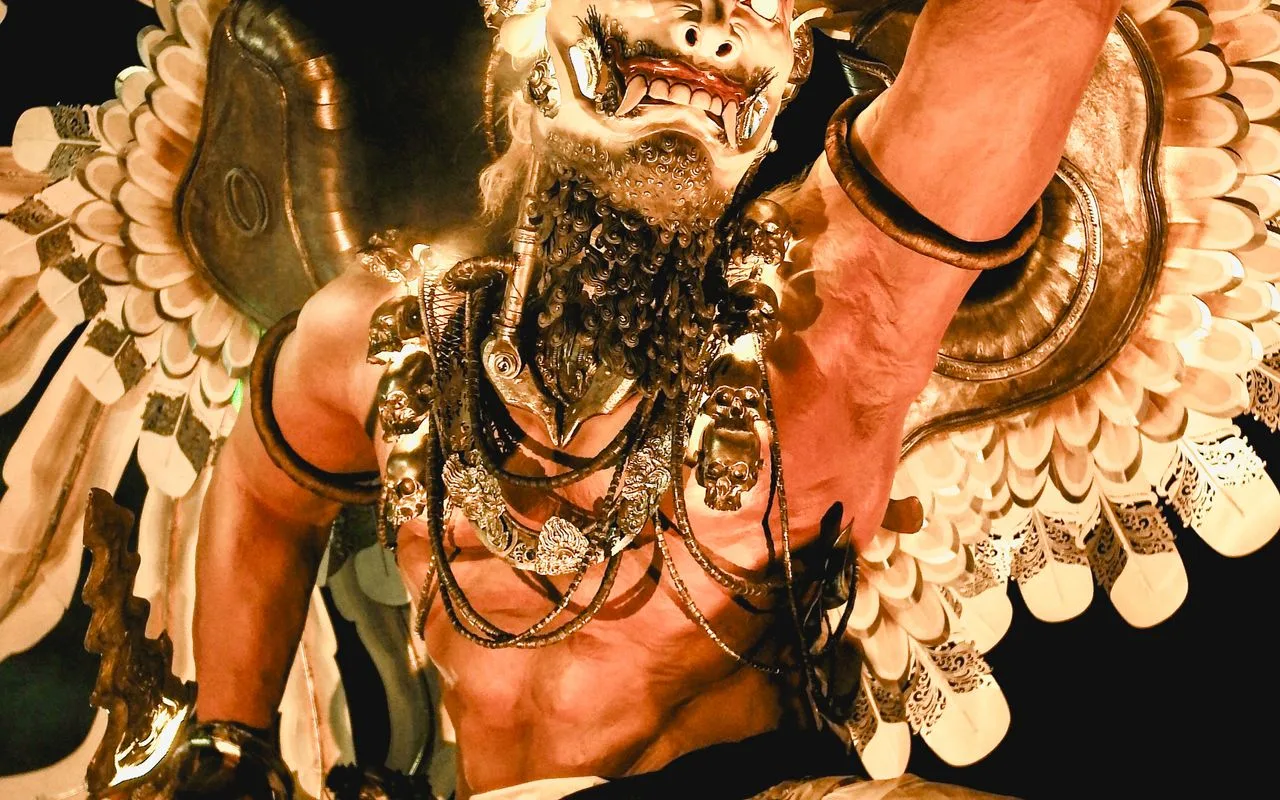
On the eve of Nyepi, every neighbourhood (banjar) parades a towering ogoh-ogoh — a monstrous papier-mâché and bamboo effigy representing the Bhuta Kala, the demonic and negative elements of the world. Built over weeks by local youth groups, these figures can stand four metres tall: fanged demons, witches, and mythological beasts, often startlingly detailed. After dark they are hoisted onto bamboo platforms and carried through the streets to the beat of gamelan, spun at crossroads to confuse the spirits, and in many places finally burned, symbolically purifying the village for the new year.
It is loud, joyful, and genuinely thrilling — the polar opposite of the silence that follows hours later. Nusa Dua and the surrounding Benoa villages put on excellent ogoh-ogoh processions, and our concierge can suggest the best nearby spot and timing on the night. If you want to understand the artistry and beliefs woven through it, our guide to Balinese cultural etiquette and our overview of the island’s temples and ceremonies give helpful context.
The 24 hours of silence: what really happens
From 6am on Nyepi day until 6am the next morning, Bali shuts down. Here is what that means in practice, and it is stricter than first-time visitors expect:
- No one goes outside. Streets are empty and patrolled by traditional security officers called pecalang, who will turn back anyone wandering out. This applies to tourists too — you stay within your accommodation’s grounds.
- No lights visible from outside. After dark, curtains are drawn and lights kept low so nothing shows beyond the walls. Inside the villa you can keep a soft, considerate level of lighting.
- The airport is closed. No flights land or depart for the full 24 hours — the only day of the year this happens anywhere in the world for a religious holiday. Plan arrivals and departures accordingly.
- Shops, restaurants and attractions are closed. Nothing operates outside hotel and villa grounds.
- Internet is often limited. Mobile data is usually switched off island-wide; villa Wi-Fi sometimes continues but can be intermittent.
- Keep noise down. Loud music or shouting is discouraged out of respect.
How our guests actually spend the day
Nyepi at a private villa is, quite simply, a treat. With four suites, a private pool and a walled garden, the day at Villa Soleil becomes a true retreat. Guests swim, read, nap by the pool, and have the long, unhurried meals that ordinary holiday schedules never allow. Families play cards and board games; couples treat it as an enforced digital detox. Many tell us afterward it was their favourite day of the trip.
We stock the villa before the shutdown so you want for nothing, and our chef-prepared meals (arranged in advance) mean you eat beautifully without anyone needing to leave. At night, with the lights low and the island unusually dark, the stargazing can be extraordinary — on a clear night the Milky Way is often visible from the pool deck, a view the island’s usual glow rarely allows. If you are travelling with little ones, our Bali with kids guide has ideas for keeping a quiet day playful.
Planning your trip around Nyepi: timing and dates
Because Nyepi follows the Saka lunar calendar, the date shifts each year. If your travel dates are flexible and you want to either experience it or avoid it, here are the dates to know:
| Year | Nyepi date | Ogoh-ogoh night (eve) | What it means for travel |
|---|---|---|---|
| 2026 | Thu, 19 March | Wed, 18 March | Airport closed 19 Mar 06:00–20 Mar 06:00 |
| 2027 | Mon, 8 March | Sun, 7 March | Airport closed 8–9 March |
| 2028 | Sun, 26 March | Sat, 25 March | Airport closed 26–27 March |
Our practical advice: do not schedule a flight to arrive or depart on Nyepi itself or in the early hours after — the airport reopens at 6am, but the first flights are busy and the roads are only just restarting. Arriving two or three days before lets you catch Melasti and the ogoh-ogoh, then settle in for the silence. For broader trip pacing, our 5-day Bali itinerary and notes on the best time to visit Bali are useful companions.
Respectful behaviour: the short version
Observing Nyepi as a guest is simple if you remember it is a sacred day, not a novelty. Stay inside the villa grounds for the full 24 hours. Keep lights dim and curtains closed after dark. Keep voices and music low. Do not fly a drone or wander the beach. If a pecalang asks something of you, comply graciously. These small courtesies matter enormously to your Balinese hosts, and they cost you nothing but a single quiet, restorative day.
What we arrange at Villa Soleil
Ahead of Nyepi we stock the villa for the full 24 hours, arrange a private chef for the day, and time your airport transfers to sit safely outside the closure window — see our getting to Villa Soleil page and transport guide. If your dates touch Nyepi 2026, message the Villa Soleil team on WhatsApp to set it up.
Related reading
- Balinese cultural etiquette: do's and don'ts
- Bali temple guide: ceremonies and respect
- Best time to visit Bali
- A 5-day Bali itinerary from Nusa Dua
Written by the team at Villa Soleil. Message us to plan your stay in Nusa Dua.