Jatiluwih Rice Terraces: A Guide to Bali’s UNESCO Highlands
By Villa Soleil · Published August 2026 · 7 min read
- Why Jatiluwih is different from Tegallalang
- The subak system: why this landscape is UNESCO-listed
- Getting to Jatiluwih from Nusa Dua
- Walking trails and what to expect on the ground
- When to visit: seasons and the rice cycle
- Combining Jatiluwih with nearby west-Bali sights
- Practical tips before you go
- What we arrange at Villa Soleil
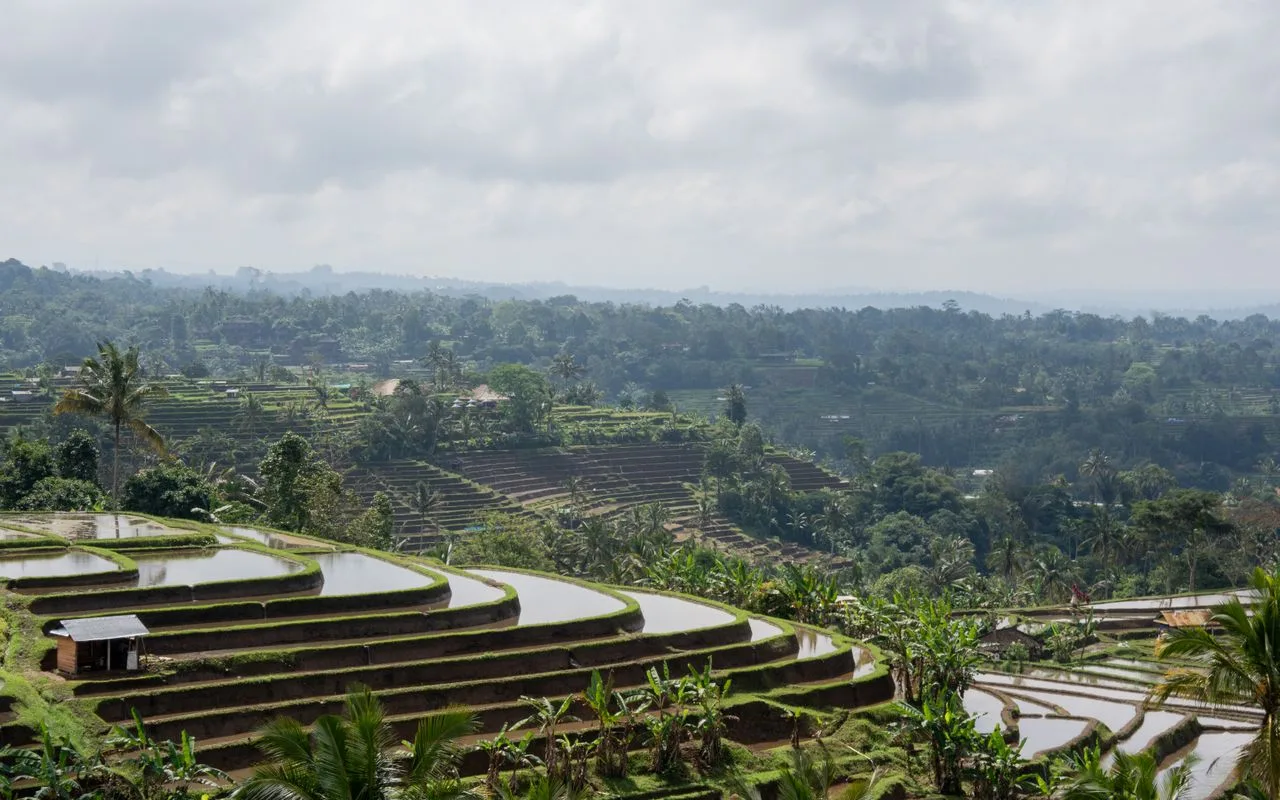
Jatiluwih spreads across roughly 600 hectares of working paddy at about 700 metres on the southern flank of Mount Batukaru, layered ridge after ridge toward the volcano. It sits in the Penebel district of Tabanan regency and is protected as a UNESCO World Heritage site within the Cultural Landscape of Bali Province. When guests at Villa Soleil ask where to see Bali’s rice terraces without the crowds and the selfie swings, this is almost always where we point them. From our villa in Nusa Dua it is a scenic drive of about two to two and a half hours—far enough to feel like a proper day trip, close enough to be back for a swim in the private pool by mid-afternoon.
Why Jatiluwih is different from Tegallalang
The terraces most visitors photograph are at Tegallalang, just north of Ubud. They are lovely, but they are also small, steep-sided and very popular. By mid-morning the single road above them is lined with cars, the viewpoints are shoulder-to-shoulder, and the “Bali Swing” operators add a theme-park edge. Jatiluwih is the opposite kind of place: enormous, gently contoured, and still farmed by families who depend on the harvest. You can walk for an hour and pass only a handful of other people. The elevation keeps the air cool and clear, and the scale is what stays with you—an unbroken green valley rather than a single photogenic slope.
- Size: Tegallalang is a compact ravine; Jatiluwih spreads over hundreds of hectares with multiple marked trails.
- Crowds: Tegallalang can feel like a queue; Jatiluwih stays peaceful, especially before 10am.
- Setting: Tegallalang sits in lowland Ubud heat; Jatiluwih is breezy west-Bali highland under Mount Batukaru.
- Atmosphere: Tegallalang has swings and cafes built for photos; Jatiluwih is a living agricultural landscape with quiet warungs.
The subak system: why this landscape is UNESCO-listed
Jatiluwih is not protected just because it is pretty. It is one of the clearest surviving examples of the subak, the thousand-year-old Balinese cooperative system for sharing irrigation water. Subak is democratic and spiritual at once: farmers organise themselves into associations, decide together how water is released from springs and rivers high on Batukaru, and tie the whole cycle to the Hindu philosophy of Tri Hita Karana, the harmony between people, nature and the divine. Small water temples and shrines dot the fields, and planting calendars are still set by tradition rather than the clock. UNESCO inscribed the subak landscape in 2012 precisely because this combination of engineering, ecology and faith is so rare. Walking the dykes here, you are not just looking at a view; you are inside a working system that has fed this valley for centuries. If you enjoy that cultural layer, our notes on Balinese cultural etiquette will help you visit respectfully.
Getting to Jatiluwih from Nusa Dua
Part of what keeps Jatiluwih quiet is how far out it sits. There is no efficient public transport, and the final mountain road is narrow and winding, so for a trip this long we recommend a private driver over a self-driven scooter. From Villa Soleil the route runs up through Tabanan town, then climbs into the Penebel highlands. Allow for the drive itself plus stops and you have a comfortable full-day outing, or a focused half-day if you leave early.
| Leg | Approx. distance | Approx. time | Notes |
|---|---|---|---|
| Villa Soleil → Tabanan town | ~55 km | 1.5 hrs | Bypass then inland; busiest section |
| Tabanan → Penebel | ~15 km | 30 min | Road narrows, scenery improves |
| Penebel → Jatiluwih gate | ~10 km | 25–30 min | Steep, winding mountain road |
| Total one way | ~80 km | 2–2.5 hrs | Leave by 7am to beat heat & tour buses |
Many guests pair Jatiluwih with other west-Bali sights to make the long drive worthwhile—more on that below. For general guidance on hiring cars and drivers, see our Bali transportation guide.
Walking trails and what to expect on the ground
Jatiluwih is best experienced on foot. After paying at the main gate you can choose from several colour-coded loop trails, ranging from a gentle 30–45 minute stroll to longer routes of two hours or more that drop deep into the valley and back. The shorter loops are mostly flat along the paddy dykes and suit almost everyone, including older travellers and families with school-age children. The longer trails involve some uneven ground, a few stream crossings and a steady climb on the return, so wear proper shoes.
- Best time of day: arrive between 8am and 9am for soft light, cool air and the fewest people.
- What to wear: light layers, a hat, sunscreen and trainers; mornings can be misty, midday strong.
- What to bring: water, a little cash for the warungs, and a phone or camera; signal is patchy.
- Accessibility: the road-side viewpoints and shortest loop are manageable without much walking.
Scattered through the fields are simple warungs and a few cafes serving Balinese coffee, fresh coconut and local dishes, some grown with the area’s heirloom red rice. Sitting with a coffee while the valley fills with morning light is, for many of our guests, the highlight of the whole day.
When to visit: seasons and the rice cycle
Jatiluwih looks different through the year because it is a real farm, not a film set. The terraces are most vivid green roughly six to eight weeks after planting; just before harvest they turn gold; and immediately after harvest some plots are bare brown mud and water. There is no single “wrong” time, since each stage has its own beauty, but if you want the postcard emerald you can ask our team to check the local cycle before you go.
- Dry season (April–October): clearer skies, firmer trails, best Batukaru views; the most reliable window.
- Wet season (November–March): lush and dramatic, but afternoon rain and slippery paths—go early.
- Green peak: varies by plot; a few weeks after each planting, often vivid around mid-year.
- Golden harvest: short windows; ask before travelling if this is your priority.
For the bigger picture on weather and shoulder seasons across the island, our best time to visit Bali guide is a useful companion to this one.
Combining Jatiluwih with nearby west-Bali sights
Because Jatiluwih is a two-hour-plus drive, it rewards a little planning. The classic pairing is with Tanah Lot, the sea temple on the way back toward the coast: a morning in the highlands followed by an afternoon coffee and a sunset over the water makes a beautifully balanced day. Other options for a longer itinerary include the serene Batukaru temple in the rainforest above the terraces, or the Ulun Danu Beratan lake temple further north near Bedugul. Some guests who love this slow, agricultural side of Bali also enjoy Kintamani’s coffee country on a separate day, or the eastern hills of Sidemen, which share Jatiluwih’s unhurried, terrace-lined character. The Villa Soleil team can help you sequence these so you are never doubling back or rushing.
Practical tips before you go
- Entrance fee: around IDR 50,000 per adult, sometimes a small extra for parking; bring cash.
- Timing: leave Nusa Dua by 7am to arrive before the heat and the first tour buses.
- Facilities: there are toilets, parking and warungs at the main entrance; fewer once you are on the trails.
- Respect the farmers: stay on marked paths, don’t walk through unharvested plots, and ask before photographing people working.
- Weather: highland mornings can be cool and misty—bring a light layer even in dry season.
- Money: small warungs are cash-only; see our Bali money & ATM notes before you set off.
What we arrange at Villa Soleil
We book the Jatiluwih day often: a trusted English-speaking driver who knows the mountain road, a departure time matched to the season and the current state of the rice, and a sensible loop ending with Tanah Lot at sunset. Message the Villa Soleil team on WhatsApp to set it up.
Related reading
Written by the team at Villa Soleil. Message us to plan your stay in Nusa Dua.