Bali Traditional Healing in 2026: How to Experience It Well from Nusa Dua
By Villa Soleil · Published September 2026 · 7 min read
Quick answer: Balinese traditional healing covers melukat (holy-water purification), visits to a balian (traditional healer), and herbal practices like Boreh and jamu. The most authentic experiences sit near Ubud and the east — 1.5 to 3 hours from Villa Soleil in Nusa Dua — so plan an early start, go with respect, and let our host arrange a driver and an introduction.
- What “traditional healing” really means in Bali
- The balian: meeting a traditional healer
- Melukat: holy-water purification
- Herbal medicine: jamu, Boreh and the kitchen pharmacy
- Honest travel times from Nusa Dua
- The luxury alternative: healing without the road trip
- How to be a good guest at a healing experience
- Planning it from Villa Soleil
Bali’s wellness story usually starts at the spa menu, but its oldest chapter is written on lontar palm leaves: Usada, the Balinese medical knowledge passed down for generations, kept alive by villagers who still treat health as a balance between body, community and the unseen. For a guest based in the calm of Nusa Dua, this world is reachable — but it sits an hour or more north, and it is not a theme park. This guide explains what Balinese traditional healing actually is, where to find it honestly, and how to approach it from your base at Villa Soleil without turning sacred practice into a photo op.
What “traditional healing” really means in Bali
Balinese healing is holistic in the original sense: it assumes that illness can come from physical causes, but also from emotional imbalance, broken relationships, or disturbances in one’s spiritual life. The framework is Tri Hita Karana — harmony between people, nature and the divine. A headache might be treated with herbs; a run of bad luck or grief might be addressed through ritual purification. None of this replaces a hospital, and reputable practitioners will say so. Think of it as a parallel layer of care, woven into culture rather than sold as a cure.
The main pillars you’ll encounter are the balian (traditional healer), melukat (water purification), and herbal medicine in forms like jamu tonics and Boreh body paste. Each has a place, and each rewards a respectful, unhurried visitor far more than a rushed one.
The balian: meeting a traditional healer
A balian is a community healer, and there are several kinds. A balian usada works from the lontar texts and herbal knowledge; a balian tetakson works through trance and spiritual guidance; a balian tulang sets bones and treats physical injury. Visits are quiet, often at the healer’s family compound, and they revolve around a conversation, a diagnosis, and sometimes a small ritual or herbal prescription.
A few honest notes. Genuine balian are not tourist attractions; several well-known names became overwhelmed after appearing in films and books, and some now decline foreign visitors or charge accordingly. Going through a trusted local intermediary matters enormously — it’s the difference between a meaningful audience and a staged performance. Our host can ask around discreetly; please don’t expect a celebrity healer on demand. Bring an open mind, dress modestly, and offer a respectful donation rather than haggling.
Melukat: holy-water purification
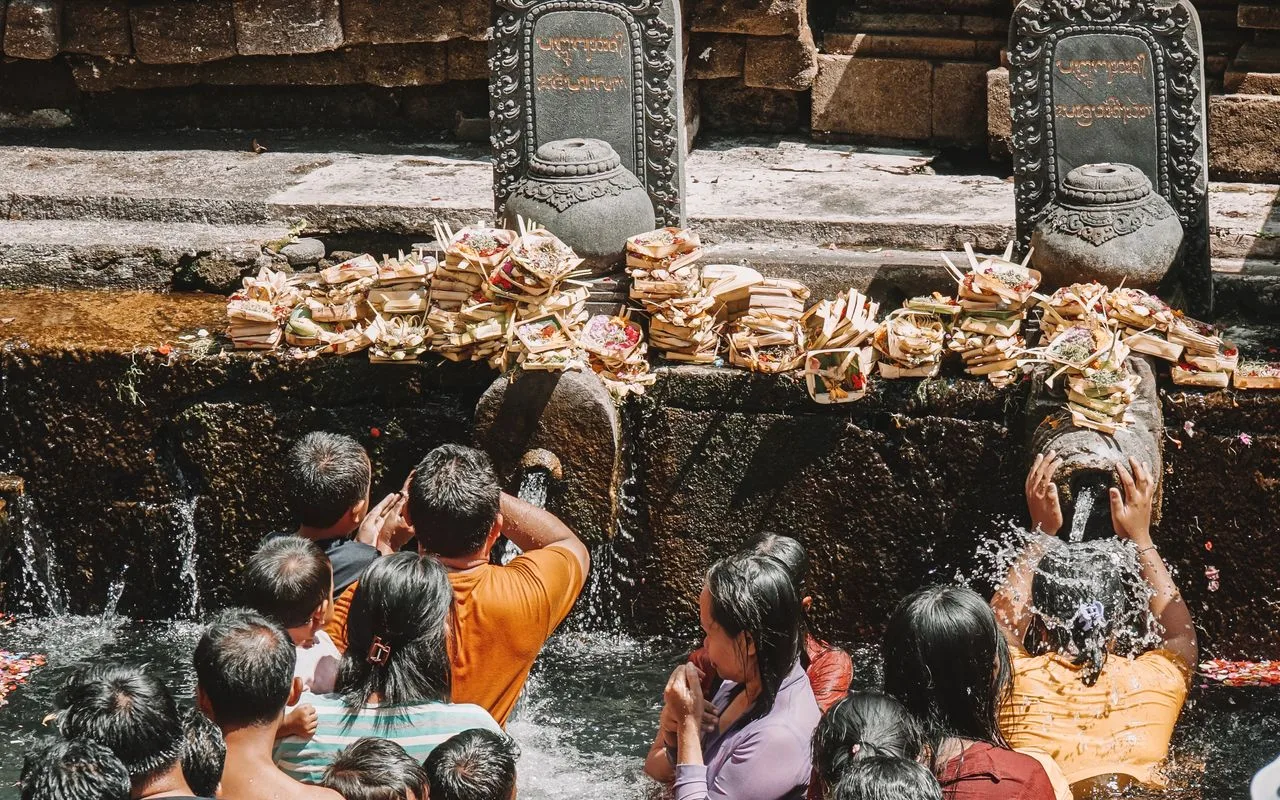
Melukat is the practice most accessible to visitors and, for many, the most moving. You enter a spring or temple water source, often in a sarong, and let consecrated water flow over you spout by spout while a pemangku (temple priest) or guide leads the sequence. It is part cleansing, part meditation, part letting-go. The most visited site is Tirta Empul near Tampaksiring, roughly 1.5–2 hours north of Nusa Dua; quieter alternatives include spring temples around Ubud and the east where the crowds thin out.
Practicalities: bring a change of clothes, a sarong and sash (often rented or provided), and a small offering. Women who are menstruating traditionally do not enter temple water, and everyone should follow the priest’s order of fountains rather than wandering. If you want context before you go, our Bali temple guide and notes on cultural etiquette are worth a read — melukat is a religious act, not a spa treatment.
Herbal medicine: jamu, Boreh and the kitchen pharmacy
Long before wellness was a marketing word, Balinese households brewed jamu — herbal tonics built on turmeric, ginger, tamarind, galangal and honey. Kunyit asam (turmeric-tamarind) and jamu beras kencur are the everyday classics, sold by morning vendors and now poured at smart cafes too. Boreh is a warming paste of ground spices and roots applied to the body, traditionally used by farmers against cold and aching muscles, and adapted into many spa treatments.
- Kunyit asam — turmeric and tamarind, bright and tangy, the most popular daily tonic.
- Beras kencur — rice and aromatic ginger, mild and slightly sweet, often for energy.
- Boreh — a heating body paste of clove, ginger, nutmeg and rice powder, deeply warming.
- Loloh cemcem — a green herbal drink from the Penglipuran area in Bangli, refreshing and a little sour.
You can taste much of this without leaving the south. Ask our host about a private chef session at the villa that includes a jamu-making demonstration, or pair it with a proper cooking class and a private chef dinner so the healing tradition arrives at your table rather than the other way around.
Honest travel times from Nusa Dua
This is where many guides quietly mislead. Nusa Dua sits at the far south of Bali, and the great healing sites lie in the centre and east, none of them a five-minute hop. Plan a full day, leave early to beat both traffic and tour buses, and consider an overnight near Ubud or Sidemen if you want to combine several. Agree the fare with your driver before you set off.
| Experience & place | Drive from Nusa Dua | Best paired with |
|---|---|---|
| Tirta Empul melukat (Tampaksiring) | ~1.5–2 hr north | Ubud, Tegallalang |
| Spring temples & balian near Ubud | ~1.5–2 hr north | Campuhan Ridge, markets |
| Besakih & eastern water temples (Karangasem) | ~2–2.5 hr NE | Sidemen overnight |
| Tirta Gangga water palace (east) | ~2.5–3 hr east | Amed, Lempuyang |
| Loloh & village herbalism (Penglipuran, Bangli) | ~2–2.5 hr | Kintamani, Mt Batur |
| Villa-based jamu & spa (Nusa Dua) | 0 — at the villa | Private chef, pool day |
A realistic full-day driver from Nusa Dua to the Ubud area generally runs around IDR 700,000–1,200,000 depending on hours and route. Temple entrance and sarong rental are usually modest, and a respectful donation for melukat or a balian is expected on top.
The luxury alternative: healing without the road trip
If hours in a car each way is not how you want to spend a holiday, you have a genuinely good option: bring elements of the tradition to you. Many south-Bali wellness practitioners and therapists travel to private villas, so a Boreh body treatment, a flower-bath ritual, or a guided breathwork-and-jamu morning can happen on your own terrace. It won’t carry the temple’s spiritual weight — be honest with yourself about that — but as a restorative, sensory introduction it is lovely, and it suits guests travelling with children or anyone who simply wants to stay near Nusa Dua. For a deeper movement-and-meditation focus, see our yoga and wellness guide, and for in-villa pampering, the spa and massage options.
How to be a good guest at a healing experience
Respect is the whole point, and it’s simple to get right. Cover shoulders and knees; wear a sarong at any temple. Ask before photographing people, springs or rituals, and accept “no” gracefully. Don’t step over offerings on the ground. Keep your voice low. Never treat a balian session as entertainment, and don’t film a private consultation. If you are unwell, see a doctor too — traditional and modern care are not rivals.
- Go early — both spiritually calmer and far less crowded.
- Bring small cash for offerings, donations and sarong rental.
- Let a trusted local make the introduction to any healer.
- Dress modestly and follow the priest’s lead at all times.
- Keep medical conditions in the hands of qualified doctors as well.
Planning it from Villa Soleil
Ten minutes from Geger Beach, the villa makes an easy base for a single, well-planned healing day. The team can line up a reliable driver and realistic timing, or set up an in-villa treatment instead. Message the Villa Soleil team on WhatsApp to set it up.
Related reading
- Bali Yoga & Wellness Retreats
- Bali Spa & Massage Guide
- Bali Temple Guide & Etiquette
- Ubud Day Trip from Nusa Dua
Written by the team at Villa Soleil. Message us to plan your stay in Nusa Dua.