Bali Surfing for Beginners: Easy Breaks Reachable from Nusa Dua
By Villa Soleil · Published June 2026 · 9 min read
- An honest word first: Nusa Dua is not where you learn to surf
- Why sand beats reef for your first wave
- The best beginner breaks reachable from Nusa Dua
- Surf schools & what a lesson actually costs
- When to go: tides, seasons and time of day
- Safety & etiquette: the unwritten rules of the line-up
- What to bring — and what to leave at the villa
- What we arrange at Villa Soleil
An honest word first: Nusa Dua is not where you learn to surf
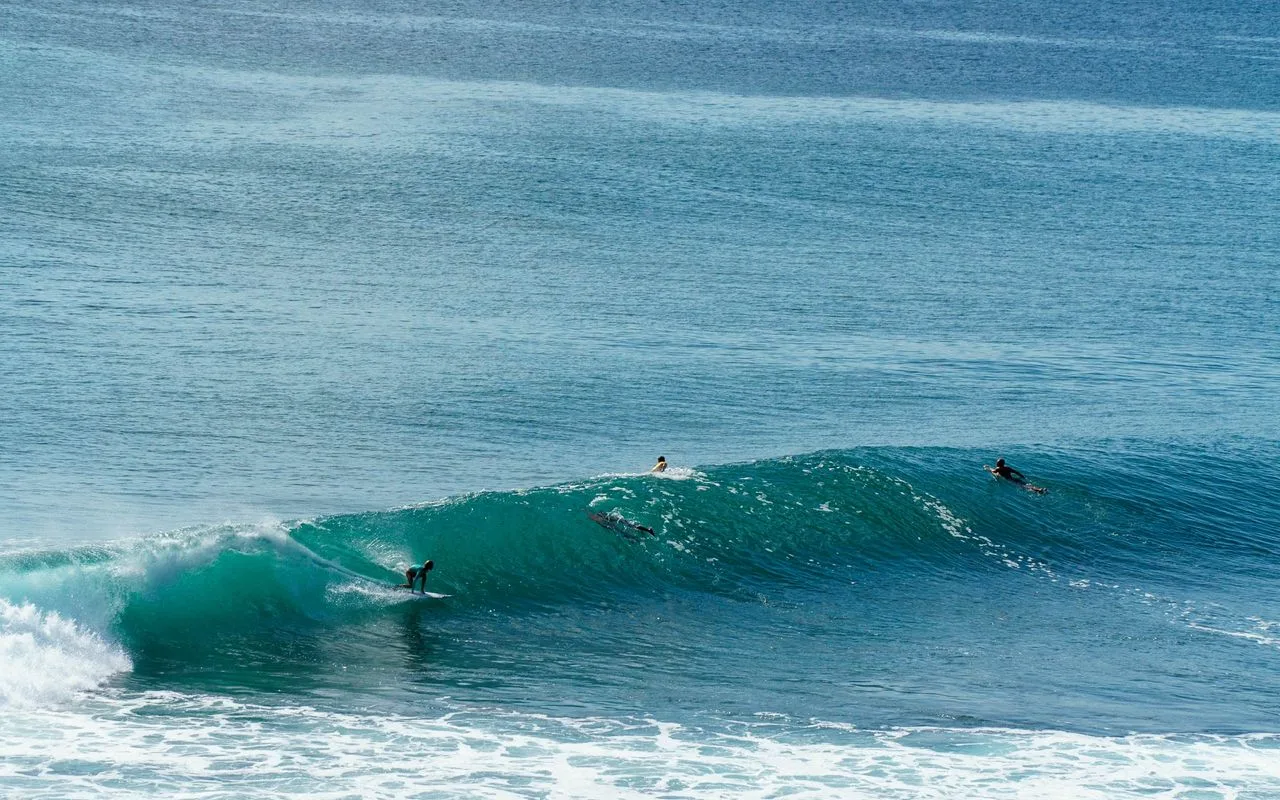
Let us be straight with you, because we’d rather you trust the rest of this guide. Nusa Dua — where Villa Soleil sits, a short stroll from Geger Beach — is a beautiful place to swim, paddle a clear lagoon and watch the reef at low tide. It is not a beginner’s surf beach. The waves here break over shallow coral, and the famous breaks on this side of the Bukit peninsula (Nusa Dua reef, Sri Lanka, Black Stone) are fast, hollow reef waves for confident surfers only. Beautiful to watch from the headland; no place to take your first lesson.
The good news is that Bali’s very best learner waves are an easy drive away, on soft sandy beaches where a wipeout means a mouthful of saltwater and a laugh, not a scrape on coral. From our villa in Benoa you reach the classic beginner beaches of Kuta and Legian in roughly 40–55 minutes, and the longboard-friendly sand of Batu Bolong in Canggu in about 60–75 minutes depending on traffic. Our concierge arranges the driver and the lesson; you bring the willingness to fall off a few times.
Why sand beats reef for your first wave
The single most important choice a beginner makes is where to paddle out. Beginners belong on a beach break — waves that break over a sandy bottom — on a big, soft, foam “soft-top” board. Sand is forgiving. Reef is not. Almost every surf-injury story you’ll hear in Bali involves someone out of their depth on a reef break. Stay on the sand until you can confidently paddle, pop up, trim along a wave and read where other surfers are. That usually takes a few sessions, sometimes a full week.
- Soft-top board — an 8–9 ft foam longboard floats well, catches whitewater easily and won’t hurt you (or others) on contact.
- Whitewater first — you start in the broken, foamy water close to shore, not out the back. That foam pushes you, so you can practise standing without having to paddle into a steep face.
- An instructor in the water with you — a good teacher pushes you into the right waves, shouts “stand!” at the right moment and keeps you clear of other people.
The best beginner breaks reachable from Nusa Dua
Here is where our guests actually go to learn, ranked roughly from easiest-to-reach to most worth-the-drive. All of these are genuine sand-bottom beach breaks (with one reef spot included only for watching, not surfing).
Kuta & Legian Beach — the classic learner strip
This long, gently sloping sandy beach is where most people in Bali catch their first wave, and for good reason. The waves are mostly soft and rolling, the bottom is sand, schools line the sand with racks of soft-tops, and the whitewater zone is wide and friendly. Roughly 40–55 minutes from the villa. It does get crowded, so an early-morning lesson (start around 7–8 am) is calmer, cooler and far safer.
Batu Bolong, Canggu — mellow longboard sand
If you’d enjoy the trip out and a more stylish, laid-back scene, Batu Bolong in Canggu is a gorgeous longboarding beach with a forgiving sandy peak. It can get busy with longboarders, so listen closely to your instructor about staying out of others’ way. About 60–75 minutes from Nusa Dua — pair it with a cafe lunch and make a half-day of it.
Padang Padang — for watching, not surfing
You may have heard of Padang Padang (“the Balinese Pipeline”). Be honest with yourself: it is an expert-only reef barrel and absolutely not a learner wave. But it’s a glorious place to watch real surfing from the sand, especially mid-year when the swell is firing, and it’s close to other Bukit sights. Treat it as a spectator stop near Uluwatu temple, not a place to paddle out.
Surf schools & what a lesson actually costs
A standard beginner package is a two-hour group or private lesson including the board, a rash vest and an instructor in the water. Group lessons are cheaper and perfectly good; private lessons get you more individual pushes into waves and faster progress. Prices below are realistic 2026 ranges paid on the beach; pre-booked packages through a hotel or concierge may run a little higher for the convenience of a guaranteed slot and transfer.
| Option | Typical price (IDR) | Duration | Good for |
|---|---|---|---|
| Group lesson (shared instructor) | 250,000–450,000 | ~2 hours | First-timers, social, budget |
| Private lesson (1-on-1) | 450,000–800,000 | ~2 hours | Fast progress, nervous swimmers |
| Multi-day course (3–5 sessions) | 1,500,000–3,500,000 | Several days | Going from zero to standing solo |
| Soft-top board rental only | 50,000–100,000 | Per hour / day | Once you can paddle out alone |
For board rental once you’re confident, expect roughly IDR 50,000–100,000 per hour for a soft-top, or a day rate that works out cheaper. Always rent a soft-top, not a hard fibreglass board, until you genuinely know what you’re doing — a hard board in beach-break chaos is how beginners get hurt. If you want to budget the whole trip, our broader Bali trip cost guide puts surf lessons in context alongside food, drivers and activities.
When to go: tides, seasons and time of day
Bali has two broad seasons and they matter for surf. The dry season (roughly May to September) brings consistent swell and offshore winds — the surfers’ high season — but the Bukit reefs near us get powerful then. The wet season (roughly October to April) is generally smaller and friendlier on the beach breaks of Kuta and the west coast, which can actually suit total beginners. In truth, the learner beaches work year-round; what matters more for you is the time of day and the tide.
- Go early. The wind is usually lightest and the water glassiest just after dawn until mid-morning. By afternoon it’s windier, choppier and far more crowded.
- Ask about the tide. Beach breaks behave very differently at high and low tide; a good school books your slot for the friendliest window, so trust their timing.
- Avoid post-rain river mouths. After heavy rain, water quality near drains and river mouths drops — another reason to lean on a local instructor who knows where to paddle out.
For the bigger picture on seasons, crowds and weather across the island, our best time to visit Bali guide pairs neatly with planning a surf-focused trip.
Safety & etiquette: the unwritten rules of the line-up
Surfing has a clear code, and beginners who respect it are welcomed; those who don’t cause accidents. None of this is hard — it’s mostly courtesy and self-preservation.
- Never let go of your board. A loose board is a missile for the person behind you. Hold it or push it under a wave; don’t bail and dive away from it in a crowd.
- Don’t drop in. The surfer closest to the breaking part of the wave (the peak) has priority. Don’t take off on a wave someone is already riding.
- Stay in the beginner zone. Keep to the whitewater and the marked or obvious learner area; don’t paddle into the pack of experienced surfers.
- Watch for rip currents. If you’re being pulled out, don’t fight straight back in — paddle parallel to the beach until you’re out of the current, then come in. Always surf where lifeguards and other people are.
- Respect the reef and the culture. Don’t stand on living coral, and remember many breaks sit near temples. A little cultural awareness goes a long way; see our Bali cultural etiquette guide.
What to bring — and what to leave at the villa
Schools provide the board and usually a rash vest, so you can travel light. Pack and wear:
- Reef-safe, water-resistant sunscreen (high SPF) — you burn fast on the water, even on cloudy days. Apply before you leave Villa Soleil.
- A rash guard / long-sleeve swim top if you have sensitive skin or want extra sun protection.
- Swimwear that stays on — tie bikinis tightly; board shorts beat loose trunks.
- A leash and rash vest if you own them; otherwise the school supplies these.
- Drinking water, a hat and sunglasses for before and after; the sun is fierce.
- Flip-flops and a dry change of clothes for the drive home — you’ll be sandy and salty.
Leave valuables, jewellery and anything you can’t replace at the villa. Beaches are generally safe but an unattended bag on the sand is an unnecessary risk. Our team is happy to mind anything you’d rather not bring. For a fuller list of what to pack for the whole island, see our Bali packing list.
What we arrange at Villa Soleil
Because the learner beaches are a drive from Nusa Dua, the logistics are exactly the kind of thing we love to handle so your morning is effortless. When you stay at Villa Soleil, our concierge can:
- Match you with a reputable, English-speaking surf school at Kuta, Legian or Batu Bolong and pre-book your lesson for the best tide and an early, uncrowded slot.
- Arrange a private driver to take you from the villa to the beach and back, wait or return at a set time, and keep your dry clothes in the car.
- Plan a half-day around it — a surf in the morning, lunch at a beachside cafe, and back to the private pool to rinse off in the afternoon.
- Recommend whether group or private lessons suit your group, and sort lessons for children if you’re travelling as a family.
- Combine your surf morning with other Bukit highlights nearby, so you make the most of the drive out.
Tell us how confident a swimmer you are and what you’re hoping for, and we’ll tailor the day. Message the Villa Soleil team any time on WhatsApp — our host usually replies within the hour, and booking your stay direct with us is cheaper than through the platforms. We’ll have the driver and the lesson ready so all you have to do is paddle out and stand up.
Related reading
Written by the team at Villa Soleil. Message us to plan your stay in Nusa Dua.