Bali Morning Market Tour: Jimbaran Fish Market, Pasar Badung & the Local Pasar
By Villa Soleil · Published October 2026 · 8 min read
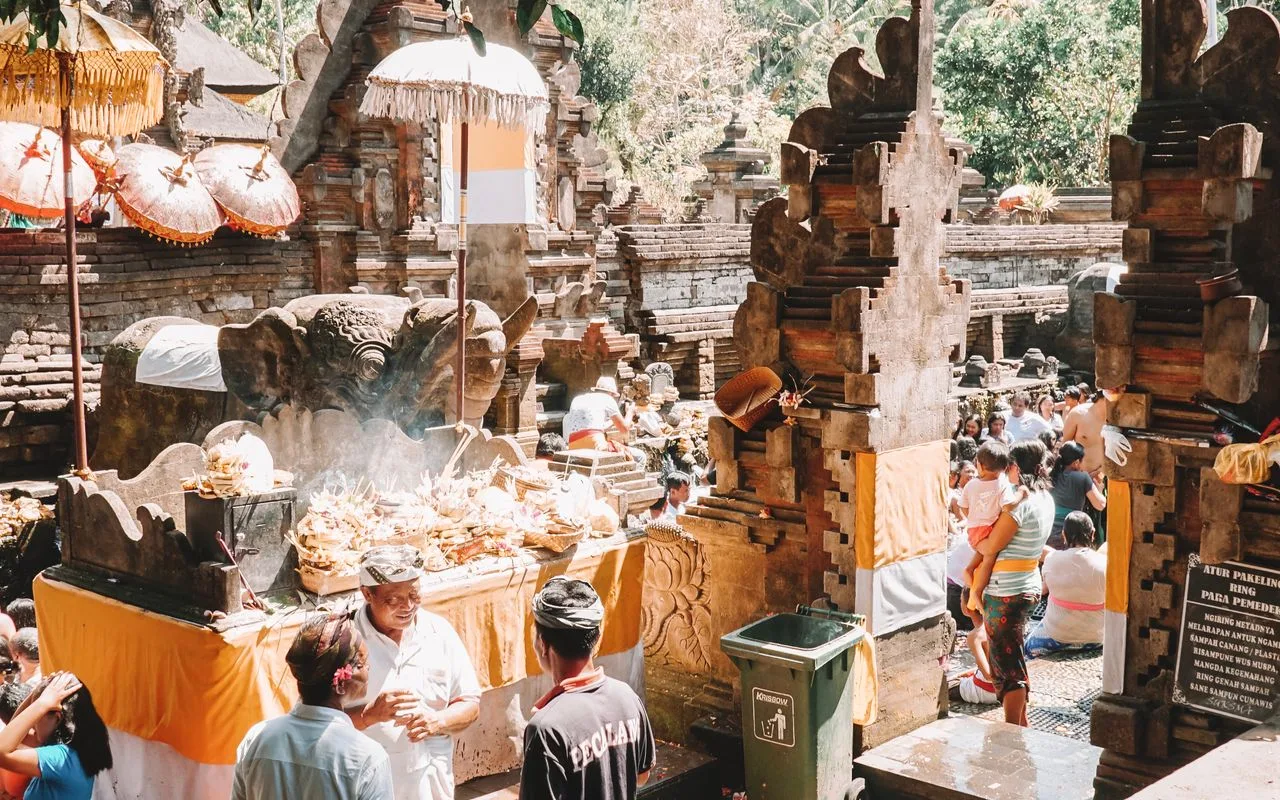
Quick answer: Leave Villa Soleil by 5:30am for Kedonganan fish market in Jimbaran (25–35 min), be on the sand by 6am, then continue to Pasar Badung in Denpasar or drop into the small village pasar near Benoa on the way home. Dress modestly, carry small IDR notes, ask before photographing people, and let your driver or chef handle the bargaining. The best version of the morning ends with a cooking class or a private chef turning your purchases into lunch back at the villa.
Most guests at Villa Soleil discover Bali’s food from the comfortable end: a seafood grill on Jimbaran sand, a warung the driver swears by, a chef at the villa. A morning market tour flips that around. You see where the fish on last night’s plate actually came from, who carries it up the beach, and what a kilo of it really costs before anyone adds a sunset and a tablecloth. It is not a polished experience. It is wet, loud, slightly chaotic and finished by the time most hotel breakfasts begin — which is exactly why it is one of the more honest things you can do with a Bali morning.
Why go before 7am
Bali’s traditional markets run on the sun and the tide, not on tourist hours. At Kedonganan, the fish market at the northern end of Jimbaran Bay, the outrigger jukung and larger boats land their catch in the dark, and the serious trading — restaurant buyers, warung owners, the women who resell in village markets — happens from roughly 5am. By 7am the best fish has gone, the ice is melting and the smell tells you so. Pasar Badung in Denpasar is even earlier: the wholesale produce floor is busiest well before dawn, then the retail stalls take over through the morning.
There is a comfort argument too. South Bali roads are nearly empty at 5:30am. The Nusa Dua to Jimbaran drive that takes 40 minutes at 9am is closer to 25 at that hour, and the temperature is still under 26°C. You will be back at the villa, showered and eating what you bought, around the time other people are queuing for a buffet.
Kedonganan fish market, Jimbaran
This is the anchor of any south Bali market morning and the closest to Villa Soleil, roughly 25–35 minutes by car via the airport road. The market itself is a long, open-sided hall right on the sand, with the boats pulled up behind it. Inside you will find whatever came in overnight: yellowfin and skipjack tuna, mahi-mahi, red and white snapper, barramundi, mackerel, squid, prawns and clams, plus lobster and crab when the season allows. Prices are per kilo, written nowhere and quoted on the spot; as a rough guide expect snapper and mahi-mahi roughly IDR 40,000–120,000 per kg, prawns IDR 70,000–200,000 depending on size, and lobster several times that. Rates move daily with the catch and the weather, so treat these as orientation and confirm on the day.
The trick most visitors miss is what happens next door. A row of simple warungs beside the market will grill, fry or steam whatever you have just bought for a small per-kilo fee, served with rice, plecing kangkung and sambal matah. That is the original, unbranded version of the Jimbaran seafood dinner, eaten at 7am with your feet in the sand and a glass of hot sweet tea. Confirm the grilling price before handing over the fish; it usually runs about IDR 20,000–35,000 per kg including sambal; rice, vegetables and drinks are charged separately, so agree the whole plate price first, a fraction of the fish cost, but agree it first.
A few minutes’ drive south along Jalan Uluwatu, in the centre of Jimbaran village, is Pasar Jimbaran, the village’s own produce and offering market, which is a good second stop if you do not want to drive on to Denpasar: chillies, shallots, galangal, turmeric, banana leaf, palm sugar and the woven canang sari baskets that will be placed on every doorstep within the hour.
Pasar Badung, Denpasar
If you want the full-scale version, continue north to Pasar Badung, the largest traditional market on the island, on the banks of the Tukad Badung (the Badung river) in central Denpasar. The original building burned down in 2016; the market now operates from a rebuilt multi-storey hall with the produce, spice, meat and fish trade on the lower floors and textiles, ceremonial goods and household items above. It trades more or less around the clock, but the atmosphere you want — porters running baskets up the ramps, spice sellers weighing out cloves and candlenut, the fruit aisles smelling of salak and durian — belongs to the early morning. Aim to arrive by 7–7:30am; from Kedonganan it is about 30–45 minutes, and from Nusa Dua directly 30–45 minutes before traffic builds.
Directly across the river is Pasar Kumbasari, the art and handicraft market, useful if anyone in your group wants sarongs, baskets or temple parasols without the boutique mark-up. Pair the two with a short walk through the old colonial streets and you have covered the best of a Denpasar morning before the heat arrives.
The small pasar near the villa
You do not have to leave the peninsula at all. Every Balinese village has its own morning pasar, and the one that serves Bualu and Benoa is a short drive from Villa Soleil. It is a fraction of the size of Badung, wraps up by mid-morning and sells exactly what the local households need that day: vegetables, tofu and tempeh, live chickens, fresh-pressed coconut milk, jaja (Balinese rice cakes), and the flowers and palm-leaf components for the daily offerings. Nobody is performing for visitors here, which makes it the gentlest introduction for families with young children or anyone who finds Kedonganan a bit much before coffee. Ask the Villa Soleil team the night before and they will point your driver to the right lane.
What to taste
The markets are also breakfast. Look for the carts and low stools at the edges rather than inside the wet sections:
- Bubur Bali — rice porridge with shredded chicken, urap greens, peanuts and sambal, IDR 10,000–20,000.
- Jaja pasar — a mixed plate of steamed rice-flour cakes, klepon and laklak with palm sugar and grated coconut, usually IDR 10,000–15,000.
- Tipat cantok — pressed rice cake with blanched vegetables in peanut sauce, IDR 10,000–20,000.
- Kopi Bali — thick, unfiltered and sweet, poured from a kettle into a glass, IDR 5,000–10,000.
- Fresh-cut fruit — salak, mangosteen, rambutan and pineapple in season, sold by the bag.
Stick to things that are cooked in front of you or peeled by you, use hand sanitiser after handling cash and fish, and read the food and water safety guide if anyone in your party has a sensitive stomach. Market food is generally safe when it is hot and busy; the risk is the plate that has been sitting.
Etiquette that actually matters
Markets are working places, not attractions, and a few habits make you welcome rather than tolerated. Dress modestly — shoulders and knees covered is the polite default, and closed shoes or sandals you do not mind getting wet are essential at Kedonganan. Ask before photographing people, especially close-ups; a smile and a raised camera with a questioning look usually gets a nod, and a purchase gets a better one. Do not touch fish or produce you are not buying, and never step over offerings placed on the ground. Carry small notes (IDR 2,000–20,000) because nobody wants to break a 100,000 note for an IDR 10,000 porridge. Bargaining is expected for larger purchases and non-food items, gentle and good-humoured, but haggling over a few thousand rupiah on a bowl of bubur is not the tone. If you are shopping to cook, the simplest move is to let your driver or chef do the buying; the price they get is the price locals pay, and you avoid the tourist premium without any awkwardness. For more on how this fits into daily Balinese life, the cultural etiquette guide covers offerings, temples and dress in detail.
Planning the morning from Nusa Dua
| Stop | Best time | Drive from Villa Soleil | Good for |
|---|---|---|---|
| Kedonganan fish market, Jimbaran | 5:30–7:00am | 25–35 min | Seafood, boats, grill-it-there breakfast |
| Pasar Jimbaran (Jimbaran village, 5 min from Kedonganan) | 6:00–8:00am | 25–35 min | Spices, produce, offerings |
| Pasar Badung, Denpasar | 6:00–8:30am | 30–45 min | Scale, spices, textiles, Kumbasari crafts |
| Village pasar, Bualu/Benoa | 6:00–9:00am | 5–10 min | Families, a quiet first look |
| Ubud market (for cooking-class days) | 7:00–9:00am | 1.5–2 h | Combined with an Ubud class |
A private driver for a half-day market run typically costs IDR 400,000–700,000 including fuel and waiting, more if you continue to Ubud; the villa can book someone who knows the markets rather than just the roads. Drive times are for the early-morning window; after 8am add 15–30 minutes to anything involving Denpasar or the airport road.
Pairing the market with a cooking class or private chef
A market visit is far better with a purpose, and there are two ways to give it one. The first is a cooking class that starts at the market: several schools in south Bali and around Ubud begin with a guided walk through the stalls, then cook a full Balinese menu — bumbu base paste, sate lilit, pepes ikan, lawar — back in their kitchen. Expect roughly IDR 450,000–900,000 per person depending on the school and whether transport is included, with morning sessions typically starting between 6am and 8:30am; confirm current prices and start times when you book.
The second, and the one that suits a whole-villa group of up to eight, is to shop with the villa’s private chef. You choose the fish at Kedonganan and the spices at Pasar Badung together, then come home to the pool while the chef turns it into a long lunch on the terrace. Chef fees vary with the menu and group size, usually in the region of IDR 500,000–1,500,000 plus the cost of ingredients; the Villa Soleil team can quote for your dates. Either way, you eat what you saw come off the boat, and that is the whole point.
Message the team on WhatsApp the evening before and they will fix the driver, the early-start coffee and, if you like, the chef. Book Villa Soleil direct for better rates than the booking sites, and let the fish market set your alarm at least once.
Related reading
- Bali Cooking Classes: From Market to Table
- Hiring a Private Chef at Your Bali Villa
- Jimbaran Bay Seafood Sunset Dinner
- Balinese Dishes You Should Try
Written by the team at Villa Soleil. Message us to plan your stay in Nusa Dua.