Devdan Show at Bali Nusa Dua Theatre: Schedule, Tickets & Is It Worth It?
By Villa Soleil · Published October 2026 · 8 min read
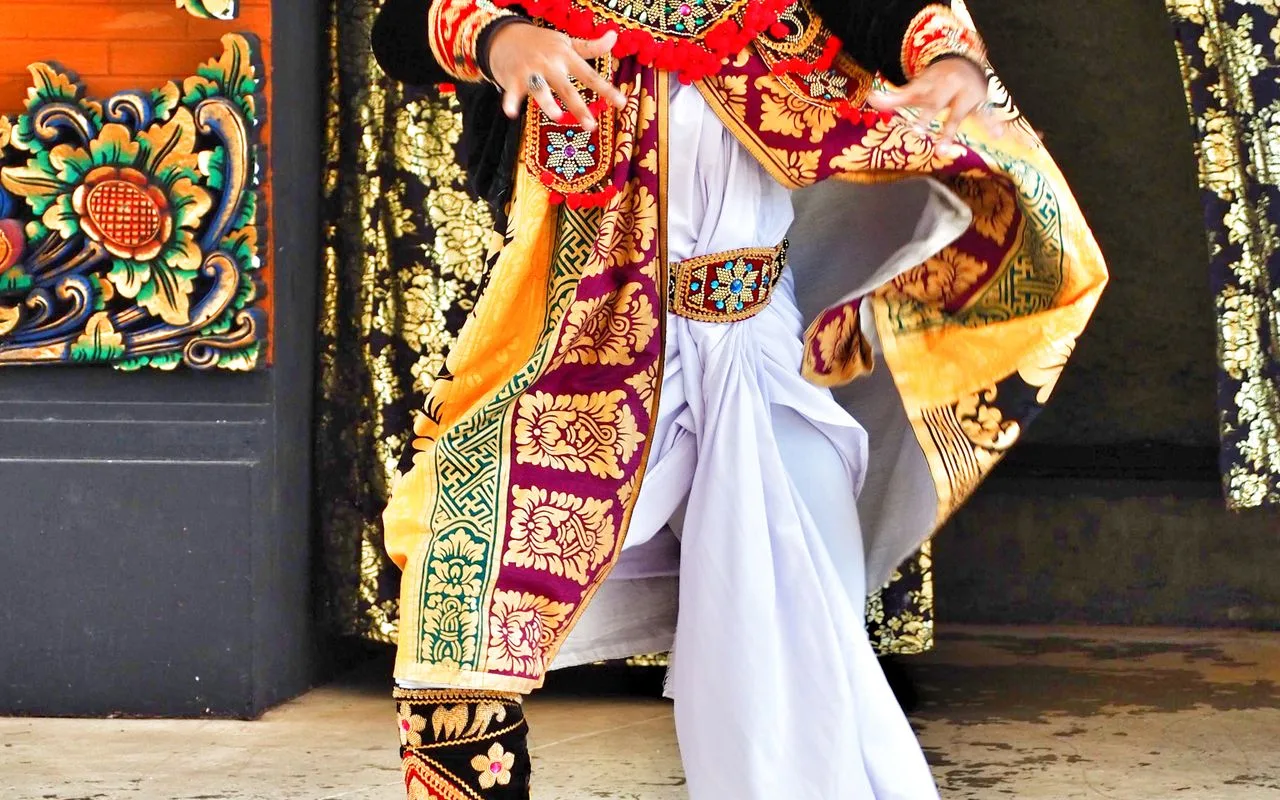
Quick answer: The Devdan Show is a roughly 75-minute, family-friendly theatrical tour of five Indonesian regions with acrobatics and stage effects, performed Mon, Wed, Fri and Sat at 19:30 inside the ITDC complex, about 10 minutes from Villa Soleil. Official adult tickets run roughly IDR 500,000–850,000 (children 4–12 half price; confirm current rates). Choose it over Kecak when you have young kids, it is wet season, or you want an easy evening; choose Kecak for authenticity and atmosphere.
Most evenings in Nusa Dua end the same way: a long dinner, a walk along the promenade, an early night. The Devdan Show is the one thing on the peninsula that breaks that rhythm. It is a roughly 75-minute theatrical production staged four nights a week inside the Bali Nusa Dua Theatre, a purpose-built venue in the ITDC resort complex, a few minutes’ drive from Villa Soleil. It is not a temple dance, it is not a dinner show, and it is not trying to be either. Here is what it actually is, what it costs, and who will genuinely enjoy it.
What the Devdan Show actually is
Devdan (the name is a play on the Sanskrit for “gift of the gods”) is billed as a “treasure of the archipelago”, and that framing is accurate. Two children in a tour group slip away, find a mysterious chest, and are whisked through five regions of Indonesia: Bali, Sumatra, Java, Kalimantan and Papua. Each region gets its own act with its own costumes, music and choreography, so you move from Balinese temple dance to Sumatran plate dancing, Javanese court elegance, Dayak warrior sequences and Papuan drumming in a single sitting.
What makes it different from anything you will see in a village pavilion is the staging. There is aerial silk and trapeze work, a rain effect, pyrotechnics, projection and a proper lighting rig. Think a compact, family-friendly cousin of a Las Vegas or Cirque-style production, filtered through Indonesian folklore. Purists sometimes call it “Indonesia-lite”, and that is fair: the dances are stylised and abbreviated for a mixed international audience. But the dancers and acrobats are skilled, the pace never drops, and the whole thing is delivered without narration, so language is irrelevant.
Schedule, running time and location
At the time of writing the official site lists performances every Monday, Wednesday, Friday and Saturday at 19:30 WITA, running about 75 minutes (officially 19:30–20:45) with no intermission. The theatre asks guests to arrive at least 30 minutes before curtain; we suggest aiming for 18:45 to clear the ITDC gate and parking. Reservations can be made well in advance; in July–August, Christmas–New Year and around Indonesian public holidays the better seat categories do sell out, so book a week or two out rather than on the day.
The venue sits inside the ITDC complex, directly beside Bali Collection and a few hundred metres from the Bali Nusa Dua Convention Center. From Villa Soleil in Benoa it is about an 8–12 minute drive depending on the evening traffic through the Nusa Dua gate. Several Nusa Dua hotels feed into a complimentary Bali Collection shuttle loop that stops near the theatre; as a villa guest you will simply have our host arrange a car, which is easier anyway.
Two things to check before you commit: the theatre occasionally goes dark for private buy-outs and around Nyepi (the Balinese day of silence, when nothing on the island operates), and the schedule has changed in the past. Confirm the date on the official site or have our host call the box office on the day you book.
Ticket categories and current prices
The official booking page sells three standard seat categories plus a small VIP tier (18 reclining sofa seats at around IDR 1,300,000, no child discount). The three standard categories all carry a child rate for ages 4–12. These are the rack prices listed at the time of writing; promotions appear intermittently and online resellers price slightly differently, so treat this as a guide and confirm current rates.
| Category | Adult (IDR) | Child 4–12 (IDR) | What you get |
|---|---|---|---|
| Category A | 850,000 | 425,000 | Central stalls, closest to the stage, best view of aerial work |
| Category B | 650,000 | 325,000 | Mid-house seats, full stage view, good value for families |
| Category C | 500,000 | 250,000 | Rear or side seats; fine for the spectacle, further from the detail |
Honest advice on seat choice: the theatre is compact enough that Category B is the sweet spot. Category A puts you close to the pyrotechnics and the rain scene, which small children either love or find a bit much. Category C is perfectly acceptable if you are budget-conscious, but you lose the facial expressions and costume detail that carry the quieter Javanese act. Children under four are generally not charged but are also not really the target audience; babies rarely last the full 75 minutes of drums and lights.
For a family of four in Category B you are looking at around IDR 1,950,000 before any promotion. Add a car for the evening and a pre-show dinner and the outing lands somewhere between IDR 2,500,000 and IDR 3,500,000 depending on where you eat.
Is it suitable for kids?
Yes, with caveats. This is one of the few evening events in south Bali that is designed with children in the audience, and the two child protagonists give younger viewers someone to follow. Our rough guide from families who have stayed with us:
- Ages 6–12: the ideal audience. Acrobatics, warriors, rain on stage and a treasure hunt plot: they are gripped from the first scene.
- Ages 4–5: usually fine, especially in Category B where the fire and drums are a little further away. Bring a light jacket, the air-conditioning is strong.
- Under 4: a gamble. A 19:30 start means a finish around 20:45, and the loud percussion sections can startle toddlers. If you go, sit on an aisle.
- Teenagers: more variable. Those interested in dance or circus arts enjoy it; the cynical ones may find it earnest. The aerial sequences usually win them over.
Practical points for parents: there is no intermission, so do the toilet run before you sit down. No food or drink is allowed inside, and cameras and phones are supposed to stay off, which staff do enforce. The venue is fully indoor and air-conditioned, which makes it an excellent wet-season fallback when a Kecak at Uluwatu might be rained off.
Devdan vs Kecak: which should you choose?
This is the question almost every guest asks, so let us be direct. They are different animals and, if you have the nights, worth doing both.
The Kecak at Uluwatu Temple is a ritual-derived performance: roughly 60 minutes, open-air on a clifftop, a hundred bare-chested men chanting in a circle as the sun drops into the Indian Ocean, with the Ramayana story acted out in the centre and a fire dance to finish. It is raw, atmospheric and genuinely Balinese. It is also 30–45 minutes each way from Nusa Dua, involves monkeys and a fair amount of standing, and depends on the weather.
Devdan is a produced show: roughly 75 minutes, indoor, comfortable seats, high production values, pan-Indonesian rather than specifically Balinese, and ten minutes from the villa. It is easier, especially with young children or older relatives, and there is no risk of a washed-out evening. What it lacks is the sense of place; you could be in a well-equipped theatre anywhere.
A workable rule: if you only have one evening for a performance and you want to feel Bali, choose Kecak on a clear dry-season night. If you are travelling with kids under eight, if it is wet season, or if you want a low-effort evening that still counts as culture, choose Devdan. For a deeper look at the traditional forms Devdan is drawing on, including Legong and Barong, see our guide to Balinese dance.
Making an evening of it
Because the show starts at 19:30 and asks you to arrive by 18:45, dinner is either early or late. Both work. For an early meal, the restaurants inside Bali Collection are a five-minute walk from the theatre and accustomed to pre-show diners; ask for the bill by 18:30. For a late meal, book a 21:30 table at one of the beach-front hotel restaurants along the Nusa Dua strip, most of which serve until 22:30 or later. Our Nusa Dua restaurant guide lists the ones that hold late tables reliably.
The other option, and the one our returning guests tend to prefer, is a private chef dinner at the villa afterwards: children can go straight to bed in their suite while the adults eat by the pool. Give our host at least a day’s notice for that.
Dress is smart-casual; there is no formal code, but the theatre is cold enough that sleeveless tops are a mistake. Parking is ample if you drive yourself, though the one-way loops inside ITDC confuse first-timers, which is one more argument for a driver.
Booking through our host
You can book directly on the official site, which takes cards and issues e-tickets, or through the usual online platforms. Guests at Villa Soleil generally find it simpler to send a WhatsApp to our host (+62 877 7000 1535) with the date, number of adults and children, and preferred category. The team confirms availability with the box office, secures the seats, and adds a car for the evening so nobody has to think about the ITDC gate or parking. There is no mark-up on the tickets themselves; you pay the theatre’s rate, and when a promotion is running our host will flag it.
If you are planning around a wider south Bali itinerary, the show pairs neatly with a morning at the water-sports beach in Tanjung Benoa or a lazy pool day, since it requires no travel and no stamina. Families building a full week should see our notes on Bali with kids for how to slot evenings like this between the bigger day trips.
The bottom line
The Devdan Show is not the most authentic performance in Bali, and it does not claim to be. It is, however, the most polished, the most child-friendly and by far the most convenient one for anyone staying in Nusa Dua or Benoa. Go in expecting a bright, fast, well-drilled celebration of Indonesian culture rather than a temple ceremony and you will leave happy. Sit in Category B, arrive by 18:45, leave the camera at the villa, and let our host handle the rest.
Related reading
- Uluwatu Temple at Sunset: Kecak Dance, Timing and Tips
- Balinese Traditional Dance: Legong, Barong, Kecak and Where to See Them
- Things to Do in Nusa Dua Beyond the Resort Pool
- Nusa Dua Restaurants: Where to Eat Before or After the Show
Written by the team at Villa Soleil. Message us to plan your stay in Nusa Dua.