Grab & Gojek in Bali: How Ride-Hailing Really Works
By Villa Soleil · Published September 2026 · 10 min read
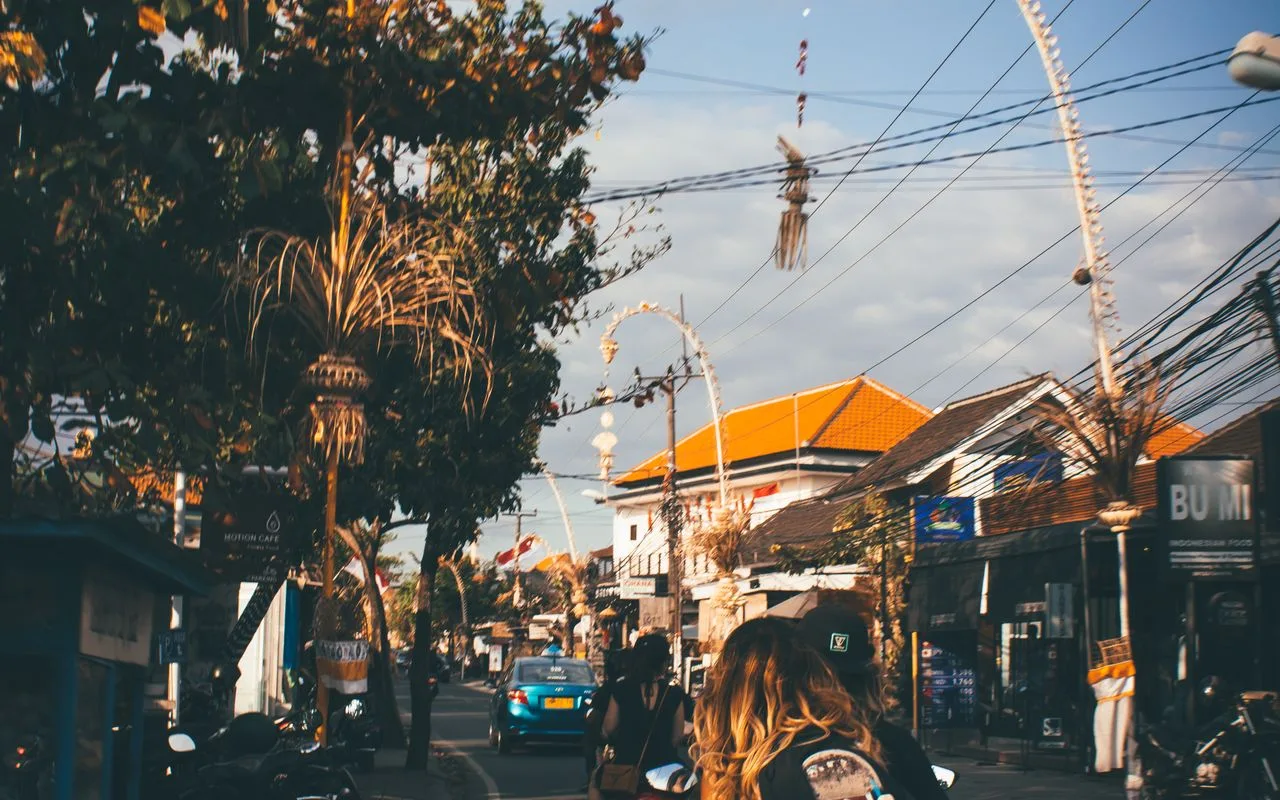
Quick answer: Grab and Gojek both work in south Bali, including Benoa and Nusa Dua, and they are cheap for short hops. Expect small snags: meet drivers at official lounges at the airport, outside resort gates inside the ITDC zone, and a short walk from busy beaches. Cash always works; Visa/Mastercard usually does if you add it before you fly. For full day trips beyond the south, a private driver at roughly IDR 600,000–900,000 per day beats stacking app rides.
- How the apps work in Bali
- Set up before you land
- Airport pickup: lounges, fees and expectations
- Nusa Dua, the ITDC zone and the pickup grey areas
- Cash, card or e-wallet
- Bluebird: the metered alternative
- Typical fares from Benoa and Nusa Dua
- When a private driver beats the apps
- From the villa: what we actually do
Ride-hailing in Bali is a genuinely good deal, and also a source of more confused forum threads than almost any other travel topic on the island. Both things are true. Grab and Gojek run tens of thousands of cars and motorbikes across the south, fares are transparent and low, and for a ten-minute hop from Benoa to Bali Collection there is no cheaper or simpler option. The confusion comes from the places where the apps bump into older arrangements: the airport, the gated resort zone of Nusa Dua, and beaches where local driver co-operatives have worked for decades. This guide explains how the two apps actually behave in September 2026, where the friction points are, how to pay, what a Bluebird taxi is for, and when it is smarter to stop tapping and book a driver for the day.
How the apps work in Bali
Gojek is Indonesian, Grab is Singapore-based, and in Bali they overlap almost completely. Each has a motorbike option (GoRide on Gojek, GrabBike on Grab) and a car option (GoCar and GrabCar), plus larger vehicles and a “premium” car tier in busier areas. Both apps show an upfront fixed fare before you confirm, which is the single biggest reason to use them over street bargaining. Gojek also lets you book a metered Bluebird taxi through its GoBluebird option, and Grab has a GrabTaxi product that, unlike its other rides, is not fixed-fare.
Reported base pricing for a standard car sits around IDR 7,500 flagfall and roughly IDR 3,800 per kilometre plus a small platform fee, though the number that matters is the one shown in the app. Fares are dynamic: rain, Friday evenings, sunset hour on the Bukit and the last flights of the night all push prices up. Bike rides are usually a third to a half of the car fare and are the fastest way through Kuta or Sanur traffic if you are travelling alone with a small bag, though they are not covered by every travel insurance policy.
The legal position, which is worth knowing because drivers occasionally cite it, is that ride-hailing is lawful across Bali under provincial regulation. In 2025 the province passed a regulation creating a separate app-based tourism-transport category whose drivers must hold a Bali ID and drive DK-plated cars; ordinary Grab and Gojek drivers are not covered by that rule. For a passenger nothing changes: you are not doing anything wrong by ordering.
Set up before you land
Most airport frustration is self-inflicted and avoidable with ten minutes of preparation at home:
- Download both apps and register with a phone number you can receive SMS on; a verification code is required at first login.
- Add a Visa or Mastercard while your home bank can still send you a confirmation text. Adding a card from a Bali hotel lobby with no roaming is the classic failure.
- Sort out data. A local eSIM or SIM makes the whole system work; our SIM card and internet guide covers the options.
- Drop a pin on your villa in Google Maps and save it. Drivers navigate by pin, not by address, and Benoa lanes look identical after dark.
- Learn three words: kiri (left), kanan (right), di sini (here). Drivers appreciate it, and it saves circling.
Airport pickup: lounges, fees and expectations
Ngurah Rai airport used to be the place where ride-hailing quietly did not exist. That has changed. Both Grab and Gojek now operate official lounges in the arrivals pick-up zone, before the car park exit, with staff who help you book and direct you to the bay where your driver waits. The process is: clear immigration and customs, follow the signs for the pick-up zone, find the lounge, order in the app (or with staff help), and wait in air conditioning rather than on the kerb. Our airport guide walks through the terminal layout.
Two things to expect. First, a small airport levy of roughly IDR 10,000–15,000 is folded into airport-departure fares to cover the vehicle exit fee; it is normally already visible in the price shown. Second, airport rides simply cost more than the same distance elsewhere. Current reports put a GrabCar from the airport to Nusa Dua or Jimbaran at around IDR 130,000–190,000, against IDR 200,000–320,000 to Ubud, with surge on top at peak arrival times. Drop-offs at the airport carry no extra charge and are completely straightforward.
If you are arriving with eight people, four suitcases and a toddler asleep on someone’s shoulder, this is the moment ride-hailing is weakest. Two cars, two bookings, two waits. A pre-arranged transfer, which the Villa Soleil team organises on request, puts one driver with a name board at arrivals and a single vehicle sized to your group; see getting to the villa for the details.
Nusa Dua, the ITDC zone and the pickup grey areas
This is the part that trips people up most, so here is the honest version. Nusa Dua is not a no-Grab area, and the Benoa neighbourhood around the villa is entirely normal: order at the gate, the car arrives, you go. There is no significant “taxi mafia” presence here compared with Kuta or Ubud.
The exception is the gated ITDC resort complex, the manicured zone holding the big five-star hotels, Bali Collection and Nusa Dua Beach. Drop-offs inside are fine and take you to the lobby door. Pickups are where many hotels enforce a house rule: app drivers may not collect from the lobby, and you will be asked to walk to the main security gate or a designated online-transport point. Some drivers will message asking you to meet at the gate; if your app shows the driver stationary a few hundred metres away, that is usually why.
The same soft rule applies at Geger Beach and the public end of Nusa Dua Beach, where a local driver association operates from the car parks. There is no official ban, but drivers prefer not to pick up right at the beach entrance, so walk 100–200 metres up the access road before ordering. The beach details are in our Nusa Dua beach guide. Elsewhere on the island, respect any hand-painted sign reading “No Gojek / No Grab”: they are common at village beaches and waterfall car parks, and the local co-operative is the only option there. Ask their price first, and expect it to be higher than the app.
Cash, card or e-wallet
Cash works everywhere in both apps and is the zero-setup default: select cash, pay the driver the amount shown, round up if you like. Cards are almost as good if you add them in advance. Visa and Mastercard process reliably in both apps; American Express is hit-and-miss on Grab and unreliable on Gojek. If a card is declined at first use, the fix is usually a 3-D Secure text from your bank that you cannot receive without roaming or a local number, which is why setting up at home matters.
The wallets, GoPay for Gojek and OVO for Grab, are excellent for residents and awkward for visitors: topping up generally needs an Indonesian bank account, and card top-ups do not always succeed for foreign accounts. Most short-stay guests are happier ignoring them. Keep IDR 100,000–200,000 in small notes for rides regardless; drivers rarely carry change for a 100,000 note on a 25,000 fare. Our money and ATM guide explains where to get sensible denominations.
Bluebird: the metered alternative
Bluebird is Indonesia’s reputable metered taxi company and remains a useful backstop in south Bali, especially in the resort zone where an app driver cannot collect but a taxi can. Current meter rates run about IDR 7,000 flagfall, IDR 6,500 per kilometre and a minimum fare of IDR 30,000, so a Seminyak-to-Nusa Dua run lands around IDR 160,000–200,000 depending on traffic, broadly similar to an app car once surge is taken into account. Book through the MyBluebird app, via GoBluebird inside Gojek, or hail one on the street in Kuta, Seminyak or Sanur.
Two honest cautions. Several look-alike blue taxis operate in tourist areas; check for the bird logo, the driver ID on the dashboard and a running meter before you sit down. And at the airport, the Bluebird counter quotes fixed prices that some travellers report as negotiable and that may exclude tolls; the app lounges are simpler. Outside the south, in Ubud, the east and the north, Bluebird coverage thins out quickly and you are back to apps or a booked driver.
Typical fares from Benoa and Nusa Dua
These are realistic mid-2026 ranges for a standard four-seat car at normal times. Rain, surge and upgrading to a six-seater for a bigger group will move them; confirm current rates in the app before you book.
| Route from Benoa / Nusa Dua | Drive time | App car (GoCar / GrabCar) | Notes |
|---|---|---|---|
| Bali Collection or Geger Beach | 8–12 min | IDR 30,000–60,000 | Pickup at gate / away from beach entrance |
| Ngurah Rai airport | 12–20 min | IDR 70,000–120,000 to; IDR 130,000–190,000 from | Airport fares include a small levy |
| Jimbaran Bay | 20–30 min | IDR 60,000–110,000 | Return surge at sunset dinner hour |
| Uluwatu / Bukit | 30–45 min | IDR 130,000–220,000 | Scarce drivers for the return after 7 pm |
| Kuta / Legian | 30–45 min | IDR 110,000–170,000 | Toll road adds about IDR 13,000–14,000 |
| Seminyak | 45–60 min | IDR 150,000–220,000 | Bluebird similar on the meter |
| Sanur (fast-boat port) | 30–45 min | IDR 120,000–190,000 | Fine for one-way; drivers plentiful |
| Ubud | 1.5–2 h | IDR 250,000–380,000 each way | Day driver usually cheaper overall |
When a private driver beats the apps
The apps win for point-to-point trips inside the south, spontaneous dinners and anyone travelling light. A hired driver wins the moment you leave that zone or the moment your group grows. A full-day private car with driver, fuel and parking currently costs about IDR 600,000–900,000 for ten to twelve hours in a standard MPV, and it is not really a luxury: the same day’s worth of app rides to Ubud, Tegallalang and back, if you could even find a car in the rice fields at 4 pm, would cost as much and leave you stranded between stops. Drivers also handle temple parking, know which warung is actually good, and wait while you swim. Our private driver guide covers rates, etiquette and how to brief a good one.
A few practical rules of thumb: for anything beyond Uluwatu or Sanur, book the driver. For groups of five or more, book the driver, because two app cars rarely arrive together. For sunrise at Mount Batur, northern waterfalls or a fast-boat connection at Padang Bai, always book the driver. For everything else, tap the app.
From the villa: what we actually do
At Villa Soleil, guests use Gojek and Grab daily for the short runs to Bali Collection, Geger Beach and Jimbaran without any fuss; the villa sits outside the ITDC gates, so drivers collect from the door. For airport transfers, group dinners in Seminyak and every day trip, our host arranges vetted drivers at rates guests consistently find fair, and a WhatsApp message to +62 877 7000 1535 is answered within the hour. If you want the wider picture, including shuttles, scooters and the Bukit’s fickle evening supply, read our Bali transportation overview. Keep both apps installed, keep small notes in your pocket, and treat the drivers with the courtesy you would want back; that, more than any hack, is what makes getting around south Bali easy.
Related reading
- Hiring a private driver in Bali: rates, etiquette and how to brief one
- Ngurah Rai airport guide: arrivals, e-VOA and getting out fast
- Getting around Bali: every transport option compared
- Money, ATMs and small notes in Bali
Written by the team at Villa Soleil. Message us to plan your stay in Nusa Dua.