Bali Photography Spots: The Best Light, Times & Logistics
By Villa Soleil · Published August 2026 · 8 min read
- How to think about light in Bali
- The Gates of Heaven — Pura Lempuyang
- Tegallalang and the rice-terrace shots
- Handara Gate and the central highlands
- Uluwatu, Pandawa and the south-coast cliffs
- Waterfalls, and the Tanah Lot exception
- Drone rules, fees and hiring a photographer
- Spot-by-spot: light, timing and distance from the villa
- What we arrange at Villa Soleil
The split gate at Pura Lempuyang frames Mount Agung for about a minute before the next person in the queue takes your place — and that one minute is the whole reason people set a 4:30am alarm. The gap between a phone snapshot and a frame you will print comes down to three things: the right spot, the right light, and the logistics to be there when the light arrives. After hosting hundreds of guests at Villa Soleil — photographers, honeymooners with a camera, families who just want the holiday to look as good as it felt — we have learned which icons reward the early alarm and which are better saved for golden hour. This guide is mapped from our corner of Nusa Dua, so you always know how far you are travelling and when to leave.
How to think about light in Bali
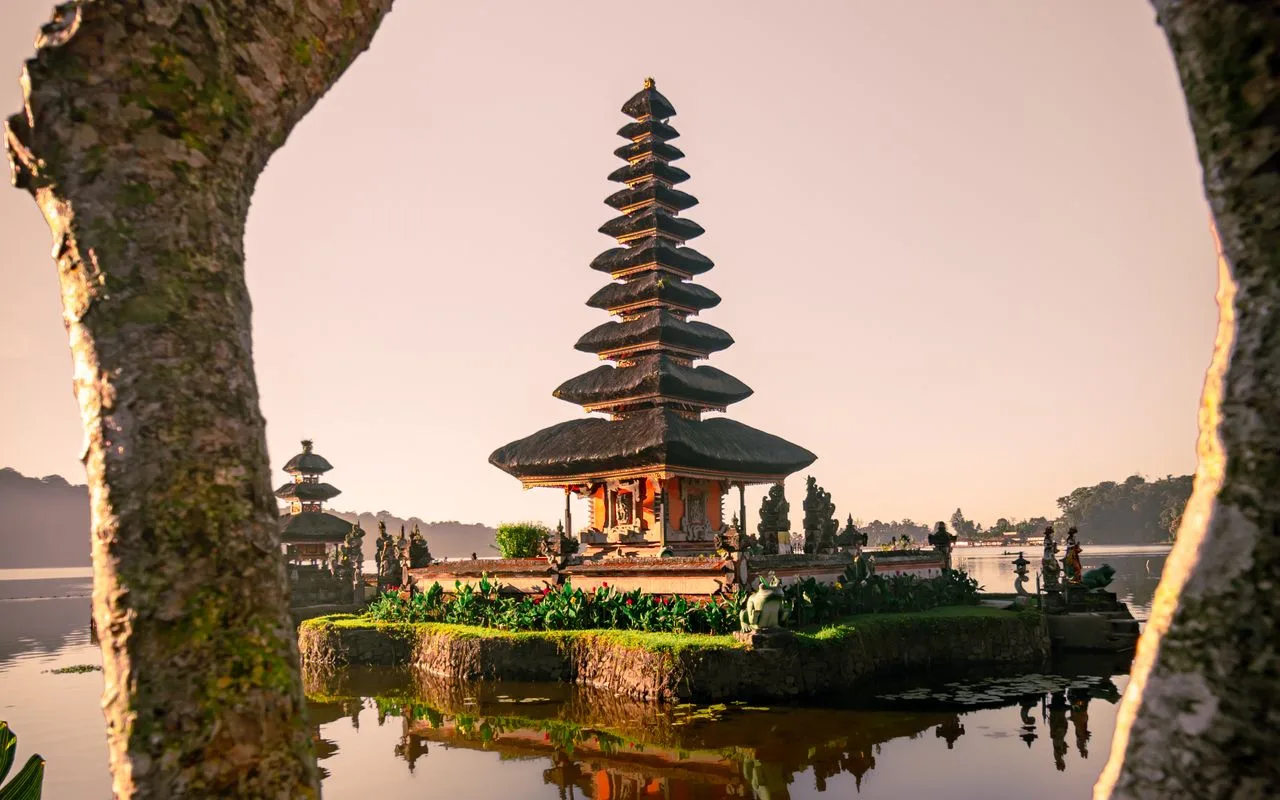
Bali sits just south of the equator, so the sun rises around 6:00–6:30am and sets around 6:00–6:30pm year-round, with very little seasonal drift. That gives you two reliable golden hours and a hard, contrasty midday best avoided for landscapes. The dry season (April–October) brings cleaner skies and sharper sunsets; the wet season (November–March) trades reliability for atmosphere — dramatic clouds, lush green rice fields, the occasional rainbow. For the most flattering portraits and the emptiest frames, the first ninety minutes after sunrise is the golden window: the crowds are still asleep, the air is soft, and the famous gates and terraces are yours. We cover the seasonal trade-offs in more detail in our guide to the best time to visit Bali.
- Sunrise (6:00–7:30am): Lempuyang gates, Tegallalang, rice fields, waterfalls, Mount Batur.
- Midday (avoid for landscapes): good only for snorkelling shots, market colour and shaded temples.
- Golden hour & sunset (5:00–6:30pm): Uluwatu, Handara Gate, Pandawa, Jimbaran, Tanah Lot, west-coast beaches.
The Gates of Heaven — Pura Lempuyang
The split gate at Pura Penataran Agung Lempuyang in east Bali frames Mount Agung in the distance. The mirror reflection you see online is faked: a staff member holds a phone with a piece of glass beneath the lens — there is no actual pool. Knowing that saves disappointment. What you get instead is a genuinely beautiful gate, a sacred working temple, and a queue. Arrive at opening (around 7:00am) to beat the lines, which can stretch to two or three hours by mid-morning. You are given a numbered ticket and wait your turn for the official photo, then you are free to shoot elsewhere on the grounds.
Lempuyang is the most logistically demanding spot on this list: it is roughly 2.5–3 hours from Nusa Dua, so a 4:00–4:30am departure is realistic if you want to be near the front of the queue. Dress respectfully — shoulders and knees covered, sarong required — and read our Bali temple guide before you go so you photograph with the right etiquette. Many guests pair Lempuyang with the Tirta Gangga water palace nearby to make the long drive worthwhile.
Tegallalang and the rice-terrace shots
The Tegallalang rice terraces north of Ubud are the postcard image of inland Bali: stacked emerald paddies, palm-fringed ridges and the swing platforms that have become an Instagram fixture. Light is everything here. Come before 8:00am and the terraces are backlit, misty and almost empty; arrive at 10:00am and you are sharing narrow paths with tour buses and paying multiple small “donation” fees at each viewpoint. Bring small cash (10,000–50,000 IDR per donation point) and good shoes — the paths are steep and slippery after rain.
For the cleanest green, visit early in the growing cycle when the paddies are flooded and reflective, or mid-cycle when they are vivid and full. After harvest the terraces turn brown and far less photogenic, so it is worth asking our team about current conditions. Tegallalang sits about 50–54 km north of the villa — allow 1.5–2.5 hours each way, as the terraces lie 10–12 km beyond Ubud and the Ubud area sees chronic traffic. It fits naturally into a wider inland day; see our Tegallalang rice terrace and Ubud day trip guides to build the rest of the morning around it.
Handara Gate and the central highlands
The Handara Gate — a traditional Balinese candi bentar framing a misty golf course and mountain backdrop near Bedugul — is the photogenic doorway of the central highlands. It is free to stand beside, though there is now a small ticket for the prime shooting position. The cool, fog-prone mornings here are magical but unpredictable: arrive by 7:30–8:00am for the best chance of mist before the sun burns it off. At roughly 1,200 metres elevation it is genuinely chilly, so bring a layer.
Handara is about 2–2.5 hours from Nusa Dua and pairs beautifully with the Ulun Danu Beratan lake temple and the Bedugul waterfalls, making a full highland circuit. Because the drive is long and winding, this is one we strongly recommend doing with a private driver rather than self-riding a scooter — the mountain roads carry fog and trucks.
Uluwatu, Pandawa and the south-coast cliffs
The good news for our guests: some of Bali’s most dramatic coastal photography is right on your doorstep. Uluwatu Temple sits on a 70-metre limestone cliff and is hard to beat for golden-hour and sunset silhouettes, especially when the Kecak fire dance begins around 6:00pm. Watch for the resident macaques — they will steal sunglasses and lens caps. From Villa Soleil, Uluwatu is around 35–45 minutes; arrive by 5:00pm to claim a clifftop spot. Our Uluwatu sunset temple guide covers the dance timings and ticketing.
Closer still, Pandawa Beach offers towering carved-cliff entrances and a curve of white sand that photographs superbly in late afternoon, and Jimbaran’s beach is the classic spot for warm, low-sun seafood-dinner frames. Geger Beach — a ten-minute walk from the villa — gives you quiet sunrise reflections on wet sand without driving anywhere at all. For sunset portraits with fewer people, the south coast generally beats the busier west.
Waterfalls, and the Tanah Lot exception
Bali’s waterfalls — Tegenungan, Tibumana, Sekumpul, Banyumala — are jungle-light subjects: they look best on overcast mornings or in soft early light, when the harsh midday contrast is gone and you can use a slow shutter for silky water. Bring a small travel tripod and a polarising filter to cut glare on wet rock and leaves. Most charge a modest entry (20,000–40,000 IDR) and involve a stair descent, so footwear matters. Our Bali waterfalls guide ranks them by effort and crowd level.
The exception to the “mornings are best” rule is Tanah Lot, the sea temple west of Canggu that is purpose-built for sunset. Arrive 60–90 minutes before sundown, position yourself south of the temple for the classic silhouette over water, and be patient with the crowds — it is busy for a reason. See our Tanah Lot sunset guide for parking and timing.
Drone rules, fees and hiring a photographer
Drones are popular over Bali’s terraces and cliffs, but the rules are real and increasingly enforced. Flying near Ngurah Rai airport — which includes much of the Nusa Dua, Jimbaran and Kuta zone — is restricted, and many temples, beaches and cultural sites prohibit drones outright or charge a separate permit fee. As a rule: never fly over ceremonies or crowds, keep below 120 metres, keep the aircraft in sight, and ask before launching at any temple. Indonesia’s aviation authority requires registration for heavier drones, and penalties for flying in restricted airspace are steep. If in doubt, our team can tell you whether a given spot allows it.
For couples and families, hiring a local photographer is often money well spent. A two-hour sunrise or sunset session typically runs 1.5–4 million IDR depending on the photographer’s reputation and whether locations and transport are included. Book the photographer and the driver together so timings line up, and agree the shot list and delivery turnaround in advance. We keep a short list of photographers our guests have enjoyed working with, from honeymoon shoots — useful alongside our Bali honeymoon villa notes — to family portraits at the villa itself.
Spot-by-spot: light, timing and distance from the villa
Use this table to plan your departures. Distances and drive times are from Villa Soleil in Nusa Dua and assume a private driver; allow extra for traffic on the bypass and the central mountain roads.
| Spot | Best light | Arrive by | From the villa |
|---|---|---|---|
| Pura Lempuyang (Gates of Heaven) | Sunrise / early morning | 7:00am opening | 2.5–3 hrs (leave ~4:30am) |
| Tegallalang rice terraces | Early morning, backlit | 7:30–8:00am | 1.5–2.5 hrs |
| Handara Gate, Bedugul | Misty morning | 7:30–8:00am | 2–2.5 hrs |
| Uluwatu Temple | Golden hour / sunset | 5:00pm | 35–45 min |
| Pandawa Beach | Late afternoon | 4:30pm | 20–25 min |
| Geger Beach | Sunrise | 6:00am | 10-min walk |
| Tanah Lot | Sunset | 4:30–5:00pm | 1.5–2 hrs |
| Waterfalls (Tegenungan etc.) | Overcast / soft morning | 8:00–9:00am | 1–3 hrs |
What we arrange at Villa Soleil
We can book an English-speaking driver who knows these spots and the pre-dawn timings, pack a takeaway breakfast for the 4:30am Lempuyang start, and point you to a photographer our guests have trusted — and the villa’s private pool and the quiet sunrise light on Geger Beach, a ten-minute walk away, make easy backdrops in their own right. Message the Villa Soleil team on WhatsApp with your dates and your wishlist, and we will map the route, timings and driver around them.
Related reading
Written by the team at Villa Soleil. Message us to plan your stay in Nusa Dua.