Bali in November: An Honest Low-Season Guide
By Villa Soleil · Published September 2026 · 8 min read
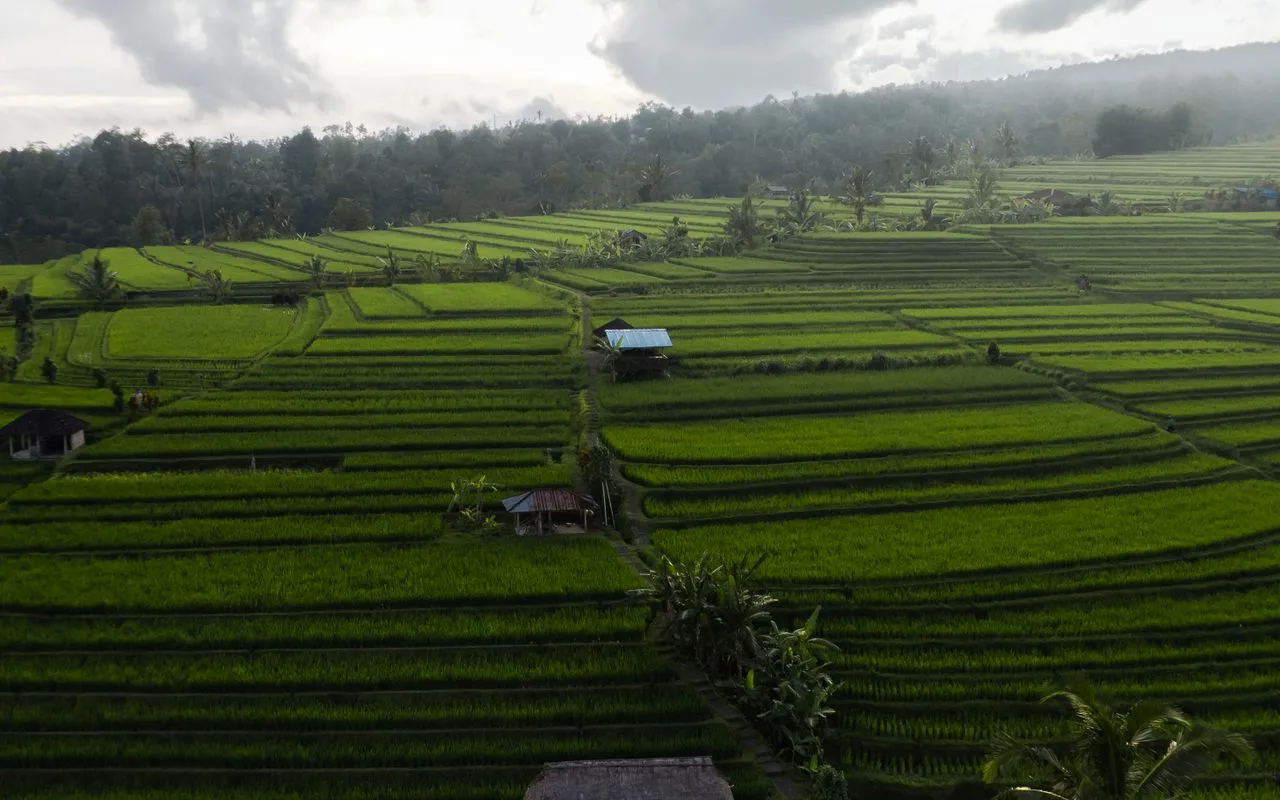
Quick answer: November is Bali’s first wet-season month, with roughly 150 mm of rain falling mostly as short afternoon downpours, low-season villa rates typically 20–35% below peak, and far thinner crowds. Surf shifts to the east coast (Nusa Dua, Serangan, Keramas), diving stays warm but visibility becomes variable, and a private villa with a covered pool terrace turns rainy afternoons into a feature rather than a problem.
- What November weather actually looks like
- Why the deals are real in November
- Thinner crowds, and what that changes
- Surf and diving conditions in November
- Rainy-afternoon plans that do not feel like a compromise
- Why a private villa suits the month
- Practical notes for a November trip
- Our honest verdict
November is the month Bali quietly changes gear. The dry-season crowds have gone home, the first proper rains arrive, villa calendars open up, and the island feels more like it belongs to the people who live here. It is not the postcard month, and we will not pretend otherwise. But for a certain kind of traveller — one who values space, price and a slower rhythm over guaranteed blue sky — November may be the smartest month of the year to book a private villa in Nusa Dua. Here is the honest version.
What November weather actually looks like
Climate averages for Denpasar put November rainfall at roughly 150 mm spread across 10–18 rain days depending on the dataset, with daytime highs around 30–31°C and humidity averaging around 80%. Those numbers sound wetter than the experience usually is. Most days follow the same pattern: a bright, hot morning; clouds building through lunch; a heavy downpour in the mid-afternoon or early evening that lasts anywhere from twenty minutes to two hours; then a washed-clean night. Full grey days of continuous rain do happen, but they are far more typical of January and February, when monthly totals run at more than double November’s.
The practical takeaway is simple. Front-load your day. Beaches, temples, rice terraces and boat trips are best done before 1 pm; afternoons are for the pool, a spa treatment or a long lunch. If you plan around that rhythm rather than fighting it, November delivers more sunshine hours than its reputation suggests. If you are weighing up later dates, the December-to-March picture is a different, wetter story.
Why the deals are real in November
November sits in the trough between the September–October shoulder and the Christmas peak, and the island’s accommodation market responds accordingly. Villa operators commonly quote low-season rates 20–35% below July–August pricing, and minimum-stay requirements that apply in peak weeks usually disappear. Occupancy across south Bali drops noticeably, which means the villa you could not get in August is available, often at its best rate of the year, and hosts are more open to flexible check-in times, longer stays and added extras.
The one caveat is the calendar’s tail end. From roughly the third week of December, rates snap back to peak levels and stay there until early January. If you want November pricing, keep the whole stay inside November or the first half of December, and confirm current rates directly rather than relying on a screenshot from last year.
| Factor | November | July–August (peak) |
|---|---|---|
| Typical rainfall (Denpasar) | ~150 mm, 10–18 rain days, mostly afternoon bursts | ~15–30 mm, a handful of showers |
| Daytime temperature | 30–31°C, humid | 28–29°C, drier, breezier |
| Villa rates | Low season, often 20–35% below peak | Peak, minimum stays common |
| Crowds at Uluwatu, Ubud, beach clubs | Thin; short or no queues | Heavy; book everything ahead |
| Sea temperature | 28–30°C | 26–28°C |
| Surf | East coast (Nusa Dua, Serangan, Keramas) turning on | West coast (Uluwatu, Canggu) at its best |
| Diving | Warm, calm; visibility variable; mola-mola season ending | Cool upwellings, best visibility, mola-mola |
Thinner crowds, and what that changes
Crowd relief is the November benefit people underestimate until they experience it. Uluwatu Temple at sunset, which in August means shuffling along the cliff path shoulder to shoulder, becomes a place you can actually stand still and watch. Tegallalang and Jatiluwih rice terraces are lush and green after the first rains and largely empty by mid-morning. Beach clubs that require a week’s notice for a daybed in peak season will often seat walk-ins. Restaurants in Nusa Dua and Jimbaran that turn tables twice a night in July take same-day bookings.
Traffic eases too, which matters more than it sounds on an island where a 15 km drive can take an hour in high season. The Nusa Dua to Uluwatu run still takes 30–45 minutes, and Ubud is still a solid 1.5–2 hours away, but you are far less likely to sit in the Kuta bottleneck for an extra forty minutes.
Surf and diving conditions in November
November is when Bali’s surf map flips. As the wind swings to the west and north-west, the famous west-coast reefs at Uluwatu and Padang Padang get blown out in the afternoons, while the east-coast breaks turn offshore and clean. Nusa Dua Reef, 500 m to 1 km off the beach and reached by boat, is one of the island’s best wet-season waves for confident surfers. Serangan, twenty minutes north, is the most reliable intermediate spot of the season, and Keramas near Gianyar is the expert-level right-hander. Beginners are not left out: sheltered morning sessions at Kuta and Legian still run, with a two-hour group lesson including board costing 350,000–600,000 IDR depending on the school, and the calmer wet-season mornings there are actually kinder to first-timers.
For divers, November is a transition. The Nusa Penida mola-mola season, driven by cold upwellings from roughly July to October, tapers off by early November, and visibility at Crystal Bay and Manta Point becomes less predictable. On the plus side the water is a comfortable 28–30°C and boats are far less crowded. Tulamben on the north-east coast, home to the USAT Liberty wreck, is the safest bet: sheltered from the prevailing wind, diveable year-round, and often at its clearest in October and November before the heavier rains reduce visibility. Expect a two-dive day trip from the south to cost 1,800,000–2,800,000 IDR per certified diver including transport; confirm current rates. Read more in our diving and snorkelling guide.
Rainy-afternoon plans that do not feel like a compromise
The trick to November is having a second plan for every afternoon without treating it as a fallback. A few that genuinely work from Nusa Dua:
- Spa afternoons. A 90-minute Balinese massage at a mid-range Nusa Dua spa runs 350,000–700,000 IDR; a full half-day package with body scrub and flower bath is roughly 900,000–1,800,000 IDR. Book for 2 or 3 pm, when the sky is most likely to open.
- Cooking classes. Half-day classes with a market visit start early and finish with lunch, so the rain arrives after the work is done. Budget 450,000–900,000 IDR per person.
- Museum Pasifika in the ITDC complex, a genuinely good collection of Asia-Pacific art that most visitors never find, ten minutes from the villa.
- Bali Collection and the mall circuit. Not glamorous, but dry, air-conditioned and eight minutes away.
- A private chef dinner at the villa on the night you would otherwise brave the traffic to Jimbaran. Our host can arrange one; see the private chef guide for what to expect.
The rainy-day activities guide has a longer list, including the Ubud museums and indoor options for children.
Why a private villa suits the month
In peak season a hotel makes sense: you are out all day and only need a bed. November inverts that logic. When the afternoon rain comes, a hotel room shrinks to four walls and a balcony you cannot use, while a villa opens up. At Villa Soleil the pool terrace is covered enough to swim through a downpour, four separate suites mean eight people can each retreat somewhere quiet, and a full kitchen turns a wet afternoon into a long lunch rather than a wait for a break in the clouds. With whole-villa rates from IDR 4,500,000 per night, a group of eight is paying less per head than most four-star hotel rooms in the same area, and in November the direct-booking price is likely to be the best you will see all year.
Practical notes for a November trip
Pack a light rain shell rather than an umbrella, a dry bag for phones on boat days, and a spare pair of sandals that can get wet. Mosquitoes are more active after rain, so bring repellent and use it at dusk. Choose road routes with a driver rather than a scooter in this month; scooter accidents are already a leading cause of serious tourist injuries in Bali, and wet roads and afternoon storms make them more likely. Book boat trips to Nusa Penida or the Gilis for the morning departure and accept that a rough day can cancel them; November seas are usually manageable but not guaranteed. Keep one fully flexible day in the itinerary for exactly this reason.
Culturally, Galungan and Kuningan run on a 210-day cycle that shifts against the Western calendar, so they land in November only in some years (they did in 2025; in 2026 they fall in June). Check the official Balinese calendar for your year, because if they do coincide you will see penjor bamboo poles lining every street and quieter shops on the main days. If you are still deciding on dates, our best time to visit Bali guide compares every month side by side.
Our honest verdict
November is not for the traveller who needs a guarantee. If your whole trip hinges on cloudless beach days or a clifftop sunset photograph, book September or come back in May. But if you are a group of friends or a multi-generation family who wants a quiet, green, affordable Bali where the pool is yours, the queues have vanished and the afternoon rain is a reason to nap rather than a ruined day, November is quietly one of the best months on the island. Villa Soleil is a short message away on WhatsApp if you would like current November rates or help shaping an itinerary around the weather.
Related reading
- Bali Rainy Season: What December to March Is Really Like
- Bali Packing List for Every Season
- Spa and Massage in Bali: Treatments and Prices
- Things to Do in Nusa Dua
Written by the team at Villa Soleil. Message us to plan your stay in Nusa Dua.