West Bali National Park & Menjangan Island: An Honest Overnight Expedition from Nusa Dua
By Villa Soleil · Published July 2026 · 7 min read
- Where it is, and why distance is the whole story
- Menjangan Island: pristine snorkelling and wall diving
- The Bali starling and the park’s birdlife
- Jungle, mangrove and the trekking trails
- How long it really takes — a sample itinerary from the villa
- When to go and what to pack
- Is it worth the distance? Our honest take
- What we arrange at Villa Soleil
On the far left edge of the Bali map, where the road runs out near Gilimanuk, the island goes quiet: 190 square kilometres of dry savannah and reef with almost no resorts on it. That is West Bali National Park — Taman Nasional Bali Barat — and the little crescent of Menjangan Island off its northwest shore. It is the wildest corner of the island, and also the furthest. That single fact shapes the whole trip: this is an overnight expedition, not a half-day outing, and the distance is exactly why it stays so pristine.
Where it is, and why distance is the whole story
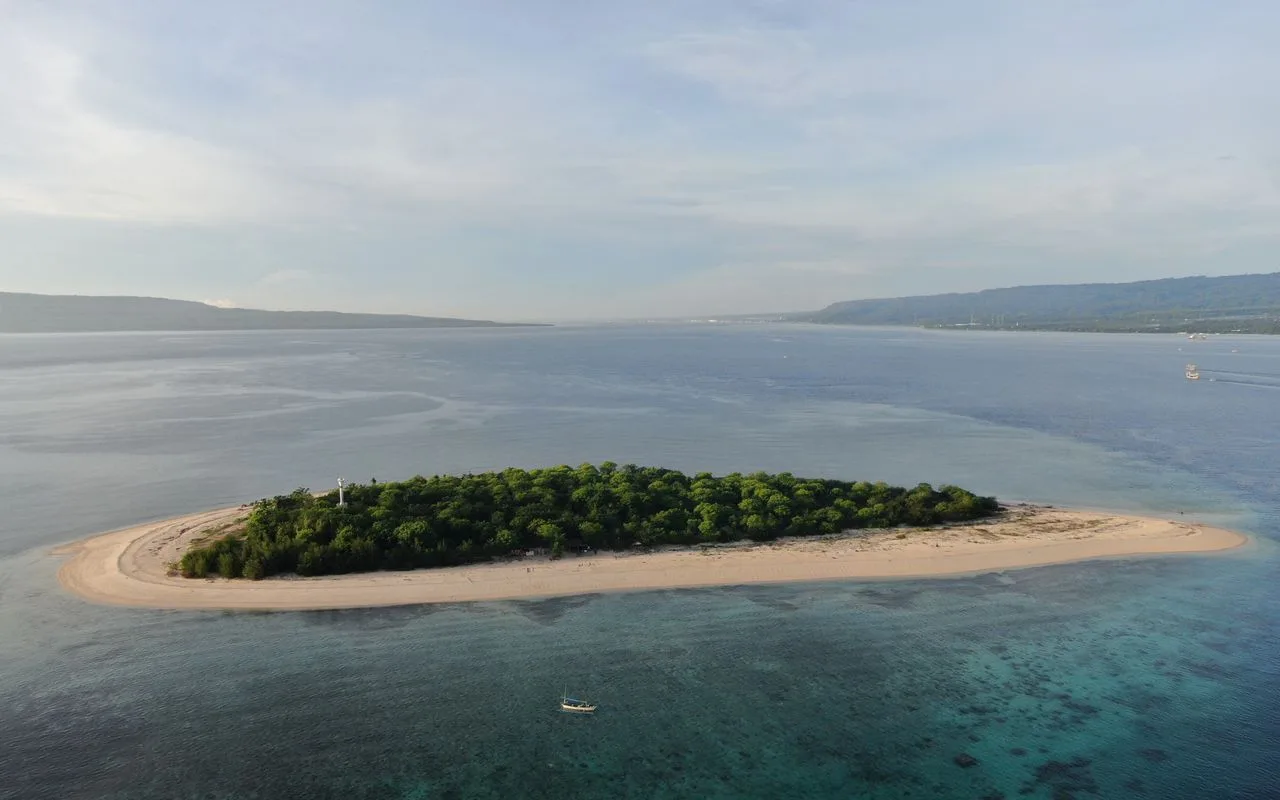
West Bali National Park covers roughly 190 square kilometres of dry savannah, monsoon forest, mangrove and coastal reef at the island’s northwestern tip, straddling the border between Buleleng and Jembrana regencies. Menjangan Island — the name means “deer” in Indonesian, after the wild Java rusa that swim across from the mainland — sits a short boat ride off the park’s north coast and is one of Bali’s best wall-diving and snorkelling sites.
From the villa in Nusa Dua you are looking at roughly 130 to 150 kilometres depending on the route, and a realistic 3.5 to 4.5 hours of driving each way. The fast option runs up through Tabanan and along the west coast road past Negara; the scenic option climbs through the central mountains via Bedugul and the Munduk highlands before dropping to the north coast. Either way, a same-day return means eight or nine hours in the car for a couple of hours in the water — and when guests ask, we say so plainly. Stay a night near Pemuteran instead and the trip becomes one of the calmer, more memorable stretches of a Bali holiday rather than an endurance test.
Menjangan Island: pristine snorkelling and wall diving
Menjangan is what people picture when they imagine untouched Indonesian reef. Because the island sits inside a protected national park and faces north into the sheltered Bali Sea, the water is unusually calm and clear — visibility of 20 to 30 metres is common, and on a good day you can see far further. The signature experience is the drop-off: coral-encrusted vertical walls that fall away from just below the surface into deep blue, draped in sea fans, soft corals and sponges, patrolled by turtles, reef sharks, batfish and clouds of anthias.
For snorkellers, the best coral begins in waist-deep water right at the wall’s lip, so you do not need to be a strong swimmer to see the best of it. For divers, Menjangan offers gentle, current-light conditions that suit both beginners and photographers, plus an atmospheric shallow wreck known locally as the “Anchor Wreck.” If diving and snorkelling are your priority on this trip, it pairs naturally with what we cover in our guide to diving and snorkelling in Bali.
- Boat access: small jukung boats depart from Labuhan Lalang jetty; the crossing takes about 30–45 minutes.
- Park & conservation fees: expect entrance, boat hire, ranger and snorkel/dive fees that together typically land in the IDR 600,000–1,200,000 per-person range depending on group size and operator.
- Best dive/snorkel points: Eel Garden, Pos 2, the Temple wall, and the Anchor Wreck.
The Bali starling and the park’s birdlife
West Bali National Park is the last wild refuge of the Bali starling (jalak Bali) — a snow-white bird with a sapphire mask that was driven to the very edge of extinction by the cage-bird trade, with only a few dozen left in the wild at its lowest point. A patient, decades-long conservation programme has slowly returned a small population to the savannah and forest around the park, and seeing one in the wild is a genuine privilege rather than a guarantee.
Early morning is the time to look. The park is also rich in other species — black-naped orioles, kingfishers, sea eagles over the mangroves, junglefowl in the underbrush — so even on a morning when the starling stays hidden, birdwatchers are rarely disappointed. A licensed park guide is required for the savannah birding trails and is worth every rupiah; they know exactly where the starlings have been feeding that week.
Jungle, mangrove and the trekking trails
The park is not only about the water. A network of guided trails takes you through dry deciduous forest, mangrove boardwalks and open savannah where the wild rusa deer graze. The trekking is gentle to moderate rather than strenuous — this is dry, low-elevation country, very different from the volcanic interior. If you enjoy active, nature-led days, this slots in beside the outdoor experiences in our rafting and adventure guide, though the mood here is quieter and more contemplative.
Treks typically run from one to three hours. The savannah loop is best for birdlife and the wide, golden grassland views; the forest trails are shadier and better in the heat of the day. Bring proper shoes, water and sun protection — shade is patchy, and the western side of the island runs noticeably hotter and drier than the lush south you know from Nusa Dua.
How long it really takes — a sample itinerary from the villa
Here is the timing we plan around when guests ask us to set this up. It assumes one overnight near Pemuteran, the gateway town for the park and Menjangan.
| Time | Day 1 | Day 2 |
|---|---|---|
| 06:30 | Depart Villa Soleil with private driver | Early breakfast at hotel |
| 08:00–10:00 | Coffee & comfort stop en route (Bedugul or Tabanan) | Morning Bali starling / savannah bird trek with park guide |
| 11:00 | Arrive Pemuteran, check in, lunch | Return to Labuhan Lalang or relax at hotel pool |
| 13:00–16:00 | Boat to Menjangan: snorkel or dive the walls | Light lunch, begin drive south |
| 17:30 | Sunset on the north coast, dinner in Pemuteran | Coffee stop in the highlands |
| 20:30 | Overnight near the park | Arrive back at Villa Soleil |
Two nights makes it gentler still — you can split a diving day and a trekking day without rushing, and add a swim at Pemuteran’s famous bio-rock reef. Because the days are long, we arrange a private car with a driver rather than self-drive; the west coast road has stretches with little traffic and few lights, and you will not want to navigate it tired after a day in the sun.
When to go and what to pack
The dry season, roughly April to October, brings the calmest seas and the clearest underwater visibility — this is the window we steer guests toward, and it aligns with what we cover in our best time to visit Bali guide. The shoulder months still work well; even in the wetter season the north coast around Menjangan is sheltered and often stays diveable when the south is choppy.
- Reef-safe sunscreen, a rash guard and a hat — the sun on the water is fierce.
- Your own snorkel mask if you have one; rental gear is available, but a familiar mask seals better.
- Binoculars and a quiet, patient attitude for the birding morning.
- Closed shoes for the trails and a light layer for the highland drive home after dark.
- Cash — ATMs are sparse out west, so withdraw before you leave the south (see our money & ATM guide).
Is it worth the distance? Our honest take
We will not pretend the drive is nothing. If you have only three or four days in Bali, the far west is probably not the right call — the south’s beaches and a closer day trip to Nusa Penida will serve you better. But if you have a week or more, love nature, and want one stretch of your holiday that feels genuinely remote — clear empty reefs, birdsong instead of scooters, a horizon with no resorts on it — West Bali repays the effort. The travellers who make the trip almost always come back to the villa calling it the highlight they did not see coming.
What we arrange at Villa Soleil
This trip has more moving parts than a southern day out — the driver, the park permit, the boat, the guide and the Pemuteran hotel — so tell us how many nights you have and whether you lean toward diving, birding, or a calm mix of both. Message the Villa Soleil team on WhatsApp to set it up.
Related reading
Written by the team at Villa Soleil. Message us to plan your stay in Nusa Dua.