Ulun Danu Beratan Temple: Best Light, Fees and a Full Highland Day
By Villa Soleil · Published October 2026 · 8 min read
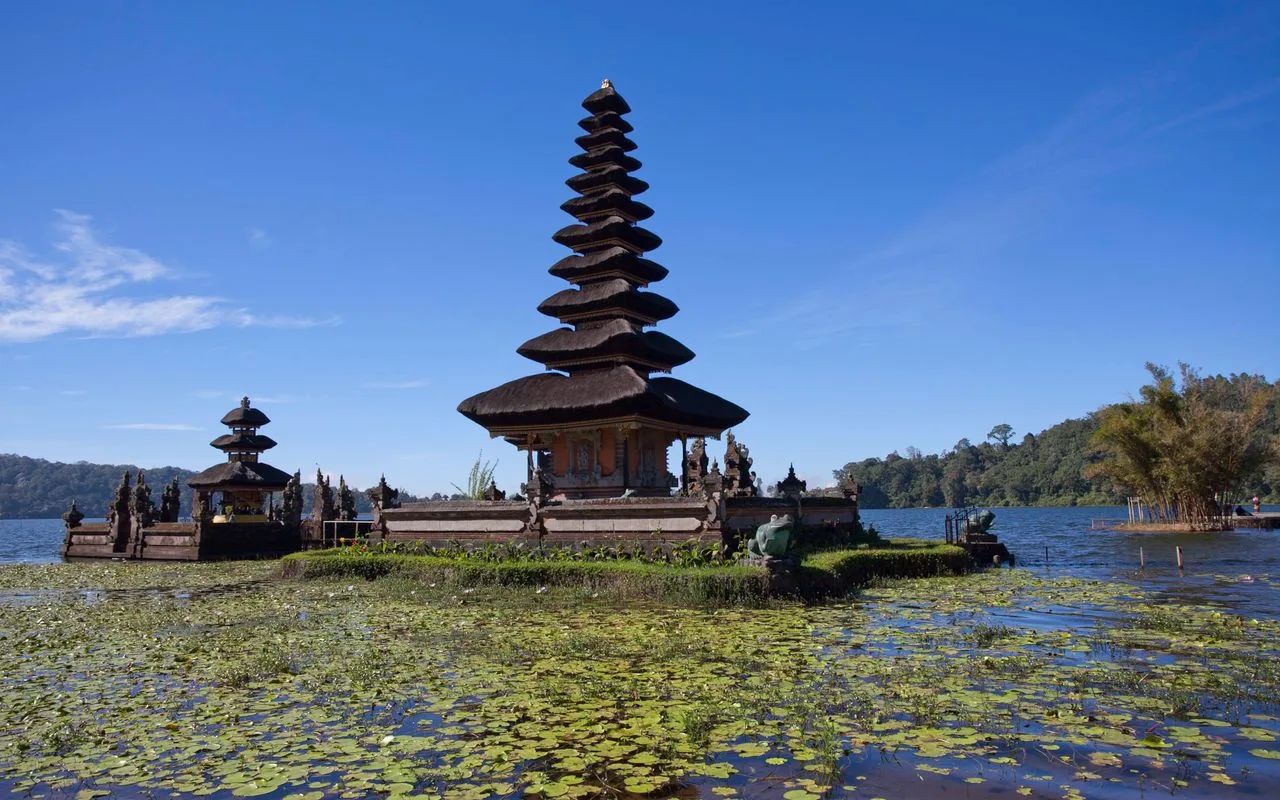
Quick answer: Ulun Danu Beratan is about 2 hours from Nusa Dua by private car. Leave by 06:00–06:30 to arrive for still water and soft light between 07:00 and 09:00, before the tour buses. Budget IDR 100,000 per foreign adult and IDR 75,000 per child for entry (rates rose on 1 July 2026; confirm at the gate), allow 60–90 minutes on site, then pair it with Jatiluwih (40–50 min away) or the Bali Botanic Garden (10 min) and be back at the villa by about 17:00.
Ulun Danu Beratan is the temple most people picture when they think of Bali’s highlands: an eleven-tiered meru standing on a tiny islet in Lake Beratan, mist on the water, mountains closing in behind. It sits at Bedugul, roughly 1,200 metres up and about two hours by car from Nusa Dua, which makes it a proper day trip rather than a quick stop. Done well — early start, the right light, one good pairing — it is among the most rewarding days you can build from the south. Done badly, it is a long drive to a crowded car park at noon. This guide is about doing it well.
Why the lake temple earns a two-hour drive
The temple complex was founded in 1633 by the ruler of Mengwi, and it is dedicated to Dewi Danu, the goddess of the lake. That is not a decorative detail. Lake Beratan feeds the irrigation channels that water rice fields across central Bali, and the subak farmers’ cooperatives downstream still hold ceremonies here to honour the source. Ulun Danu is one of Bali’s major water temples, and it appeared for years on the reverse of an earlier series of the 50,000 rupiah note. If you have read our guide to Bali’s temples, this is the one that shows how religion, water and agriculture are the same subject on this island.
Practically, the site is a landscaped lakeside park with several shrines, the famous island meru, a Buddhist stupa near the entrance, manicured lawns, and a stretch of shoreline where local families hire pedal boats. The inner courtyards are reserved for worshippers; visitors walk the grounds and the shore. Allow 60 to 90 minutes. Longer feels padded unless a ceremony is under way, in which case stay and watch from a respectful distance.
Getting there from Nusa Dua
Count on about two hours each way, sometimes more. The route runs north through Denpasar and Mengwi, then climbs the Denpasar–Singaraja road past Baturiti to Candikuning, the village beside the lake. Traffic through Denpasar is the variable; the mountain road itself is easy. There is no practical public transport for this trip and ride-hailing apps will not reliably bring you back down, so book a car and driver for the day. From Nusa Dua a full-day private car with fuel typically runs IDR 700,000 to 1,000,000 for ten to twelve hours; our private driver guide covers what to expect and how to brief them. The Villa Soleil team can arrange a driver who knows the mountain roads, which matters more than it sounds once you add Jatiluwih’s narrow lanes to the itinerary.
- Leave the villa by 06:00–06:30. This is the single most important decision of the day.
- Breakfast in the car or at a warung in Candikuning; the villa can pack something if you ask the night before.
- Bring a light jacket. Bedugul mornings are often 17–20°C, a shock after the coast.
- Carry cash. Entrance fees, parking and lakeside snacks are cash-first.
Best light and timing
Ulun Danu is a morning temple. Between roughly 07:00 and 09:00 the lake is usually still, mist hangs in the trees, the light is soft and diffused, and the car park is mostly empty. By 10:00 the tour buses arrive from Ubud and the south, and by early afternoon the highland cloud that builds almost every day tends to flatten the light and often brings a shower. Sunset can be pretty, but it is the wrong direction for the classic composition and it puts you on the road back to Nusa Dua in the dark; we do not recommend it for this trip.
Season matters as much as hour. In the wet season (November to March) the lake sits high and the island shrine appears to float, which is the picture-postcard version. In the dry season (April to October) the skies are clearer but the water can drop enough that a strip of grass shows around the base. Neither is bad; they are simply different photographs, and it is worth knowing which one you are likely to get.
Fees, hours and what you pay for
Entrance is charged per person, with a lower rate for Indonesian nationals and children, plus a small fee for parking. Rates at Bali’s major sites have been revised several times in recent years, so treat the figures below as a planning range and confirm at the gate. There is no separate charge to walk the shoreline once inside; boat hire and the market are extra.
| Item | Typical range (IDR) | Notes |
|---|---|---|
| Temple entrance, foreign adult | 100,000 | Children (5–10) 75,000, under 5 free; rates since 1 July 2026, confirm at the gate |
| Temple entrance, Indonesian adult | 50,000 | Children 25,000; show KTP |
| Car parking | 5,000–10,000 | Driver usually handles it |
| Boat or pedal boat on the lake | 100,000–200,000 per boat | 20–30 minutes; negotiate before boarding |
| Bali Botanic Garden entrance | 15,500 weekday / 25,500 weekend per person | Car entry 20,000–30,000 if you drive in |
| Jatiluwih entrance | 75,000 foreign adult / 50,000 child | Domestic 25,000 / 15,000 at time of writing |
| Private car and driver, full day | 700,000–1,000,000 | 10–12 hours from Nusa Dua incl. fuel |
The gates open early, typically from around 07:00, and stay open until early evening. Dress modestly — shoulders and knees covered — and if a ceremony is in progress a sarong may be required; they are available near the entrance. Drones need permission and are frequently refused, so do not plan the day around one.
The famous photo, and how to actually get it
The shot everyone wants is the eleven-tiered meru on its islet, reflected in the lake, with the ridge of the caldera behind. Walk past the first courtyard and follow the shoreline path to the left; the composition opens up from the lawn and the low stone edge on the western shore, where the shrine sits at a three-quarter angle with water on both sides. A few notes from experience:
- Arrive before the mist burns off for the reflection; a breeze after 09:00 usually ruffles it.
- Shoot slightly low, from the lawn edge, so the foreground water fills the frame and the tour-group railings drop out.
- A polarising filter helps with midday glare but kills the reflection; leave it off in the morning.
- Rent a small boat for twenty minutes if you want the angle from the water; it is the only way to photograph the shrine with nothing but lake around it.
- Give the shrine its distance. Worshippers use the platform; it is not a prop.
If you photograph seriously, our Bali photography guide ranks this alongside Lempuyang and Tanah Lot, and of the three it is by far the least stressful to shoot well, provided you keep the morning discipline.
Pairing it into a full day: Jatiluwih or the botanic garden
Two hours each way is too much for one temple. The good news is that Bedugul is surrounded by things worth the detour, and the two strongest pairings suit different moods.
Option A: Jatiluwih. The UNESCO-listed rice terraces sit about 40–50 minutes south-west of the lake via the Pacung road, which means they are on a plausible loop back towards Nusa Dua. Do the temple by 08:00–08:30, the Candikuning market for strawberries and highland vegetables around 09:30, then Jatiluwih by 10:30–11:00 for a walk along the terrace paths before the heat and the lunchtime crowds. Lunch at one of the terrace-edge restaurants (IDR 80,000–150,000 per person), then a stop at Taman Ayun, the royal temple of Mengwi, on the descent. Our Jatiluwih guide has the walking routes; the loop puts you back at the villa by about 17:00. This is the version we suggest for first-timers.
Option B: Bali Botanic Garden. Kebun Raya Bali is ten minutes from the temple in the same village: 157 hectares of orchid houses, giant ferns, bamboo, a begonia collection and open lawns at 1,300 metres, open daily from 08:00, closing at 16:00 on weekdays and 17:00 at weekends. It is the cooler, slower day, ideal with young children or older travellers who would rather picnic under a tree than walk terraces. Add the Handara gate ten minutes north if you must, and the viewpoint over the twin lakes of Buyan and Tamblingan a little beyond. Our botanic garden guide has the sections worth prioritising. This day returns you to the coast a little earlier and with less driving.
Do not try to do both plus the north-coast waterfalls. Sekumpul or Munduk on the same day turns a pleasant highland loop into ten hours in a car; save those for a separate trip or an overnight in the hills, which our Bedugul highlands guide covers.
Weather, comfort and what to bring
Bedugul has its own climate. Expect 17–25°C, frequent afternoon cloud even in the dry season, and rain that arrives quickly and leaves quickly. A light rain shell earns its space in the bag every month of the year. Wear closed shoes with grip if Jatiluwih is on the plan; the terrace paths are concrete and mud in roughly equal measure. Mosquito repellent is less necessary here than on the coast, sunscreen more so because the cool air hides the altitude. Bring small notes for the market and the boat operators, and something warm for the children; strawberries from a roadside stall are the traditional bribe for the drive home.
Planning it from Villa Soleil
From Villa Soleil in Benoa this is a straightforward day if you commit to the early start. Tell our host the evening before and a driver will be at the gate at 06:00 with a cool box; the villa’s private chef can have dinner ready when you roll back in around 17:00, which after a mountain day is worth more than any restaurant. For eight guests across four suites, one people-carrier for the day comes out cheaper per head than almost any organised tour, and you keep control of the timing, which for this particular temple is the whole point.
Related reading
- Jatiluwih Rice Terraces: walking routes and timing
- Bali Botanic Garden at Bedugul
- Bedugul Highlands: lakes, markets and cool air
- Taman Ayun, the royal temple of Mengwi
Written by the team at Villa Soleil. Message us to plan your stay in Nusa Dua.