Tegenungan Waterfall from Nusa Dua: Stairs, Swimming & Fees
By Villa Soleil · Published November 2026 · 8 min read
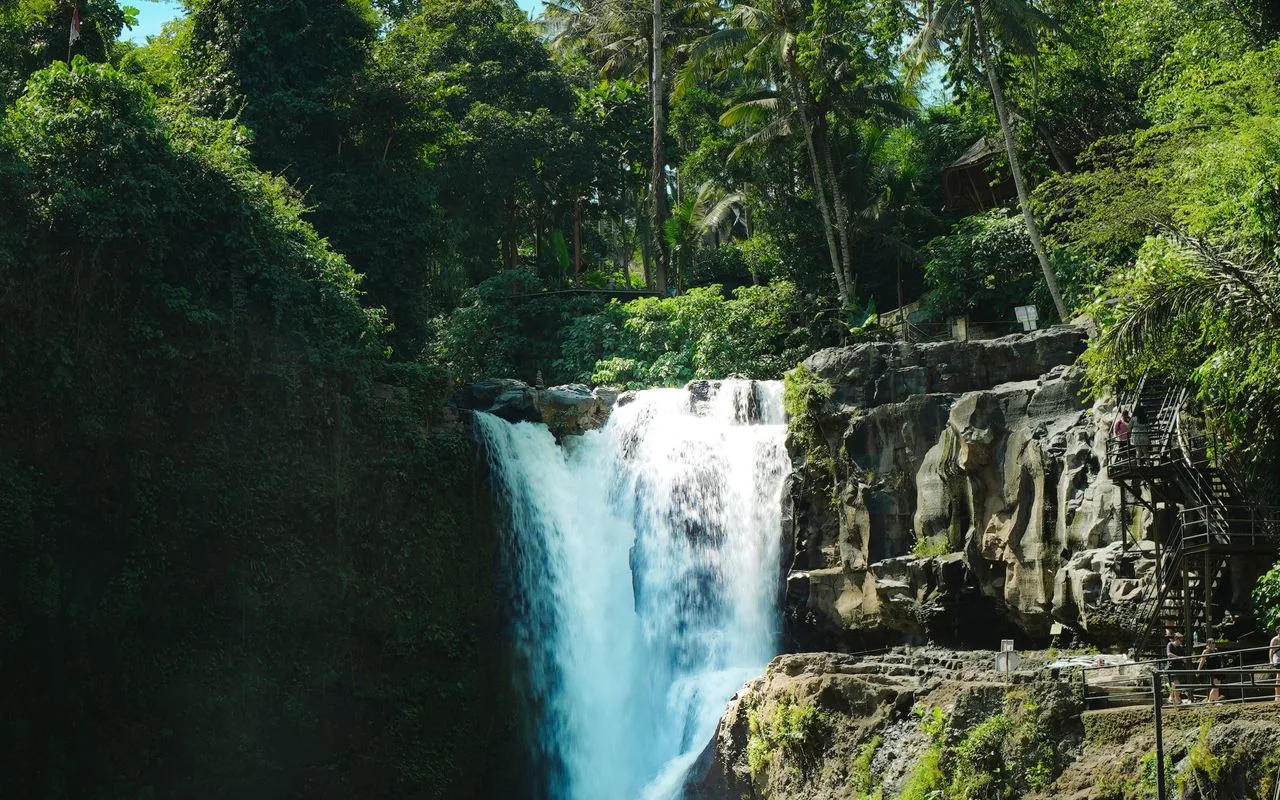
Quick answer: Tegenungan is the closest big waterfall to Nusa Dua, 1–1.25 hours by car from Villa Soleil. Expect an adult ticket of IDR 20,000–30,000 plus IDR 5,000–10,000 parking, roughly 170 concrete steps down to the pool, and safe swimming only in the dry season. Arrive for the 06:30 opening or after 16:00 to avoid the tour buses, and pair it with Goa Gajah or Ubud for a full day.
- Where Tegenungan sits and how long the drive takes
- Fees, parking and opening hours
- The stairs: what to expect
- Swimming and safety, honestly
- Crowds and the best time of day
- Pairing Tegenungan with Ubud or Goa Gajah
- Tegenungan versus Tukad Cepung, Kanto Lampo and Tibumana
- What to bring and how we help
Tegenungan is the waterfall most guests at Villa Soleil end up seeing first, and for a simple reason: it is the closest big one to Nusa Dua. Allow 1–1.25 hours each way from Benoa in normal traffic, which makes it a half-day outing rather than the full-day commitment that the northern and eastern falls demand. It is wide, loud and photogenic, and the plunge pool is one of the few in Bali where swimming is genuinely part of the visit. It is also, by mid-morning, one of the busiest spots in Gianyar. This guide is our honest take on the stairs, the swimming, the fees, the timing and whether it is the right waterfall for you.
Where Tegenungan sits and how long the drive takes
The falls are on the Petanu River between Tegenungan and Blangsinga villages, just south of the Ubud tourist belt in Gianyar regency. From Villa Soleil the route runs up the Bali Mandara toll road, through Sanur and Batubulan, then north on the Sukawati road. Budget 1–1.25 hours in the morning; the return in late afternoon can stretch longer once the Sanur bypass fills. That makes Tegenungan a comfortable pairing with Ubud, which is another 30 minutes or so north, or with Goa Gajah, roughly 20 minutes up the road.
A private car with driver for the day is the sensible way to do it. Expect around IDR 600,000–900,000 for an eight-to-ten-hour hire including fuel, and confirm current rates when you book. Our host can arrange a driver who knows the parking situation and the quieter Blangsinga side, and will tell you what a realistic day looks like before you commit.
Fees, parking and opening hours
Entry is collected at a ticket booth on the village road. Recent visitors report an adult ticket of IDR 20,000–30,000, with a lower child rate, and the price has crept up in steps over the past few years, so treat that as a range and confirm on the day. Parking is charged separately, typically IDR 5,000–10,000 depending on whether you arrive by scooter or car. Changing rooms and toilets at the base ask a small fee of a few thousand rupiah. The site opens around 06:30 and closes around 18:00, and everything is cash only; there are no card terminals and no reliable ATM nearby, so bring small notes from Nusa Dua.
One thing that catches people out: the waterfall has two independently managed entrances. The classic approach is from the Tegenungan side on the west bank, where the ticket booth, the cafe strip and the main staircase are. The Blangsinga side on the east bank has its own booth, its own viewpoint and a separate ticket, so if your driver takes you to one you are not automatically entitled to the other. Neither ticket is expensive, but it is worth knowing before you argue with an attendant.
The stairs: what to expect
From the ticket booth you walk a short paved lane past warungs and souvenir stalls to a viewing platform, which is where most of the bus groups stop. The real visit begins below. A concrete staircase of roughly 170 steps drops to the riverbed. The steps are solid and have handrails on most sections, but the risers are uneven and the lower flights get slick with spray. Going down takes five minutes; coming back up in the midday heat is a proper climb, and we have seen fit adults stop twice.
- Wear shoes with grip, not flip-flops; the last stretch to the pool is over wet boulders.
- Carry only what you need: a small dry bag, water, a sarong to change under.
- If knees or hips are a concern, the upper viewpoint still gives you the full width of the fall without a single step down.
- Children who can manage a long staircase will be fine; toddlers in carriers are a strain on the way up.
Swimming and safety, honestly
Tegenungan is a river waterfall, not a spring-fed pool, and that changes everything about the swim. In the dry season, roughly April to October, the flow is moderate and the pool below the fall is clear enough to wade into and swim across, with the current pushing you gently downstream. In the wet season, November to March, the Petanu turns brown and fast after rain in the hills, and the attendants will rope off the pool or halt swimming entirely. Do not treat that as negotiable; flash floods on Balinese rivers arrive quickly and without warning.
A few practical rules. Stay well away from the base of the fall itself, where the water hits the rocks with real force. Do not climb on the ledges behind or beside the curtain for a photo; the rock is slick and people have been injured doing exactly that. There is sometimes an attendant watching the pool, but you should assume there is no trained lifeguard, no rescue equipment and a 1–1.25 hour drive back to the enclave, where BIMC Siloam Nusa Dua sits inside the ITDC. Swim as if you are on your own, because in practical terms you are.
Crowds and the best time of day
This is the part that decides whether you love Tegenungan or shrug at it. From roughly 10:00 until 15:00 the site is busy with day-tour buses, and the staircase becomes a slow two-way procession. Arrive for the 06:30 opening and you get the pool nearly to yourself, soft light on the water and a cool climb back up. That means leaving Villa Soleil by 05:15, which sounds brutal but pairs naturally with a sunrise coffee on the road and puts you in Ubud for a late breakfast while the tour groups are still boarding.
The second-best window is after 16:00, when the buses have left for their sunset dinners. The light is flatter and you lose an hour of daylight in the pool, but budget a little extra for the drive home, since leaving Gianyar around 17:30 puts you on the Sanur bypass at its busiest.
Pairing Tegenungan with Ubud or Goa Gajah
Because the falls sit at the southern edge of the Ubud area, the natural loop is waterfall first, then culture, then lunch. Goa Gajah, the eleventh-century Elephant Cave with its carved entrance and bathing pools, is about 20 minutes north and needs an hour; entry is around IDR 50,000 and sarongs are provided. From there it is a short hop into central Ubud for the palace, the market and a long lunch, or south to the Celuk silver workshops on the way home. Our Goa Gajah guide and Ubud day trip cover the details; a realistic full day from Villa Soleil runs 06:00 to 17:00 and covers Tegenungan, Goa Gajah, Ubud lunch and one more stop.
If you would rather skip the stairs but still see the fall, Omma Dayclub sits on the ridge above the Tegenungan (Kemenuh) side of the gorge, a few steps from the main viewing platform, with pools, a lift down to a viewing deck and a day pass of IDR 300,000++ that converts to food and drink credit. It is a very different mood from the riverbed, but it makes the fall accessible to grandparents and it opens early.
Tegenungan versus Tukad Cepung, Kanto Lampo and Tibumana
Guests often ask us which one waterfall to see, so here is our straight comparison. All fees are per adult, cash, and worth confirming on the day.
| Waterfall | Drive from Nusa Dua | Entry (adult) | Walk in | Swim? | Best for |
|---|---|---|---|---|---|
| Tegenungan | 1–1.25 h | IDR 20,000–30,000 | Roughly 170 steps | Yes, dry season | Closest big fall, real swimming, pairs with Ubud |
| Kanto Lampo | About 1.5 h | IDR 25,000 | 5–6 minutes, stairs | Wading only | The rock-ledge photo, easiest access |
| Tibumana | 1.5–2 h | IDR 25,000 | About 12 minutes | Yes, calm pool | Quiet jungle swim, families |
| Tukad Cepung | 1.5–2 h | IDR 25,000–30,000 | About 20 minutes, riverbed | Ankle deep | Cave light rays, 09:00–11:00 |
In short: Tegenungan is the biggest and the closest, and the one with the biggest, deepest swim of the four, but it is also the most crowded and the most effort on the way out. Kanto Lampo, about 20–25 minutes further north near Gianyar town, is really a single photograph on a fan of rock ledges, often with a queue. Tibumana is the gentle one: a short shaded walk, a round pool, and far fewer people, which makes it our pick for families with younger children. Tukad Cepung is a spectacle rather than a swim, a slot canyon where the light pours through mid-morning; it is further, and the riverbed walk is wetter than people expect. For the full island picture, including the northern giants, read our Bali waterfalls guide and the dedicated Tukad Cepung page.
What to bring and how we help
Pack swimwear under your clothes, a quick-dry towel, water shoes or grippy sandals, a dry bag for the phone, cash in small notes and a change of clothes for lunch in Ubud. Leave drones at home unless you have checked the current rules, and note that professional shoots need a separate permit. Sunscreen matters less down in the gorge than on the walk back, but the mosquitoes do not take mornings off, so repellent is worth carrying.
From Villa Soleil, our host will book the driver, suggest a departure time that beats the buses, and pack a cool box of water and fruit from the kitchen if you ask the night before. Message the team on WhatsApp at +62 813 090 112 and they will reply within the hour with a plan that fits your group; booking direct also gives you a better whole-villa rate than the online agencies.
Related reading
- Bali waterfalls: which ones are worth the drive from Nusa Dua
- Tukad Cepung Waterfall: cave light rays and the riverbed walk
- Goa Gajah: the Elephant Cave 20 minutes from Tegenungan
- Ubud day trip from Villa Soleil: a realistic itinerary
Written by the team at Villa Soleil. Message us to plan your stay in Nusa Dua.