Nusa Dua Weather Month by Month: Rain, Heat & Sea
By Villa Soleil · Published October 2026 · 9 min read
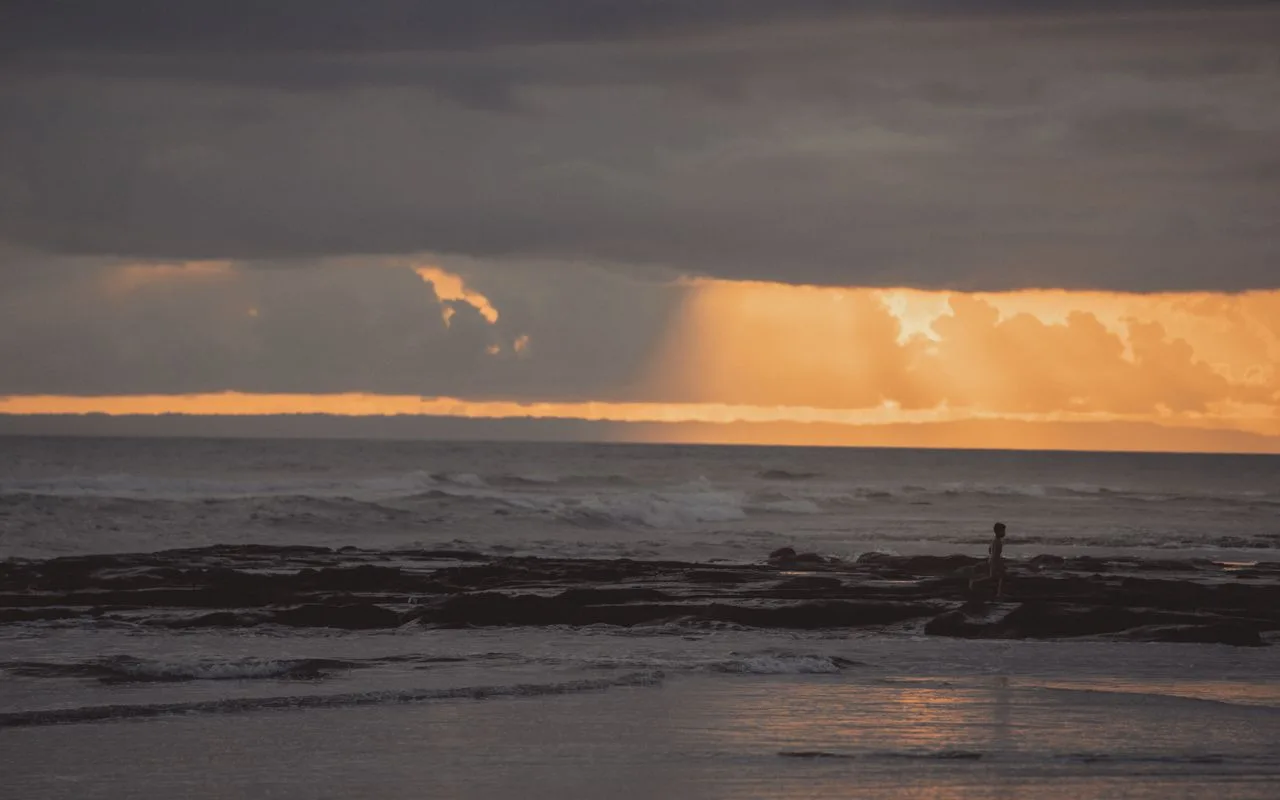
Quick answer: Nusa Dua is driest from July to September (about 15–60 mm a month) and wettest from December to February (about 290–350 mm a month), based on the Ngurah Rai 1991–2020 normals. Monthly mean temperatures hold at 26.3–28.2°C year-round and the sea stays 26–29°C. Wet-season rain falls in short, heavy afternoon bursts rather than all day, and May, June and September are our pick for dry weather without peak-season crowds.
- The short version: two seasons, one forgiving coastline
- Nusa Dua weather month by month
- What the wet season actually looks like from a villa
- Sea, wind and swell along the Nusa Dua lagoon
- Heat, humidity and how a pool villa handles them
- The best months, honestly ranked
- What to pack for each season
- Planning your stay at Villa Soleil
Nusa Dua sits on one of the driest corners of Bali. The Bukit peninsula catches far less rain than Ubud or the mountains, the lagoon is sheltered by a reef, and the airport weather station at Ngurah Rai, roughly fifteen minutes up the road, gives us a long, reliable record to work from. We have used the 1991–2020 climate normals for that station throughout this guide, because it is the closest official series to the villa. What follows is what those numbers feel like from a sun lounger, the pool, or the back seat of a driver’s car.
The short version: two seasons, one forgiving coastline
Bali has a dry season from roughly April to October and a wet season from November to March. The temperature barely moves: monthly means at Ngurah Rai run from 26.3°C in August to 28.2°C in November, with daytime highs of about 29–32°C and nights around 23–26°C all year. What changes is rainfall, and it changes a lot. July averages about 30 mm across the whole month; January averages about 350 mm. The three wettest months, December to February, each collect roughly 290–350 mm, while July to September each see only about 15–60 mm.
The forgiving part is where Nusa Dua sits. South Bali gets noticeably less rain than the central highlands, and the east-facing lagoon at Nusa Dua and Benoa is protected from the big southwest swells that hit Kuta and Seminyak. Even in the wettest weeks, a villa afternoon here tends to look like sun, a dark build-up of cloud, a hard downpour, and then sun again.
Nusa Dua weather month by month
The figures below are long-term averages for the Ngurah Rai station, rounded, with our own notes on how each month feels at the villa. Sea temperature along this coast ranges from about 26°C in August to 29°C in January, so swimming is comfortable in every month.
| Month | Mean temp | Rainfall | What it feels like |
|---|---|---|---|
| January | 27.9°C | ~350 mm | Wettest month; sticky, dramatic afternoon storms, lush and quiet. |
| February | 28.0°C | ~290 mm | Still very wet, though multi-day breaks of sun are common. |
| March | 28.0°C | ~230 mm | Rain easing; Nyepi usually falls here, when the whole island stops for a day. |
| April | 28.1°C | ~105 mm | The turn; warm, greener than the dry season, fewer visitors. |
| May | 27.8°C | ~95 mm | One of our favourites: dry, calm seas, light crowds. |
| June | 27.2°C | ~70 mm | Cooler evenings, steady breeze, long sunny days. |
| July | 26.5°C | ~30 mm | Very dry and breeziest; peak season, book early. |
| August | 26.3°C | ~15 mm | Driest and coolest month, crisp mornings, busiest beaches. |
| September | 26.8°C | ~60 mm | Still dry, wind dropping, crowds thinning. |
| October | 27.6°C | ~65 mm | Hot and mostly dry; occasional first storms late in the month. |
| November | 28.2°C | ~130 mm | Warmest mean; humidity rising, afternoon showers begin in earnest. |
| December | 28.0°C | ~325 mm | Very wet but festive; Christmas and New Year bookings fill fast. |
Notice that the wet season is not a single block. November is a transition month with less than half the rain of December, and March carries roughly two-thirds of January’s total. If you can only travel in the northern-hemisphere winter, late November and the second half of March are the gentler ends of it.
What the wet season actually looks like from a villa
The most common misconception we hear is that 350 mm in January means grey skies all month. It does not. Bali’s wet-season rain is convective: the morning is often bright, cloud towers build over the mountains and drift south through the afternoon, and then a burst of very heavy rain lands for thirty minutes to two hours, usually between mid-afternoon and early evening. A single storm can drop 40–60 mm, which is why the monthly totals look so alarming. Between storms, the air is washed clean and the light is spectacular.
That said, we want to be honest about the exceptions. Two or three times each wet season a slow-moving system parks over the island and it rains, on and off, for a day or two. Roads in low-lying parts of Denpasar and Kuta can flood briefly, and drives to Ubud (usually 1.5–2 hours) or the north coast (usually 2.5–3 hours) take noticeably longer than normal. If your trip is short and weather-critical, our guide to the Bali rainy season goes deeper into planning around it.
From the villa itself, a downpour is genuinely pleasant: the pool terrace is partly covered, and most of our December guests spend the storm hour with a book and a coffee and are back in the pool before dinner.
Sea, wind and swell along the Nusa Dua lagoon
Nusa Dua faces east across the Badung Strait, and a fringing reef sits a few hundred metres offshore. From roughly June to September the southeast trade winds blow steadily, which keeps the afternoons fresh but can make the outer reef choppy; inside the lagoon the water stays calm and swimmable. The trade winds are also why July and August feel cooler than the thermometer suggests, and why a light layer is worth packing for evenings on the terrace.
From November to March the wind swings to the west and northwest and softens. The east coast becomes glassier than the west coast, which is one reason wet-season mornings at Nusa Dua’s beaches can be some of the calmest on the island. Tanjung Benoa water sports run in both seasons, though operators will pause parasailing and jet-ski sessions when a squall is visible on the horizon. Visibility for snorkelling is best in the dry season, when river run-off is minimal.
Tides matter more than season on this coast. At low water the lagoon drains to ankle depth over sand and seagrass; at high water it is a proper swimming beach, so check a tide table for the day.
Heat, humidity and how a pool villa handles them
Relative humidity in south Bali sits around 80 percent for most of the year and climbs higher in the wet season. The pairing matters more than the number: 31°C at 85 percent humidity in December feels heavier than 31°C at 70 percent in August with a trade wind behind it. Nights rarely drop below 23°C in any month, so air conditioning in the suites earns its keep year-round.
A private pool changes the calculation entirely. In the dry season you use it mid-afternoon to knock the heat out of a beach day. In the wet season you use it mid-morning, before the cloud builds, and again after the storm when the air is at its freshest. The pool at Villa Soleil is unheated and sits in full sun for most of the day, so water temperature tracks the air closely; it is never cold, but it is at its most refreshing in July and August.
- Sun is fierce in every month; the UV index regularly hits 10 or above at midday, even under thin cloud.
- Mosquitoes are busier after rain, so evening repellent is more important from November to March.
- Dehydration creeps up in the humid months; keep a refillable bottle for days out.
- Laundry dries in an hour on a dry-season terrace and can take a day in January, so pack quick-dry fabrics for the wet months.
The best months, honestly ranked
If we had to pick, May, June and September are the sweet spot: dry, comfortable, and noticeably quieter than July and August. Rates across the island are softer, restaurants in Nusa Dua take walk-ins, and day trips to Uluwatu (35–45 minutes) or Ubud (1.5–2 hours) run without holiday traffic.
July and August are the classic peak for good reason: the lowest rainfall of the year and the coolest nights. The trade-off is demand. Villas, drivers and popular beach clubs book out weeks ahead, and Ngurah Rai airport is at its busiest. April and October are the shoulder months, and both are underrated; October in particular is hot, largely dry, and pleasantly empty until the last week.
December to February is the wet season proper and, apart from the Christmas and New Year fortnight, the most affordable time to be here. Come with realistic expectations and you get a green island, dramatic skies and a villa that feels like a refuge. Our full best time to visit Bali guide weighs crowds, festivals and prices alongside the weather if you want the wider view.
What to pack for each season
Packing for Nusa Dua is mostly about fabrics and footwear rather than volume; you will live in swimwear and linen regardless of month. The additions below are the ones guests tell us they were glad to have.
- Wet season: a compact umbrella or light rain jacket, quick-dry clothing, sandals that survive puddles, and a dry bag for phones on boat days. Minimarts sell ponchos for around IDR 15,000–30,000 and umbrellas for IDR 30,000–60,000 if you forget.
- Dry season: a light long-sleeve layer for breezy July and August evenings, a hat with a brim, and reef-safe sunscreen in larger quantities than you think.
- All year: a sarong or light cover-up for temple visits, insect repellent, and a spare pair of sunglasses.
Our separate Bali packing list covers the full checklist, including plug adapters and pharmacy items that are easier to bring than to buy.
Planning your stay at Villa Soleil
Villa Soleil is a private four-suite Mediterranean-style villa that sleeps eight, with its own pool, at Kendi Mas Villa 2 in Benoa on the edge of Nusa Dua. The nearest beach is about a 650 m walk, Bali Collection and the ITDC enclave are 8–10 minutes by car, and Ngurah Rai airport is 12–20 minutes depending on traffic. Whole-villa rates start from IDR 4,500,000 per night, and booking direct with our host is consistently cheaper than the online agencies.
Whatever month you choose, our host replies on WhatsApp at +62 877 7000 1535 within the hour and can arrange a private driver, typically IDR 600,000–900,000 for an 8–10 hour day (confirm current rates), a private chef for storm evenings, and babysitters for families. Tell us your dates and we will tell you, candidly, what the weather is likely to do.
Related reading
Written by the team at Villa Soleil. Message us to plan your stay in Nusa Dua.