Benoa Mangrove Kayaking & Boardwalks: The Quiet Side of Nusa Dua
By Villa Soleil · Published October 2026 · 7 min read
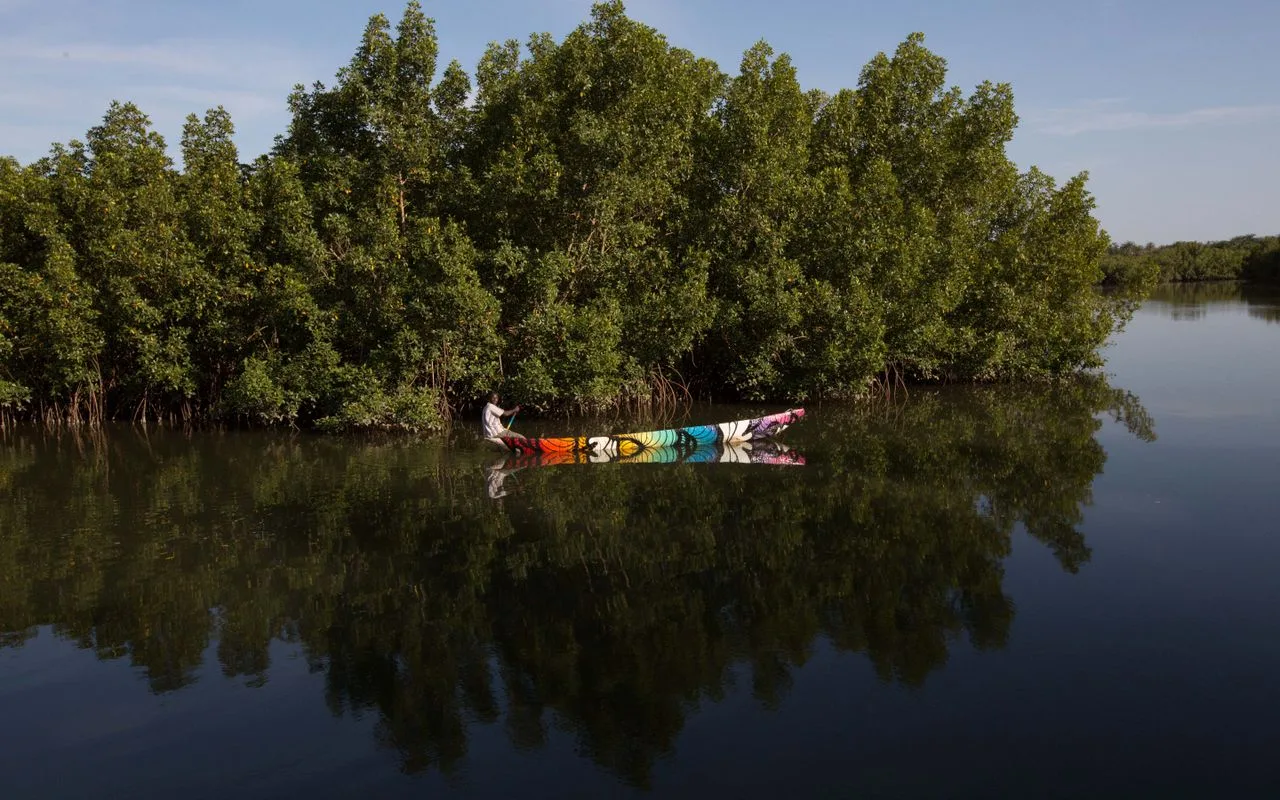
Quick answer: Benoa Bay is ringed by Bali’s largest mangrove forest, Tahura Ngurah Rai, 10–30 minutes from Nusa Dua depending on the launch point. Guided kayak tours (roughly 1.5–2.5 hours) launch from the Serangan, Tanjung Benoa and Kedonganan sides and are timed to the tide; expect typical rates of IDR 350,000–850,000 per person (the higher figures usually include hotel pickup) and confirm current rates. The famous Suwung boardwalk has been reported closed to walk-in visitors, so check its status before you go. Mornings, mid-to-high tide, and children of about six and up in a tandem kayak work best.
Most guests at Villa Soleil discover Benoa Bay by accident. You cross the causeway to Serangan for a surf check, or you look south from the airport road at low tide, and there it is: a grey-green horizon of mangrove that stretches for kilometres, minutes from the manicured lawns of Nusa Dua. This is Taman Hutan Raya (Tahura) Ngurah Rai, a 1,373-hectare forest park that wraps the whole bay, and it is the closest genuinely wild landscape to the villa. Paddling through it in a kayak is a slow, quiet counterpoint to the jet-ski buzz of Tanjung Benoa water sports, and it suits children, grandparents and anyone who has had enough of beach clubs for a day.
What the Benoa Bay mangroves actually are
Tahura Ngurah Rai is not a garden with a fence around it. It is a working coastal forest that spans two administrative areas, Denpasar city and Badung regency and touches the villages of Sanur Kauh, Sidakarya, Sesetan, Serangan, Kuta, Jimbaran and Benoa. The Dutch first protected the area in 1927; Indonesia formalised it as a grand forest park in 1993. A 2019 survey counted roughly 1,000 hectares of actual mangrove cover inside the boundary, the rest being tidal flats, ponds and channels. Japanese aid (JICA) funded the elevated boardwalks, watchtowers and rest pavilions you see in photographs, and in November 2022 the G20 leaders were brought here to plant seedlings, which tells you how seriously Bali treats this forest as a climate showcase.
Expect to see the classic Indo-Pacific mangrove cast: stilt-rooted Rhizophora along the channel edges, pencil-rooted Sonneratia and Avicennia on the mudflats, and the cone-shaped pneumatophores poking up like a bed of nails at low tide. None of it is spectacular in the waterfall sense. The pleasure is in the detail and the silence.
Kayak tours: where they launch and what they cost
There is no single “official” kayak concession; several small operators run guided paddles from different edges of the bay, and most sell through Klook, GetYourGuide, Traveloka or WhatsApp. The three launch areas that matter from Nusa Dua are:
- Serangan (Turtle Island) side — the most established channels, reached via the causeway from the Sanur bypass. Roughly 20–30 minutes from the villa.
- Tanjung Benoa / Nusa Dua side — a handful of operators launch from the bay side of the peninsula, which puts you on the water within about 10–15 minutes of leaving the villa. Channels here are shorter and more open.
- Kedonganan / Tuban side — on the Benoa Bay side of the bypass, just east of the airport (launch at the Wana Segara Kertih fishermen's group), popular with transparent-kayak outfits. Roughly 20–30 minutes away, longer if the Dewa Ruci junction is jammed.
Prices move with the platform, the season and whether a hotel pickup is bundled in. In our experience a guided small-group paddle of 1.5–2.5 hours usually lands around IDR 350,000–850,000 per person (the higher figures generally include hotel pickup); private or sunrise departures and transparent kayaks sit higher, sometimes above IDR 1,000,000 per boat. Treat every figure here as a range and confirm current rates with the operator before you book; our host can shortlist two or three that are running well this season and check tide slots for you.
Timing around the tide
This is the part most visitors get wrong. Benoa Bay is shallow. At low water the picturesque channels turn into ankle-deep mud, and even a kayak will ground. Operators therefore schedule departures around the tide table, which shifts by roughly 45–50 minutes each day, and a slot that was 08:00 on Monday may be 10:30 by Thursday. Mid-tide rising into high tide is ideal: deep enough to move freely, low enough that the roots and mudskippers are still on show. Dead high tide is fine but hides the roots; dead low tide means no paddle at all.
Morning is better than afternoon. Light is soft, the wind has not picked up, the birds are active and the airport approach path, which you will hear from the Kedonganan side, is quieter. In the wet season (roughly November to March) storms tend to arrive after lunch, so a morning slot also keeps you dry.
Wildlife you can realistically expect
Keep expectations honest: this is a bird-and-crab landscape, not a safari. What a quiet paddle reliably delivers is:
- Collared kingfishers, egrets and herons stalking the mud at the channel edges.
- Mudskippers hopping across the flats and fiddler crabs waving one oversized claw.
- Water monitors, often sunning on a root and sliding off as you approach.
- Schools of juvenile fish sheltering among the roots; the bay is a nursery for the reef fish you might later see off Turtle Island.
- Occasionally sea eagles or brahminy kites overhead, and in the right season migratory waders.
Bring binoculars if you own a small pair. A guide who paddles in silence and lets the boat drift will show you far more than one who narrates the whole way.
The Suwung boardwalk: check before you go
The forest’s best-known access point is the Mangrove Information Centre on Jalan Bypass Ngurah Rai in Suwung, about 100 metres from the Dewa Ruci junction, with a roughly two-kilometre timber boardwalk looping out over the water. Published tariffs list Indonesian adults at about IDR 10,000 and foreign adults at up to IDR 200,000, with opening hours of 08:00–18:00. However, sources updated in 2026 report that has remained closed to general walk-in visitors since the pandemic and the 2022 G20 renovation, with access limited mainly to official events. Do not build a morning around it without confirmation. If you want a walking rather than paddling experience, ask our host to call ahead, or combine a kayak tour with the short boardwalk sections some operators maintain at their own launch points.
Suitability at a glance
| Who | Verdict | Notes |
|---|---|---|
| Children 6–12 | Good | In a tandem with an adult; life jackets supplied; ask for a 1.5-hour rather than 2.5-hour tour. |
| Toddlers and babies | Not suitable | No safe seat in a kayak; boardwalk only if it reopens. |
| Teenagers | Very good | Solo kayaks are usually fine from about 12–14; transparent kayaks are the crowd-pleaser. |
| Seniors | Good with care | Entry from a muddy bank can be awkward; choose a launch with a proper jetty or pontoon. |
| Non-swimmers | Acceptable | Channels are shallow and sheltered; jackets are mandatory anyway. |
| Photographers | Excellent | Early, 07:00–09:00 on a rising tide; dry bag essential; a polariser cuts glare on the water. |
The sustainability angle, without the greenwash
Mangroves are the reason Benoa Bay still exists in its current shape. They hold the shoreline against erosion, absorb storm surge, filter runoff from Denpasar and store carbon several times more densely than dry forest. The bay was the subject of a bitter, years-long fight over a proposed 700-hectare reclamation project; that plan was ultimately shelved and the bay designated a maritime conservation area in 2019, which is why you can paddle here at all. Tourism has a role in keeping it that way, provided it is the low-impact kind. Practical things you can do:
- Choose operators that use paddles, not engines, inside the channels, and that brief guests not to touch roots or chase birds.
- Skip the “plant a mangrove” photo opportunity unless it is run with the forest office; badly placed seedlings in the wrong zone rarely survive.
- Take out what you bring in. The channels collect plastic from the whole bay, and some operators run informal clean-up paddles you can join.
- Pay the local village fee where one is levied at Serangan; it is small and it funds the people who actually patrol the forest.
Practicalities from Villa Soleil
Wear clothes you do not mind getting muddy, reef-safe sunscreen, a hat with a strap, and shoes that can get wet (old trainers or water shoes, not flip-flops). Bring a dry bag for phones, at least a litre of water per person, and insect repellent for the launch area; there are few mosquitoes on the water itself. Most outings are back at the villa within three to four hours door to door, which leaves the afternoon free for the pool or a walk to the beach. Families often pair a morning paddle with lunch at a Serangan warung and the Sanur beachfront, or with the calmer stretches listed in our guide to things to do in Nusa Dua.
Our Villa Soleil host will arrange a driver to wait at the launch point, book the tide slot, and, if you have a mixed-age group, split you between a kayak tour and a quieter option such as one of the ideas in our guide to Bali with kids so nobody is stuck in a boat they do not want to be in. Message the team on WhatsApp the day before and they will come back with the tide times, two operator quotes and an honest opinion on the weather.
Related reading
- Tanjung Benoa Water Sports Guide
- Turtle Island (Pulau Penyu) from Tanjung Benoa
- Bali with Kids: A Family Planning Guide
- Sanur Day Trip from Nusa Dua
Written by the team at Villa Soleil. Message us to plan your stay in Nusa Dua.