Batur Hot Springs: Toya Devasya, Toya Bungkah & the Sunrise Trek from Nusa Dua
By Villa Soleil · Published October 2026 · 8 min read
Quick answer: The Lake Batur hot springs sit in Toya Bungkah, ten minutes below the Mount Batur trailhead and 2.5–3 hours’ drive from Nusa Dua. Batur Natural Hot Spring (7 am–7 pm; IDR 200,000 foreign adult, IDR 70,000 Indonesian) is the calm choice; Toya Devasya (eight hot pools, slides, infinity pool, tickets via the Goers app from about IDR 300,000 per foreign adult) suits families. Book a trek-plus-springs package from about IDR 650,000 per person, leave the lake by 11 am, and you are back at the villa by mid-afternoon.
- Where the hot springs are, and why they exist
- Batur Natural Hot Spring vs Toya Devasya: which pool is yours?
- Pairing the springs with the sunrise trek
- The day in numbers
- What to bring (and what to leave in the villa)
- The long drive back to Nusa Dua
- A more relaxed alternative: springs without the summit
- Honest verdict
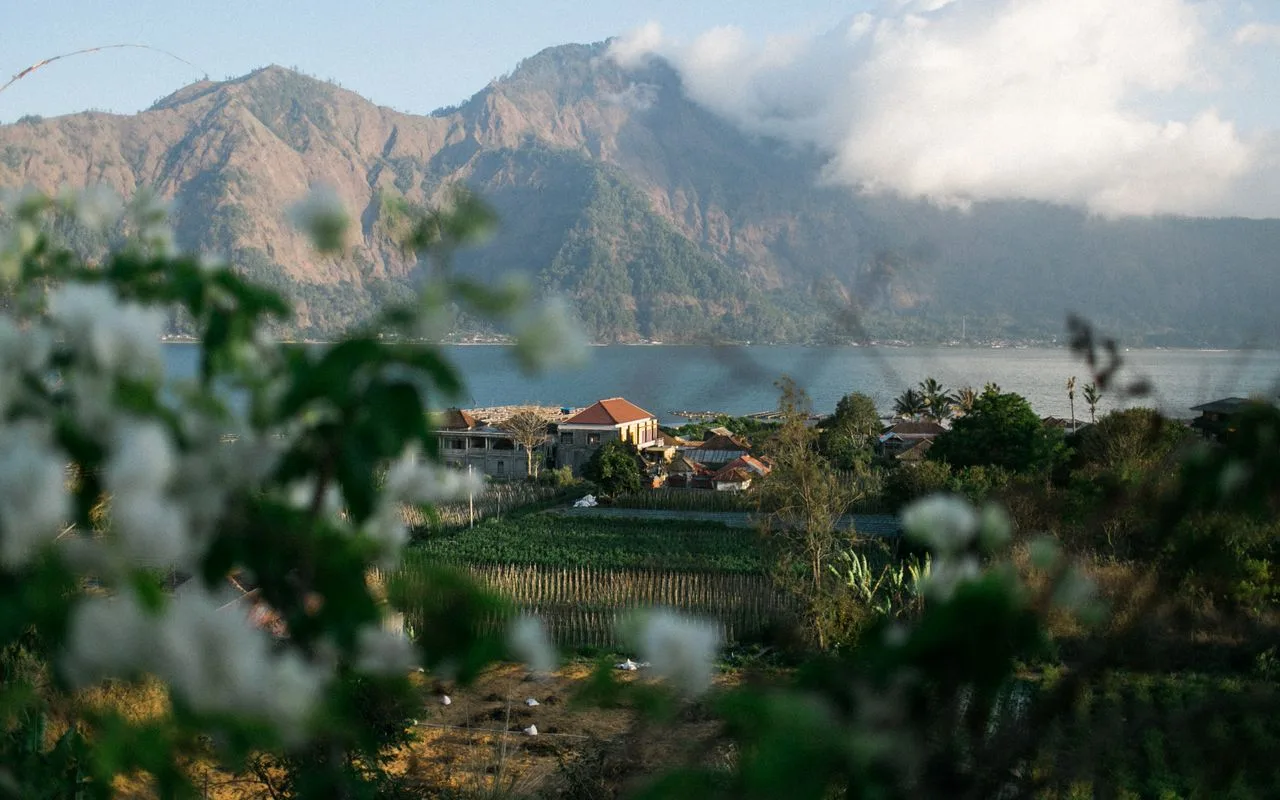
There is a particular kind of tired that only a volcano gives you. You have been awake since 1.30 am, you have climbed 700 vertical metres in the dark, the last of them on loose scoria, you have watched the sun clear Mount Abang and Rinjani far off on Lombok, and now, at 8 in the morning, every muscle in your legs is filing a complaint. This is precisely the moment the hot springs at Toya Bungkah, on the western shore of Lake Batur, were made for. Sit in 38°C mineral water with the lake at eye level and the cone you just climbed steaming gently behind it, and the whole exhausting, exhilarating morning suddenly makes sense. From Villa Soleil in Nusa Dua it is a long day — there is no pretending otherwise — but done well it is one of the best days Bali offers.
Where the hot springs are, and why they exist
Lake Batur sits inside a caldera roughly 10 by 13 kilometres across, the collapsed remains of a much larger volcano that blew itself apart around 29,000 years ago. Mount Batur (1,717 m) is the young, still-active cone that grew back in the middle; its last eruption was in 2000, and the black lava fields from 1963 and 1968 still fan out across the caldera floor. Geothermal water rises along fractures near the lake edge, and the village of Toya Bungkah (the name means “water from the rock”, after the springs that seep out of the lava there) has bathed in it for generations. UNESCO added the Batur caldera to its Global Geoparks Network in 2012, which explains the “Geopark” branding you will see everywhere.
The three bathing options sit within a few hundred metres of one another on Jalan Raya Toya Bungkah. From south to north: Batur Natural Hot Spring (the simpler complex, built on the site of the old village bathing pool), Toya Devasya (the large resort with waterslides and an infinity pool) and The Ayu Kintamani (Toya Devasya’s quieter villa sibling, whose pools are mainly for overnight guests). Between them they cover everything from a family splash to a genuinely serene soak, so it is worth choosing deliberately rather than following the first tour bus.
Batur Natural Hot Spring vs Toya Devasya: which pool is yours?
Batur Natural Hot Spring is the one we send most couples and small groups to. It is a terrace of stone-edged pools stepping down to the lake, fed by running volcanic water of slightly different temperatures, with a small kids’ pool, a bar-restaurant and massage huts on site. It opens daily 7 am to 7 pm, and at the time of writing its published rates were IDR 200,000 per foreign adult (IDR 100,000 per child) and IDR 70,000 / 35,000 for Indonesian citizens (KTP holders), including locker and towel. Tickets are sold at the counter (cash, card or QRIS) or via the operator’s WhatsApp; Klook, Traveloka and similar platforms sell pre-booked vouchers that are often noticeably cheaper than the gate price, so buy ahead if you are happy to fix a date.
Toya Devasya is a different animal: eight natural hot pools plus an Olympic-sized swimming pool, two waterslides, a “cave” pool, a lakeside infinity pool with a swim-up bar, a hikers’ camp with tents and a row of food stalls. Its water runs 37–40°C in the pools from a source that emerges at around 50°C, and the aptly named “hottest pool” at the top of the site is the one to head for if you want real heat. Tickets are sold through the Goers app; the resort does not publish a fixed price on its own site, and rates vary by nationality, weekday versus weekend and whether you add a jeep or trekking package. Budget around IDR 300,000 per foreign adult (roughly IDR 100,000 for Indonesian citizens) and confirm the current rate on the app before you set off. If you have children who will be bored by sitting still, this is the right choice; if you want to hear the lake lap against the stones, it is not.
Pairing the springs with the sunrise trek
The standard rhythm is simple and works well: night pickup, summit for sunrise, breakfast on the crater rim, descend by 8–8.30 am, drive ten minutes down to Toya Bungkah, soak for an hour or two, eat properly, then head south. Most trekking operators sell exactly this bundle. Verified 2026 rates from an established Toya Bungkah operator started at IDR 450,000 per person for the sunrise trek alone and IDR 650,000 with the hot spring included, while jeep-based sunrise tours (for guests who would rather not climb) ran IDR 650,000–900,000 depending on whether the springs were bundled. Ubud-based agencies quote from about USD 35 per person before transport from the south. Expect the price to climb once a Nusa Dua pickup, a private guide and a proper breakfast are factored in, and read our full Mount Batur sunrise trek guide before you commit to the climb.
Two honest caveats. First, local guiding on Batur is effectively compulsory and tightly controlled by the village association, so do not plan a “free” ascent. Second, the trek is short but steep and the final stretch is loose ash; anyone with knee trouble should look seriously at the jeep alternative, which reaches a lower viewpoint on the lava field for the same sunrise.
The day in numbers
| Item | Realistic range (IDR) | Notes |
|---|---|---|
| Private driver, Nusa Dua – Kintamani – back | 900,000 – 1,400,000 per car | 12–14 h day incl. fuel and parking; night departure attracts a surcharge |
| Sunrise trek with local guide | 450,000 – 900,000 per person | 450,000 is the trek alone and about 650,000 with the hot spring; the top of the range is the jeep sunrise alternative |
| Batur Natural Hot Spring entry | 200,000 foreign adult / 100,000 child | IDR 70,000 / 35,000 for Indonesian citizens (KTP holders); 7 am–7 pm |
| Toya Devasya entry | From about 300,000 foreign adult (roughly 100,000 Indonesian); confirm on Goers app | Varies by nationality, day and package |
| Kintamani area retribution | 50,000 per foreign visitor (25,000 Indonesian) | Official Bangli regency fee collected at the entry posts around Penelokan and Batur (Bali residents pay a lower rate); usually handled by your driver, ask for the dated ticket |
| Lunch with a caldera view | 100,000 – 250,000 per person | Buffets at Penelokan are average; Toya Bungkah warungs are better value |
All figures are early-2026 ranges; confirm current rates when you book.
What to bring (and what to leave in the villa)
You are packing for two climates in one bag. The summit before dawn can drop to 10°C with wind; Toya Bungkah by 10 am is a mild 24°C; Nusa Dua when you get home is 31°C and humid.
- A warm layer and windproof shell for the summit — a light fleece plus the villa’s rain jacket is enough; you will strip it off within twenty minutes of descending.
- Proper trainers or trail shoes with grip. Sandals on the scoria are a real hazard.
- Swimwear worn under your trekking clothes, plus a dry set to change into. Both hot spring complexes have changing rooms and lockers, but towel quality varies; a thin quick-dry towel from the villa is worth its space.
- A dry bag or zip-lock for your phone; steam and lakeside spray are unkind to electronics.
- Cash. Batur Natural Hot Spring’s counter takes cards and QRIS, but warungs are cash-only, and the nearest reliable ATMs are back in Kintamani town or Ubud.
- Sunscreen and a hat for the pools: the caldera sun at 1,000 m is deceptive even under haze.
- Any medication you take in the morning — you will be on the mountain when you would normally take it.
Leave silver jewellery at the villa (the mineral water can tarnish it) and skip the laptop; there is no good reason to work from a hot pool. Our Bali packing list covers the rest.
The long drive back to Nusa Dua
This is the part that separates a good day from a miserable one. Kintamani to Nusa Dua is 2.5–3 hours in normal traffic and can stretch beyond that on a Friday afternoon, because every route eventually funnels into the Gianyar–Sanur corridor, then the Ngurah Rai bypass at Sanur and finally the Bali Mandara toll road. If you leave Toya Bungkah at 11 am you should be home by about 2 pm, with the afternoon free for the villa pool. Leave at 2 pm and you may be sitting in Denpasar traffic at 5 pm on three hours’ sleep, which no hot spring can fix.
Three ways to make the return civilised. Book a private driver rather than an agency minibus so you set the departure time; ask them to stop for a proper Kintamani coffee at one of the plantation cafés on the road down (our Kintamani coffee guide has the honest ones); and consider a single detour to Penglipuran village, which is only 30 minutes south and pleasantly quiet before the lunchtime coaches. Then sleep in the car. Nobody will judge you.
A more relaxed alternative: springs without the summit
Not everyone wants a 1.30 am alarm, and the hot springs stand on their own. A daytime version leaves Villa Soleil at 7 am, reaches Penelokan for the classic caldera view by 9.30 am, drops down the switchbacks to Toya Bungkah for a late-morning soak when the pools are almost empty, and lunches by the lake before the return. You still get Batur, the lake and the black lava fields, just at a civilised hour. Guests staying several nights sometimes split the difference, sleeping one night in a lakeside villa at The Ayu Kintamani or Toya Devasya’s tents so the trek starts from bed rather than a car. The Villa Soleil team can hold your suites while you do this and arrange the driver both ways; message our host on WhatsApp and it is usually sorted the same day.
Honest verdict
Is it worth a 12-hour day from Nusa Dua? For the trek-plus-soak combination, yes, once, and preferably early in your stay when your legs are fresh and the jet lag is already waking you at 3 am anyway. The springs on their own are pleasant rather than spectacular; it is the pairing that makes the memory. Go in the dry season if you can, choose Batur Natural Hot Spring for calm and Toya Devasya for children, book a driver who will leave when you say, and be back at the villa in time to fall into your own pool before the sun goes down.
Related reading
- Mount Batur Sunrise Trek: The Honest Guide
- Kintamani Coffee: Plantations Worth the Stop
- Penglipuran Village: Bali's Tidiest Bamboo Lane
- Hiring a Private Driver in Bali
Written by the team at Villa Soleil. Message us to plan your stay in Nusa Dua.