Bali Villa Pool Safety for Kids: Fences, Rules & First Aid
By Villa Soleil · Published November 2026 · 9 min read
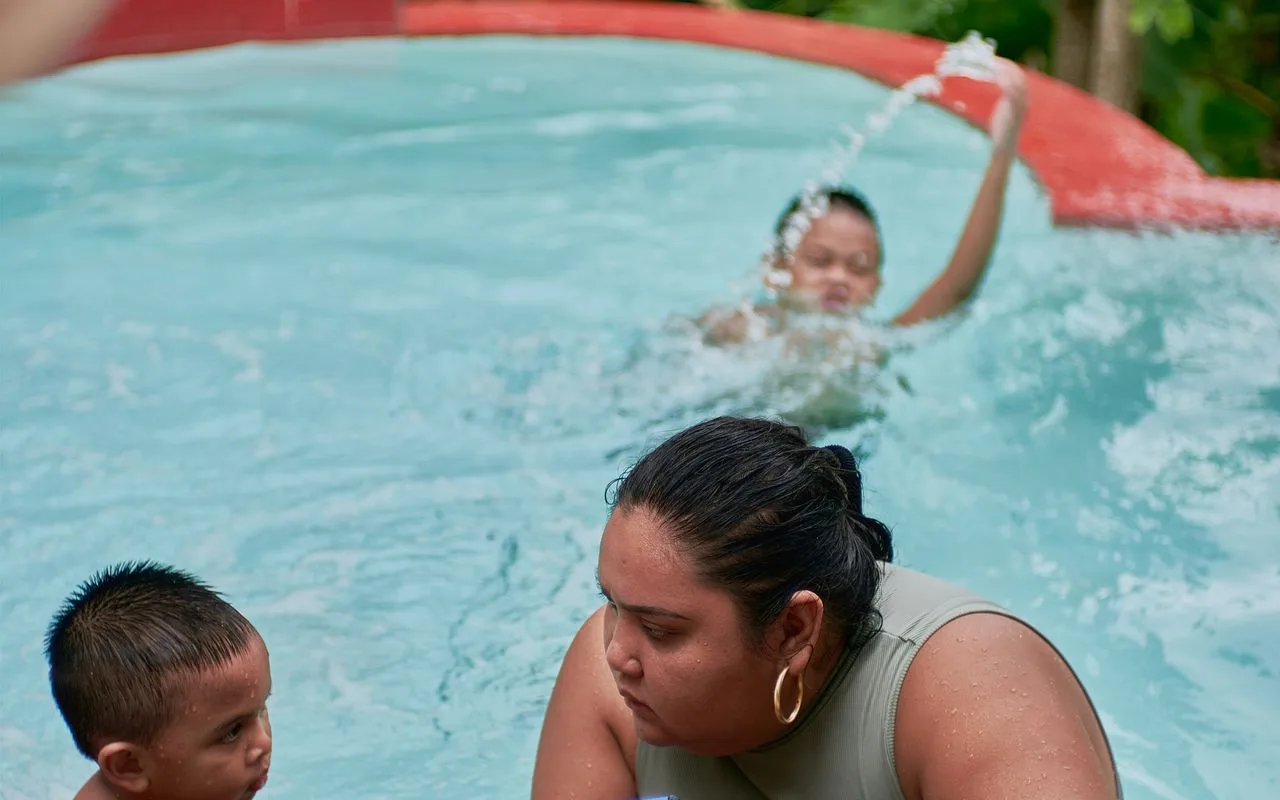
Quick answer: Bali has no pool-fence law, so almost no villa pool comes fenced or alarmed. Hire a 1.2 m mesh fence (about AUD 15–25 a day plus AUD 50–80 set-up, delivered before check-in), keep one named adult within arm’s reach whenever a child is near the water, use a proper swim vest rather than arm bands, and save the number for BIMC Siloam Nusa Dua, +62 361 3000911, 8–10 minutes from Villa Soleil.
- Why villa pools in Bali are different
- What to ask any villa before you book
- Hiring a pool fence: cost, height and how it works
- Supervision rules that hold up on holiday
- Swim aids: what helps and what does not
- Sun, heat, slips and lighting
- First aid, CPR and the nearest clinic
- What we can do for you at Villa Soleil
A private pool is the reason most families choose a villa over a hotel in Bali, and it is also the one thing that keeps parents of toddlers awake at night. The honest picture is this: Bali has no pool-fencing regulation for villas, almost no villa pool comes with a barrier or an alarm, and in the past two years more than one young child has drowned in a rented villa pool on the island. None of that means you should not bring small children to a villa. It means the safety layers that a home pool in Australia, France or the United States would have by law are yours to organise, and they are far easier to organise than you might think. This guide covers what to ask before you book, how to hire a fence, the supervision rules that actually work, and what to do if something goes wrong near Nusa Dua.
Why villa pools in Bali are different
Bali villas are designed around the pool. The living pavilion is usually open-sided, the bedrooms open onto the terrace, and the pool edge is often a single step from the sofa. That is beautiful for adults and a genuine hazard for a two-year-old who wakes before you do. Pool alarms, self-latching gates and safety covers are essentially unheard of here, and a villa that advertises a “child-friendly pool” usually means it has a shallow ledge, not a barrier.
The numbers behind the concern are worth knowing rather than fearing. The World Health Organization estimates around 300,000 drowning deaths a year worldwide, with children under five making up roughly a quarter of them, and drowning is the fourth leading cause of death for children aged one to four. The WHO’s recommended interventions are simple and well proven: barriers between children and water, close supervision, swimming skills for school-age children, and CPR training for carers. Every section below maps onto one of those four.
What to ask any villa before you book
Because nothing is standard, ask direct questions and expect direct answers. A good host will not be offended. Ask whether the pool has any fence or gate, how deep the shallowest and deepest points are and whether there is a ledge or steps, whether the bedrooms can be locked or latched from the inside so a child cannot wander out at night, whether the pool is lit after dark, and whether the staff know a pool-fence hire company. Ask for a photo of the pool taken from the living area, because that shows you the real distance between sofa and water better than any drone shot.
At Villa Soleil we would rather tell you frankly what the pool has and does not have than let you find out on arrival. Like most villas on the island ours is an open-plan pool, so if you are travelling with under-fives we will help you book a hire fence to be installed before you check in, and our host can arrange a babysitter for the hours when you want to swim without counting heads. Our broader notes on travelling with little ones are in the Bali with kids guide.
Hiring a pool fence: cost, height and how it works
Temporary mesh fencing is a well-established service in Bali, run mainly by baby-equipment hire companies based around Seminyak, Canggu and Sanur. The product is the same style used for home pools in Australia: modular panels of fine black or white mesh on aluminium frames, about 1.2 m high, with a self-closing, self-latching gate. For a rental villa the panels usually stand on heavy weighted bases so nothing is drilled into the deck, and installation takes 30–60 minutes.
Operators generally quote in Australian dollars because that is their main market: expect roughly AUD 15–25 per day for a small pool (rates rise with the pool's perimeter, so a long villa pool can run AUD 30–45 a day) plus a one-off set-up and removal fee of AUD 50–80, so a ten-night stay lands somewhere around AUD 200–330 before any delivery surcharge. Nusa Dua and Benoa are outside most companies’ home turf, so a delivery fee is normal; confirm current rates and book at least one to two weeks ahead during school holidays. When the fence arrives, walk it yourself: check that the gate latches on its own every time, that no panel has a gap wider than a child’s head, and that patio furniture has not been left against it as a climbing aid.
| Layer of protection | What it looks like at a Bali villa | Typical cost or effort |
|---|---|---|
| Barrier | Hired 1.2 m mesh fence with self-latching gate, weighted bases | AUD 15–25 per day plus AUD 50–80 set-up, plus delivery to Nusa Dua |
| Supervision | One named adult within arm’s reach, no phones, formal hand-over | Free, but needs a rota |
| Extra eyes | Babysitter for pool hours or nap cover | Typically IDR 60,000–100,000 per hour; confirm current rates |
| Flotation | Buoyancy vest sized to the child’s weight | Bring your own; hire companies also stock them |
| Skills | Rescue breaths and CPR for the adults; water confidence for the kids | A two-hour course before you fly |
| Response | BIMC Siloam Nusa Dua, +62 361 3000911, Kawasan ITDC Blok D | 8–10 minutes by car from the villa |
Supervision rules that hold up on holiday
A fence buys you time; it does not replace eyes. The failure pattern in almost every villa drowning is the same: several adults present, everyone assuming someone else was watching, a child slipping out during a busy moment such as arrival, a meal or packing. Holiday mode makes this worse, because routines are gone and the pool is always there.
- Name a water watcher. One adult is responsible for the pool, says so out loud, and hands over out loud. Some families pass a lanyard or a hat to make the hand-over physical.
- Arm’s reach for under-fives, eyes on the water for older children. Non-swimmers should be touchable at all times, even on the shallow ledge.
- No phones on watch. Drowning is fast and usually silent; a child can go under in the time it takes to read a message.
- Close the house at night. Latch bedroom doors, pull terrace curtains and put the gate on the fence, so a child who wakes at 5 am meets two barriers before the water.
- Treat check-in and check-out as the highest-risk hours. Bags are open, the door is propped, adults are distracted. Put one person on pool duty before anything else happens.
- Empty the pool of toys when you finish swimming. A floating unicorn is a magnet for a toddler at dawn.
Swim aids: what helps and what does not
Inflatable arm bands and rings are not safety devices. They deflate, they slip, and they teach a child to hold a vertical position that sinks the moment the aid is gone. A properly fitted buoyancy vest with a crotch strap, sized to the child’s weight, is the aid most swim teachers and hire companies recommend, and it lets you relax slightly without pretending you can stop watching. Puddle-jumper style vests are fine for play but the same rule applies: they are for supervised swimming, never a substitute for it. If your child is old enough, a few lessons at home before the trip pay off more than any gadget, and building water confidence on the shallow ledge in the first day is time well spent. Pool noodles and kickboards are good fun for confident swimmers and useless for the child who cannot yet float.
Sun, heat, slips and lighting
The pool is also where children burn. Bali’s UV index climbs to around 11, classed as extreme, in the middle of the day, and fair-skinned children can burn in under fifteen minutes at that level. Long-sleeved UPF 50 rash vests, a wide hat and broad-spectrum SPF 30 or higher, reapplied every two hours and after every swim, are the standard kit; the simplest rule is to swim before 11 and after 3 and to give everyone a shaded lunch in between. Heat sneaks up on children who are in and out of the water all day, so keep water bottles poolside and watch for flushed faces, headaches and a child who suddenly goes quiet.
Tiled pool surrounds are slippery when wet, and stone edges are hard. Ban running early, keep flip-flops on the terrace rather than the wet deck, and check the pool steps for algae in the wet season. After dark, ask whether the pool lights stay on; a lit pool is easier to watch from the sofa, and it also marks the water edge for a sleepy child who has wandered out. Mosquitoes bite hardest at dusk around water, so the evening swim is also the moment for repellent; the dengue guide covers what works on small children.
First aid, CPR and the nearest clinic
Do a CPR refresher before you fly, ideally one that covers children. The 2024 American Heart Association and American Academy of Pediatrics update on drowning is clear that rescue breaths matter: a child pulled from the water who is not breathing normally should be treated as a cardiac arrest, and trained rescuers should begin with rescue breaths followed by chest compressions rather than compressions alone. If you are not trained, compressions-only CPR is still far better than nothing while someone calls for help. Any child who has gone under and been coughing, unusually sleepy or vomiting afterwards should be seen by a doctor the same day, even if they seem fine.
From Villa Soleil the nearest emergency department is BIMC Siloam Nusa Dua at Kawasan ITDC Blok D, inside the ITDC enclave, 8–10 minutes by car. Its 24-hour emergency line is +62 361 3000911 and it runs its own ambulances. In practice, with a driver on hand, taking the child directly is often faster than waiting for an ambulance in Bali traffic. Indonesia’s general emergency number is 112, with 118 and 119 for ambulance services. Bring a basic kit with waterproof plasters, antiseptic, children’s paracetamol and an oral rehydration sachet or two, and check that your travel insurance covers a private-hospital visit and any evacuation; our travel insurance guide explains what to look for.
What we can do for you at Villa Soleil
Our four suites sleep two each, so a family of eight can spread across the villa while everyone stays close to the pool terrace. Tell our host on WhatsApp at +62 813 090 112 that you are bringing small children and we will help book a hire fence for delivery before your arrival, arrange a trusted babysitter for the hours you want to swim or nap in peace, put a driver on standby for day trips, and make sure you have the BIMC number saved before you need it. We reply within the hour, and booking direct with us costs less than through an agent. A safe pool holiday is not about worry; it is about setting things up once, on day one, so the rest of the week can be about the water.
Related reading
- Bali with Kids: A Family Planning Guide
- Hiring a Babysitter or Nanny in Bali
- Bali Health & Safety Essentials
- Bali with a Baby: What to Pack and Expect
Written by the team at Villa Soleil. Message us to plan your stay in Nusa Dua.