Mosquitoes and Dengue in Bali: Risk, Season, Repellents and When to See a Clinic
By Villa Soleil · Published October 2026 · 8 min read
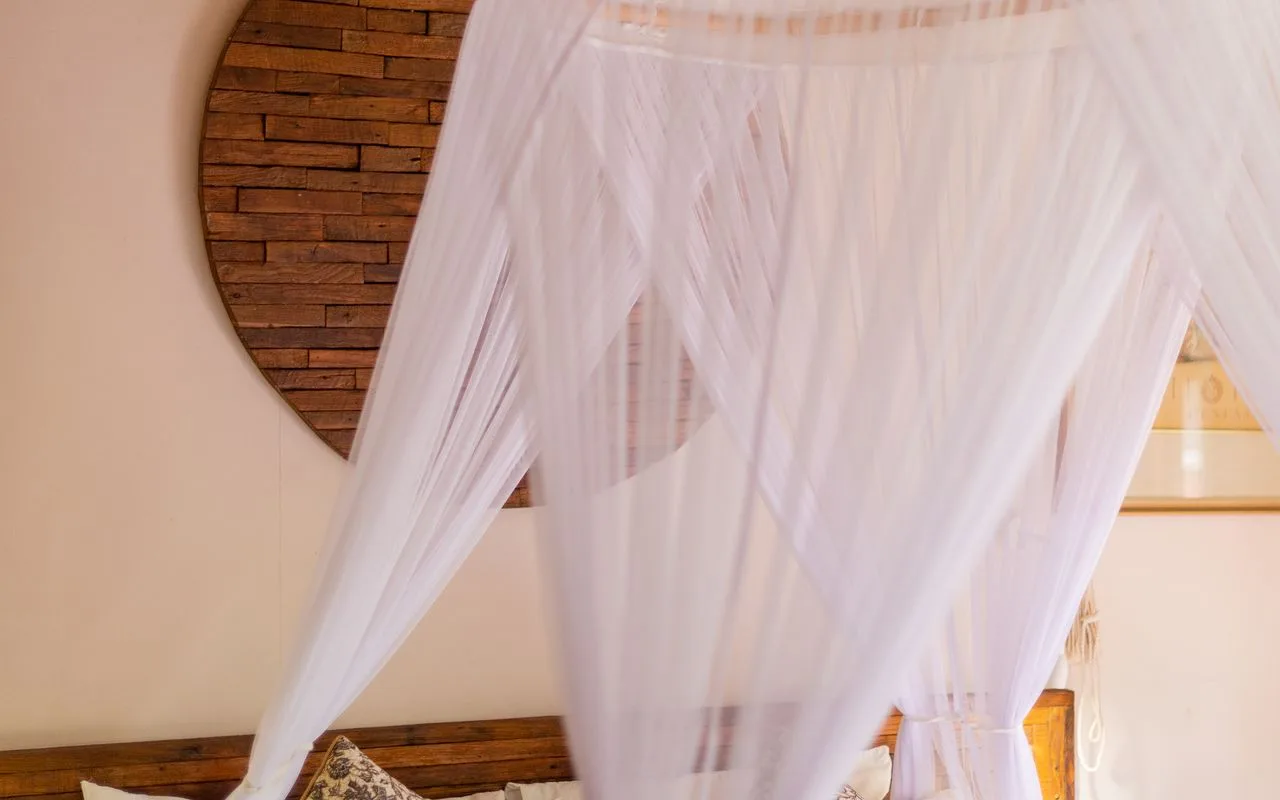
Quick answer: Dengue exists in Bali year-round and peaks roughly January to April; there is no malaria in the resort areas. Use a DEET or picaridin repellent at dawn and dusk, keep suite doors closed, and see a doctor for any fever over 48 hours or with abdominal pain, vomiting or bleeding. BIMC Siloam Nusa Dua is 24-hour and about 10 minutes from Villa Soleil.
Ask most people what worries them about Bali and mosquitoes rarely make the list — until someone in the family gets bitten twenty times by the pool and starts reading about dengue at midnight. The honest picture sits somewhere between “nothing to think about” and the alarm you will find in forum threads. Dengue is present in Bali all year, it rises in the wet season, and it is the mosquito-borne illness most worth planning around (chikungunya, carried by the same mosquitoes, is the other, and the same precautions cover it). There is no malaria in Bali’s resort areas, no need for tablets, and with a handful of sensible habits the risk for a villa stay in Nusa Dua is low. This guide sets out what the risk actually is, when it peaks, which repellents work, what we do at the villa, and exactly when a fever means a clinic visit rather than a nap.
How real is the dengue risk in Bali?
Dengue is endemic across Indonesia, and Bali records cases every month of the year. The virus is carried by Aedes aegypti and Aedes albopictus, small striped mosquitoes that breed in clean standing water — a plant saucer, a blocked gutter, a forgotten bucket — rather than in swamps or the sea. That matters for two reasons. First, the risk is urban and residential, not jungle: dense neighbourhoods in Denpasar and Kuta see more cases than a quiet villa compound with managed gardens. Second, it is controllable at the property level, which is why good villas take drainage and standing water seriously.
Put in perspective: hundreds of thousands of visitors pass through south Bali each month, and the great majority never encounter dengue. Most infections are mild or unnoticed, and the World Health Organization notes that most cases resolve within one to two weeks. Severe dengue is uncommon, but it is the reason the warning signs below are worth memorising. For the broader health picture — clinics, insurance, heat, Bali belly — see our Bali health and safety guide.
Peak season: when cases climb
Dengue tracks the rain. Bali’s wet season runs roughly November to March, and case numbers typically build from December, peak somewhere between January and April, then fall away through the dry months. The mechanism is simple: more rain means more filled containers, more larvae, more adult mosquitoes. Wet-season warmth shortens the mosquito life cycle too. The dry season (April to October) is noticeably quieter, though never zero — a single leaking air-conditioner drip tray can keep a colony going in August.
Year-to-year variation is large. Some years Bali’s provincial health office reports a sharp early-year spike; other years pass uneventfully. If you are travelling between January and April, it is worth a quick look at recent local news before you pack, and worth reading our rainy-season guide for what the weather actually looks like on the ground.
- Highest risk: January to April, especially after several wet weeks.
- Moderate: November, December, May.
- Lowest: June to October, the dry season.
- Time of day: Aedes mosquitoes bite in daylight, with clear peaks around dawn and the two hours before sunset. Night biting is mostly other species — a nuisance, not a dengue carrier.
Repellents that actually work
Not all repellents are equal, and the “natural” citronella sprays sold in gift shops are the weakest of the lot. The active ingredients recommended by the CDC and WHO are DEET, picaridin (icaridin), IR3535, and oil of lemon eucalyptus (OLE/PMD). Anything else is largely optimism in a bottle.
In Bali the everyday local choice is Soffell, a DEET-based lotion or spray sold in every Indomaret and Alfamart for roughly IDR 15,000–30,000. It works, it is cheap, and Balinese families use it daily. If you prefer picaridin (lighter smell, gentler on plastics and sunglasses), pharmacies such as Guardian or Kimia Farma stock imported brands at around IDR 80,000–200,000; confirm current prices. Bringing your own from home is easiest if you have a favourite — our packing list covers what else is worth the suitcase space.
| Active ingredient | Protection window | Best for | Notes |
|---|---|---|---|
| DEET 20–30% | 4–8 hours | Adults, children over 2 months | Proven; can mark plastics and synthetic fabrics |
| Picaridin 20% | 6–8 hours | Families, sensitive skin | Low odour, does not damage gear |
| IR3535 20% | 4–6 hours | Children, frequent reapplication | Mild; common in European brands |
| OLE / PMD 30% | 4–6 hours | Adults wanting a plant-derived option | Not for children under 3 years |
| Citronella / essential-oil blends | Under 1 hour | Nothing serious | Pleasant scent, minimal protection |
Application matters as much as the label. Apply sunscreen first, wait ten minutes, then repellent. Reapply after swimming or a sweaty afternoon. Cover ankles and the backs of knees — the favourite targets. For children, spray onto your own hands and wipe onto their skin, avoiding hands, eyes and mouth, and skip repellent altogether on babies under two months; use a pram net instead.
What we do at the villa
A private villa gives you more control over your environment than any hotel room, and at Villa Soleil the routine is built around the biology above. The gardens are checked for standing water after rain, pool chemistry is kept balanced (a maintained pool is not a breeding site; a neglected one is), and drains and gutters are cleared regularly. Each suite is air-conditioned, and the simplest anti-mosquito habit of all is to keep suite doors closed during the two high-bite windows at dawn and dusk. Ceiling and portable fans help more than people expect: Aedes are weak fliers and a moving airstream makes landing difficult.
If your family is particularly sensitive, ask our host before arrival. Plug-in electric repellent diffusers (Baygon or HIT liquid units, roughly IDR 25,000–50,000 at any minimarket) can be set up in the suites, and a cot net for a baby can be arranged with notice. Mosquito coils work outdoors on the terrace at sunset but are best kept out of bedrooms.
Everyday habits that cut out most bites
- Wear loose, light-coloured long sleeves and trousers at dawn and the last hour before sunset — linen is cool enough.
- Treat one set of evening clothes with permethrin before you fly; it survives several washes.
- Keep repellent by the pool and in the day bag, not just in the bathroom.
- Choose restaurant tables with a fan or breeze, especially at open-air warungs in the wet season.
- Rinse and refill any outdoor water features or plant trays every few days if you are on a longer stay.
- Do not rely on citronella candles, wristbands, ultrasonic apps or vitamin B — none has good evidence.
Symptoms: dengue versus an ordinary holiday fever
Symptoms appear four to ten days after a bite, so a fever in the first three days of your trip almost certainly came from home or the plane. Classic dengue is a sudden high fever (often 39–40°C) with a severe headache, pain behind the eyes, aching muscles and joints, nausea, and sometimes a blotchy rash from day three onwards. It feels worse than a normal virus and people tend to describe it as being “flattened.” Many milder cases pass as a bad flu.
The critical window is the day or two after the fever drops, which is counter-intuitive: this is when severe dengue, if it is going to happen, declares itself. Warning signs that mean go to a hospital now, not tomorrow:
- Severe or persistent abdominal pain, or vomiting more than three times in a day.
- Bleeding gums or nose, blood in vomit or stool, or unusual bruising.
- Rapid breathing, cold clammy skin, restlessness or unusual drowsiness.
- Extreme thirst with very little urine.
Two rules for home care while you wait to be seen: paracetamol only, never ibuprofen, aspirin or other NSAIDs (they raise bleeding risk), and fluids in small frequent amounts — oral rehydration salts (Oralit sachets from any pharmacy) or, failing that, an isotonic drink such as Pocari Sweat are better than plain water. Rest, shade, and someone keeping an eye on you.
When and where to see a clinic near Nusa Dua
See a doctor for any fever over 38.5°C that lasts more than 48 hours, for any fever with the warning signs above, or sooner for children, pregnant guests and older travellers. A simple NS1 antigen blood test can confirm dengue from day one of fever, and a full blood count tracks platelets. BIMC Siloam Nusa Dua (formerly BIMC Hospital Nusa Dua) sits inside the ITDC complex (Kawasan ITDC Blok D, emergency line +62 361 3000911), open 24 hours and about 10 minutes from the villa; it is used to dengue and to international insurers. Larger hospitals such as Siloam Hospitals Denpasar (on Sunset Road, Kuta) or Prima Medika in Denpasar are 30–45 minutes away. Budget on the order of IDR 500,000–1,500,000 for an international-clinic consultation with dengue bloods, and several million rupiah per night if admission for IV fluids is needed; confirm current rates and carry travel insurance that covers hospitalisation. Our host will help arrange transport at any hour — message +62 877 7000 1535 on WhatsApp.
On vaccination: Qdenga (TAK-003) was licensed in Indonesia in 2022 for ages 6 to 45 and is licensed in Europe and the UK among others, but WHO currently recommends it mainly for children in high-transmission settings, not routine short-stay travellers. Talk to a travel clinic if you have had dengue before or are planning a long stay; for a one- or two-week villa holiday, bite avoidance remains the sensible strategy.
A calm word for families
Parents worry most, so here is the proportionate view. Children in Bali get bitten because they are outside more and forget repellent; they do not get dengue at a rate that should keep you from coming. Set a two-minute routine: sunscreen, repellent, long sleeves for the sunset swim, doors closed at dusk. Pack a digital thermometer, children’s paracetamol and rehydration sachets so a fever at 2 a.m. does not become a pharmacy hunt. Know where BIMC Siloam Nusa Dua is before you need it. Then go and enjoy the pool. Our guide to Bali with kids has the rest, from beaches to bedtimes, and our host is one message away whenever a question comes up.
Related reading
Written by the team at Villa Soleil. Message us to plan your stay in Nusa Dua.