Bali Safari & Marine Park: a family day trip from Nusa Dua
By Villa Soleil · Published July 2026 · 7 min read
- Where it is, and how far from Nusa Dua
- The safari journey: the heart of the day
- Shows, the marine area, and the water park
- Night Safari: a different park after dark
- Packages, ages, and 2026 prices
- How to pace a day with kids
- Choosing reputable animal experiences — an honest note
- What we arrange at Villa Soleil
One ticket covers a tram ride through free-roaming herds, a clutch of animal shows, a marine area, and a full water park — which is why Bali Safari & Marine Park keeps three generations occupied past lunch. It is a proper open-range safari park in Gianyar, not a roadside zoo. For guests staying with us in Nusa Dua it makes a clean, contained day out: leave after breakfast, home by dinner, and nobody has to drive the winding roads themselves.
This guide is written from the villa’s point of view — how far it is, when to leave, how to pace the day so small children do not melt down at noon, and an honest word on choosing animal experiences you can feel good about. The rhythm below is what we have seen actually work for families, rather than what the brochure promises.
Where it is, and how far from Nusa Dua
The park sits in Gianyar regency, on the main road toward the east of the island, roughly 60–75 minutes from Villa Soleil depending on traffic through Sanur and the bypass. That is close compared with Ubud-area attractions, which is part of why it suits families based in the south. The drive is mostly flat highway rather than mountain switchbacks, so it is gentle on anyone prone to car sickness.
Because the park opens around 9am and the animals are most active in the cooler morning, we suggest leaving the villa by 7:45–8:00am. Arriving at opening means the tram queues are short, the savanna animals are up and grazing, and you finish the heat-of-day activities under cover. If you would rather understand all your southern transport options first, our overview of getting around Bali covers private drivers, costs, and what to expect on the roads.
The safari journey: the heart of the day
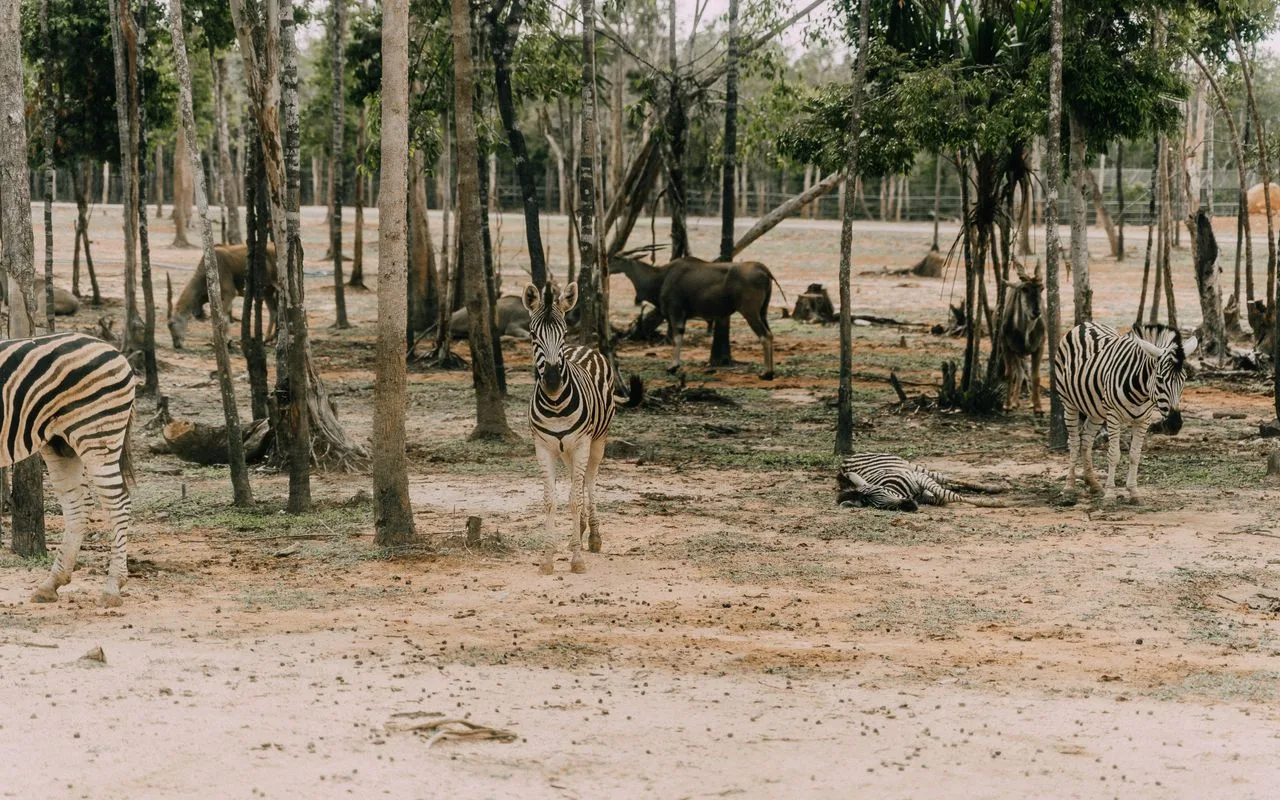
The signature experience is the safari tram, a covered open-sided vehicle that rolls slowly through landscaped zones modelled on India, Africa, and Indonesia. You pass zebras, wildebeest, antelope, rhinos, lions behind glassed enclosures, and the elephants moving in the open. A guide narrates as you go, and because the animals roam in large paddocks rather than cages, the whole thing feels far more like observation than a zoo corridor.
The standard safari runs about 30–40 minutes. Higher tiers add experiences such as the Tsavo Lion restaurant, where you eat lunch beside a lion habitat through glass, or behind-the-scenes feeding sessions. For first-timers with children, the standard tram plus the shows is plenty; you do not need the most expensive package to have a complete day.
Shows, the marine area, and the water park
Beyond the tram, the park clusters several scheduled performances and walk-through areas. The two most popular with our guests are:
- The Bali Agung show — a large theatrical production blending Balinese dance, music, and animals in a purpose-built theatre. Worth timing your day around; check the daily schedule on arrival as showtimes vary.
- The elephant and predator presentations — shorter educational shows where keepers explain behaviour and conservation work.
The marine and aquarium section is a calmer, air-conditioned break in the middle of the day — useful when little ones need to slow down. Then there is the water park: a set of slides, a wave area, and a children’s splash zone that is included in most full packages. Bring or rent towels, pack swimwear under clothes, and budget an hour or two here in the afternoon. It is a good way to reset over-stimulated children before the drive home.
Night Safari: a different park after dark
On select evenings the park runs a Night Safari — a separate tram experience after sunset when nocturnal and crepuscular animals become active. You ride through dimly lit habitats and often see lions, hyenas, and deer behaving quite differently from the daytime. It usually includes a dinner and is ticketed separately from the day pass. For families with very young children it can run late, but for couples or those with older kids it is a memorable add-on. If you are weighing it up, ask us which nights it operates during your stay before you commit.
Packages, ages, and 2026 prices
The park sells tiered packages rather than a single flat ticket, and the difference is mostly about how much is included — tram only, tram plus water park, or premium tiers with lion-side dining and feeding. The figures below are realistic 2026 estimates; rates do shift, so treat them as a planning guide, and note that booking ahead online is usually cheaper than the gate.
| Package | Typically includes | Approx. adult price (IDR) | Good for |
|---|---|---|---|
| Jungle Hopper | Safari tram, shows, water park, aquarium | 460,000–620,000 | Most families — the sensible all-rounder |
| Leopard / mid tier | Above + extra animal encounters or fast access | 700,000–850,000 | Repeat visitors wanting more |
| Rhino / premium | Above + Tsavo Lion lunch, feeding sessions | 900,000–1,200,000 | Special-occasion splurge |
| Night Safari | Evening tram + dinner (separate) | 500,000–700,000 | Couples, older children |
On ages: children under 3 are generally free, and child tickets (roughly ages 3–12) are discounted from the adult rate. Bring ID or passports for the children if you want the under-3 exemption honoured. There is no upper age limit, of course — the tram is fully seated and accessible, which is why it works so well for multi-generation groups.
How to pace a day with kids
The mistake families make is treating it as a slow wander. With young children, structure beats spontaneity in the heat. Here is the rhythm we recommend:
- Morning (9–11am): safari tram first while animals are active and queues are short, then the elephant or predator presentation.
- Midday (11am–1pm): the cooler aquarium and marine area, then lunch — either at a park restaurant or the lion-side dining if you booked it.
- Afternoon (1–4pm): the water park, when the day is hottest and kids have the most energy to burn.
- Late afternoon: the Bali Agung show if its schedule fits, then home before the evening traffic builds.
Pack sunscreen, hats, a refillable water bottle, swimwear, and a dry change of clothes for the drive back. Strollers are fine on the paved paths. If you are travelling with little ones across Bali generally, our guide to visiting Bali with kids has more on naps, food, and keeping everyone happy on the road.
Choosing reputable animal experiences — an honest note
We think it is fair to talk plainly here. Bali has many animal attractions, and the quality of welfare varies enormously. Some roadside operations offer photo props or rides that put obvious stress on the animals; we never recommend those. Bali Safari & Marine Park is one of the better-regarded large parks — it is accredited, runs conservation and breeding programmes, and keeps animals in open habitats rather than small cages. That does not make any captive-animal attraction perfect, and thoughtful guests are right to weigh it up.
Our practical advice: favour observation over interaction. The tram safari and the open habitats are the strongest reasons to go. If you would prefer wildlife in a fully wild setting instead, the sea is the place — our piece on diving and snorkelling in Bali covers reefs and marine life you can enjoy with no enclosure at all. Either way, a calm, well-run park makes a better introduction to animals for children than a chaotic one.
What we arrange at Villa Soleil
A safari day is mostly logistics — a private driver door-to-door, tickets booked ahead at the right tier, and timing built around your children’s ages and the show schedule. Tell us your dates and the ages in your party, and message the Villa Soleil team on WhatsApp to set it up.
Related reading
- Bali with kids: a practical family guide
- Diving & snorkelling in Bali
- Getting around Bali: drivers & transport
- Things to do in Nusa Dua
Written by the team at Villa Soleil. Message us to plan your stay in Nusa Dua.