Accessible Bali: A Wheelchair & Limited-Mobility Guide from Nusa Dua
By Villa Soleil · Published November 2026 · 10 min read
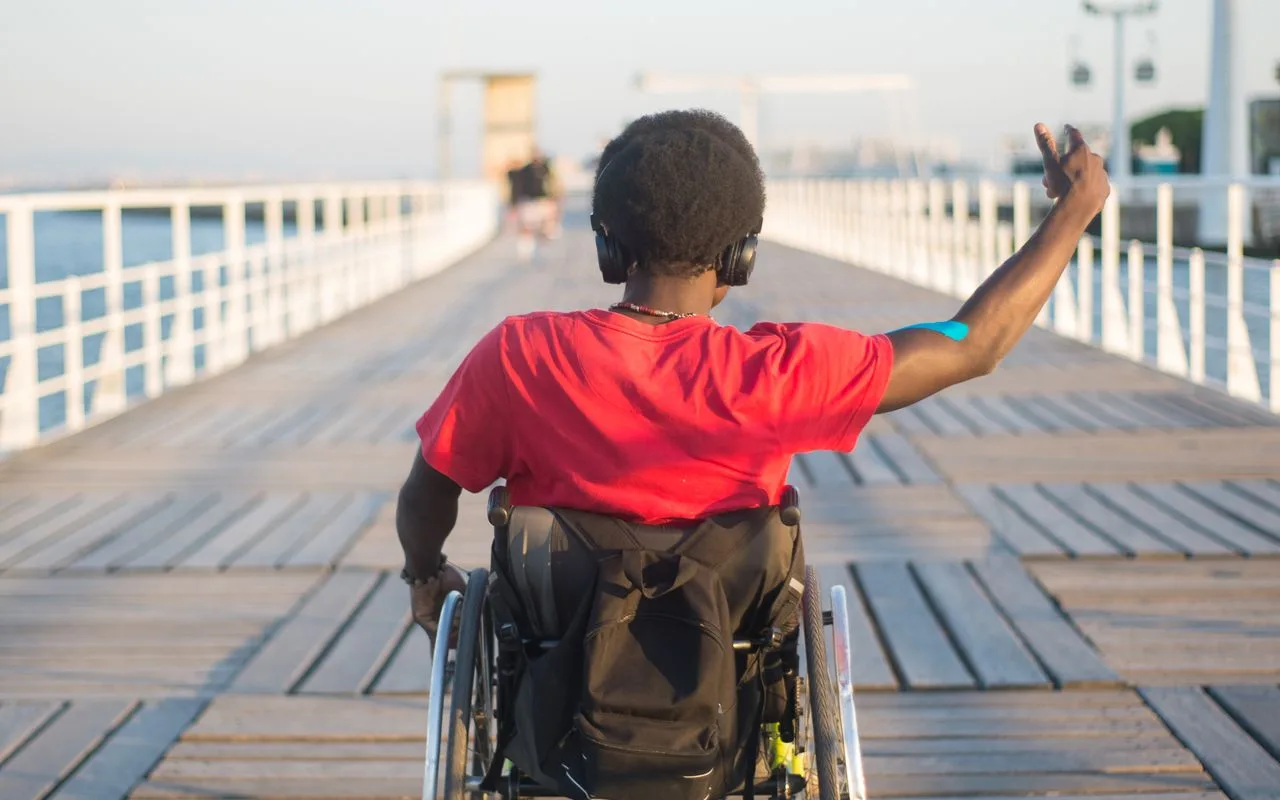
Quick answer: Bali is doable in a wheelchair if you base yourself in Nusa Dua, book a lift-equipped van with a trained assistant (airport transfers to Nusa Dua from around IDR 570,000 one-way, half-days from roughly IDR 800,000–1,200,000), and accept that most temples, cliffs and sandy beaches remain off-limits. Ngurah Rai offers airline-booked wheelchair assistance, GWK and Bali Safari Park rent wheelchairs, Museum Pasifika is a flat pavilion with ramps, and BIMC Siloam Nusa Dua runs a 24-hour emergency centre inside the ITDC enclave.
- What accessible Bali really looks like
- Arriving at Ngurah Rai airport
- Why Nusa Dua works: flat promenades and beach access
- Villa access: what to ask before you book
- Adapted transport: lift vans, drivers and equipment hire
- Accessible attractions worth the drive
- The honest limits: temples, beaches and pavements
- Medical support and practical planning
We will be straight with you: Bali was not built with wheelchairs in mind. Pavements vanish mid-block, temples sit at the top of long stairways, and the island’s most photographed beaches are reached by cliff paths. Yet every year guests with limited mobility have a genuinely good holiday here, and almost all of them do it the same way — they base themselves in Nusa Dua, book the right van, choose their days out carefully and let a host handle the logistics. This guide is the version of that plan we would give a friend, with the limits spelled out as clearly as the highlights.
What accessible Bali really looks like
Think of the island in three tiers. The first is the ITDC enclave at Nusa Dua and, to a lesser degree, Sanur: purpose-built resort zones with wide, flat, paved paths, kerb cuts, lifts and a long beachfront promenade. The second tier is a short list of attractions that have made real provision for wheelchairs — GWK Cultural Park, Museum Pasifika and Bali Safari & Marine Park among them. The third tier is everything else: Ubud’s broken pavements, the rice-terrace paths, the clifftop temples and the surf beaches of the Bukit. Tier three can sometimes be admired from a car park or a viewpoint, but it is not somewhere to plan on rolling around.
Public transport is not an option at all. Bemos, the Kura-Kura coach services and ride-hailing cars have no ramps or securing points, so a wheelchair user relies entirely on private vehicles. That single fact shapes the budget and the itinerary more than anything else, and it is why the transport section below is the longest.
Arriving at Ngurah Rai airport
The airport is the easy part. Request wheelchair assistance through your airline when you book, or at the latest 48 hours before departure, and an agent will meet you at the aircraft door with a chair and take you through immigration, baggage and customs. If something goes wrong on arrival, there is a Disabled & Special Needs Service counter in the Drop-Off A–B area outside the International Terminal. The terminal itself has lifts, accessible toilets and a priority seating area, and immigration staff routinely wave assisted passengers into the shorter lane. Our Ngurah Rai airport guide covers the tourist levy, visa-on-arrival and SIM counters you will pass on the way out.
What the airport cannot do is put you into an accessible vehicle. Standard airport taxis are ordinary sedans and MPVs: fine if you can transfer to a seat and have a folding chair, useless if you travel in a power chair. Book your lift-equipped van before you fly, and give the operator your flight number so the driver and assistant are waiting in the arrivals hall. From the airport to Benoa and Nusa Dua takes 12–20 minutes on the toll road.
Why Nusa Dua works: flat promenades and beach access
The Nusa Dua beachfront promenade runs for several kilometres along the reef-sheltered bay, paved, level and wide enough for two chairs side by side. You can roll from the Bali Collection end past the hotel lawns to the Water Blow headland and back without meeting a step, and every few hundred metres there is a hotel café with an accessible toilet. The sea inside the reef is calm and shallow, which matters if you want to be lifted into the water rather than watch from the sand. Our Nusa Dua beach guide lists the public entry points.
Getting onto the sand itself is the sticking point. Nusa Dua’s beach is soft, dry sand above the tide line and there are no fixed boardwalks to the water. A beach wheelchair with balloon tyres solves this, but you will not find one waiting at the beach; the mobility-hire companies below deliver them to your villa for a daily fee, and your driver loads it into the van. Alternatively, several ITDC hotel beach clubs let non-guests use their decked areas and pools for a day-pass fee that varies widely, so ask the host to check current terms.
Away from the promenade, the enclave’s internal roads are flat and quiet, the Bali Collection shopping complex is single-level with ramps, and BIMC Siloam Nusa Dua is inside the gates. For a limited-mobility traveller, that combination of surface, safety and proximity is hard to beat anywhere else on the island, which is also why we recommend it in our guide to Bali for seniors.
Villa access: what to ask before you book
A private villa can be better than a hotel for a wheelchair user — no corridors, no lobby, a kitchen and a chef who cooks to your timetable — or it can be a trap of sunken lounges and stepped terraces. Bali villas are rarely built to any accessibility code, so never rely on the words “ground floor” in a listing. Ask for photographs and measurements instead.
- Entrance: is there a step or a raised threshold at the gate and the front door, and how high is it?
- Doorways: internal doors and the bathroom door should clear at least 80 cm for a standard manual chair.
- Bathroom: walk-in shower or a bathtub, fixed or handheld shower head, and is there room to turn?
- Pool entry: Roman steps with a handrail, a ladder, or a flush edge only? Most Bali pools have no hoist.
- Bedrooms: which suites are on the ground floor, and how far are they from the living area and kitchen?
- Terrain: are the garden paths paved or loose gravel, and is there a covered route between rooms in the rain?
At Villa Soleil in Benoa, our host answers these questions with photos and a tape measure over WhatsApp within the hour rather than with a brochure adjective, and can source a portable ramp, shower chair or raised toilet seat from the hire companies before you arrive. The nearest beach is a short walk of about 650 m, but the pavements along the way are typical Benoa pavements, so for a wheelchair user the practical answer is a two-minute drive.
Adapted transport: lift vans, drivers and equipment hire
Two kinds of operator matter. The first is the specialist accessible-tour company, of which Bali Access Travel is the longest established: its vans carry a hydraulic lift, wheelchair tie-downs and seatbelts, and come with a driver plus a trained assistant. Published sample airport-transfer rates start at around IDR 500,000 one-way for the Kuta and Sanur zone, IDR 570,000 for Nusa Dua and Jimbaran, and IDR 850,000 to Ubud, with a night surcharge of IDR 250,000 for arrivals between 8 pm and 5 am and extra touring time at IDR 180,000 per hour; half-day and full-day hires are quoted individually and generally land in the IDR 800,000–1,200,000 range for a half-day. Book two to three days ahead in high season and confirm current rates when you enquire.
The second kind is the mobility-equipment hire firm. Bali Mobility, for example, delivers manual wheelchairs, mobility scooters, walkers, shower chairs and beach wheelchairs to your accommodation, with scooters advertised from around AUD 25 per day including delivery; Bali Access Travel also hires wheelchairs, portable ramps and oxygen. Prices are modest by international standards, but confirm the current list before you rely on it.
If you can transfer independently and travel with a folding chair, an ordinary private driver in a large MPV is a cheaper option at roughly IDR 600,000–900,000 for a ten-hour day, and our host arranges these routinely. Do specify that you need a vehicle with a high roof and a flat load floor, and that the driver is happy to help with transfers; most are, but it should be agreed in advance rather than discovered at the kerb.
Accessible attractions worth the drive
These are the places we send guests with confidence, with the honest caveat attached to each. Drive times are from Nusa Dua and Benoa and are never shorter in practice.
| Attraction | Drive from Nusa Dua | What works | What does not |
|---|---|---|---|
| Nusa Dua promenade & Water Blow | 5–10 min | Paved, level, accessible toilets, cafes | Soft sand to the water; the Water Blow viewing rock has steps |
| Museum Pasifika | 8–10 min | Level pavilions, ramps, wheelchair-friendly galleries, quiet rooms | Nothing significant |
| Bali Collection | 8–10 min | Single-level shops and restaurants, ramps, parking at the door | Open-air, so hot at midday |
| GWK Cultural Park | 25–35 min | Rear entrance and shuttle avoid the front stairs, wheelchairs for hire, amphitheatre shows | The statue plinth itself is not accessible; the site is on a hill |
| Bali Safari & Marine Park (Gianyar) | 1–1.25 h | Raised platform straight onto the safari trucks, paved paths, wheelchair hire, accessible toilets | Long day; some zones have uneven ground |
| Uluwatu Temple | 35–45 min | Car park and first terrace views | About 70 steps and 15–20 minutes of clifftop path to the main temple; the Kecak amphitheatre is stepped |
The Devdan Show at the Bali Nusa Dua Theatre and the Kecak-style performances at GWK are the easiest evenings out, the theatre under fifteen minutes from the villa and GWK about half an hour away, both with level access to the auditorium; ask the venue for wheelchair spaces when you book rather than turning up on the night. Jimbaran Bay, 20–30 minutes away, is worth a sunset seafood dinner if the restaurant seats you on its paved terrace rather than the sand, which our host can arrange.
The honest limits: temples, beaches and pavements
Bali’s temples are built upward, on purpose: the split gates, the terraces and the inner courtyards climb toward the mountains, and stairs are part of the theology. Uluwatu, Tanah Lot, Lempuyang and Besakih all involve serious steps, uneven stone and, in the case of Tanah Lot, a tidal causeway. Tirta Empul is often quoted as partially accessible, and the outer courtyard is, but the bathing pools are reached down steps and the flagstones are wet and worn. If a temple is important to you, go for the approach, the outer courtyard and the view, with a sarong and a willingness to let the last flight of stairs go.
The famous beaches are harder still. Padang Padang is reached through a cave and down a staircase, Bingin and Uluwatu by cliff paths, Kelingking on Nusa Penida by a climb that fit hikers find difficult, and Melasti by a road cut through the cliff that ends in sand. Pandawa, 20–25 minutes away, is the friendliest of the Bukit beaches because the car park is nearly at beach level, but you will still be on sand once you leave the tarmac.
Then there is the everyday problem of pavements. Outside the ITDC enclave and the Sanur promenade, expect footpaths that are narrow, tiled with slippery ceramic, interrupted by motorbikes and often absent altogether. This is why day trips to Ubud, Seminyak and Canggu work best as door-to-door itineraries: van to a specific restaurant, van to a specific gallery, and no ambitious plan to explore on foot in between.
Medical support and practical planning
BIMC Siloam Nusa Dua sits inside the ITDC enclave, roughly ten minutes from the villa, and runs a 24-hour accident and emergency centre, a 24-hour medical centre and GPS-equipped ambulances; it was the first hospital in Indonesia to hold Australian Council on Healthcare Standards International accreditation. Consultations are private-hospital priced, so travel insurance that covers pre-existing conditions and mobility equipment is not optional. Our health and safety guide covers pharmacies, dengue precautions and what to carry.
A few further things make a real difference. Travel in the dry season from roughly April to October if you can, because wet-season downpours turn every path into a puddle and every ramp into a slide. Bring spare inner tubes, a puncture kit and a charger adaptor for a power chair, since replacement parts are hard to find locally. Tell our host your equipment dimensions and weight before you book so vans and ramps are matched to the chair rather than guessed. And build rest days into the plan: a private pool, a chef who comes to you and a promenade two minutes away are the whole point of staying somewhere flat.
Related reading
- Bali for seniors: a gentler itinerary from Nusa Dua
- Bali health & safety: hospitals, pharmacies and precautions
- Museum Pasifika: Nusa Dua’s quiet art museum
- Bali travel insurance: what your policy must cover
Written by the team at Villa Soleil. Message us to plan your stay in Nusa Dua.