Amed & Tulamben: Bali’s Quiet East Coast, Taken Slowly
By Villa Soleil · Published July 2026 · 7 min read
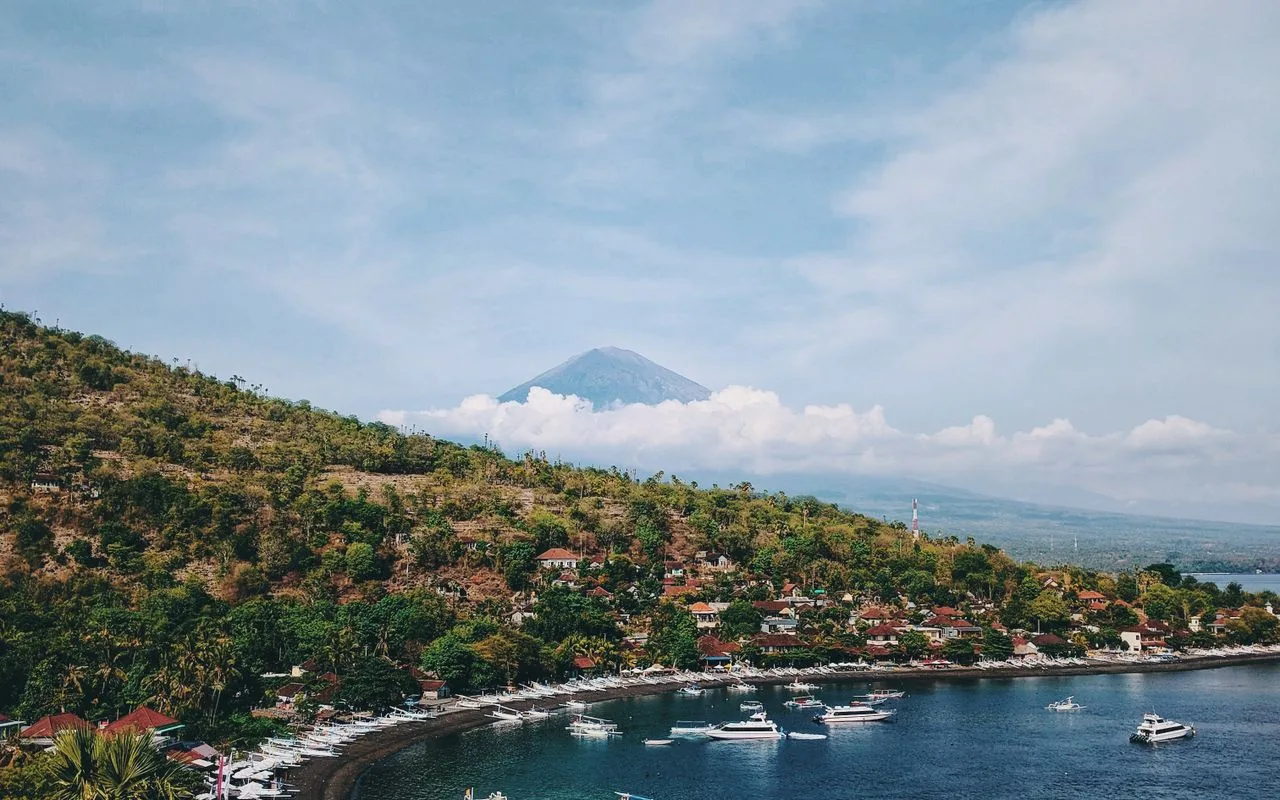
By 6am the fishermen of Amed are already mending their nets, while most of Bali is still asleep. Out on the far north-east coast, the stretch between Amed and Tulamben trades the south’s surf breaks, beach clubs and traffic for something hushed: a string of small fishing hamlets along black-sand bays, painted jukung outriggers pulled up on the shingle, and the cone of Mount Agung filling the sky behind them. From Villa Soleil in Nusa Dua it is a real journey — roughly two and a half to three hours each way — so treat it as an unhurried escape rather than a checklist. This is a place to drink coffee while the sun comes up, watch the boats go out, and let the day open slowly.
Where Amed and Tulamben actually are
“Amed” is loosely used for a whole 14-kilometre ribbon of coast made up of around half a dozen villages — Amed proper, Jemeluk, Bunutan, Lipah, Selang and Aas among them — while Tulamben sits a little further north, about 10 km on. The road hugs the coastline, dipping in and out of bays, and from almost every headland you get that line of moored fishing boats against the sea. Inland, terraced hills climb steeply, and on a clear morning Agung, Bali’s highest and most sacred volcano at just over 3,000 metres, dominates everything.
Because it is so far from the airport and the south, the east coast has stayed low-rise and local. There are no big resorts or clubs here, just small homestays, family warungs, a handful of dive shops and salt farmers working the shore the way their grandparents did. That remoteness is exactly the point — if you want quiet, you have to drive for it.
Getting there from Nusa Dua
The most comfortable way from Villa Soleil is a private car with driver. The route runs north-east through Klungkung and Karangasem, often via Candidasa, and the final coastal stretch is winding and scenic but slow, so do not expect to fly along the whole way. Budget around 2.5–3 hours one way in light traffic, longer if you stop. If you are weighing your options, our guide to getting around Bali explains why a private driver for a day this long beats juggling apps and scooters.
- Private car & driver (recommended): door to door, with stops you choose. Roughly IDR 800,000–1,200,000 for a full day depending on hours and route.
- Self-drive: possible but the distance and mountain roads make it tiring; not ideal if you want to relax.
- Overnight option: stay one night so you catch both sunset and sunrise without a brutal 4am start.
Sunrise on the black sand
The east coast is one of the few places in Bali where you watch the sun rise straight out of the sea, and Amed does it well. The bays face roughly east and north-east, so first light spills across the water and silhouettes the jukung fleet before the fishermen take them out. The sand here is volcanic — dark grey to near-black, fine and warm underfoot — which makes the whole scene feel quieter and more elemental than the bright white beaches of the south.
If you are staying overnight, set an alarm for around 5:45am, walk down to Jemeluk or the main Amed bay with a coffee, and simply sit. By 7am the boats are out, the haze lifts off Agung, and the light turns gold. It is the kind of still, unposed morning that reminds you why you came. For travellers who love a dawn ritual, it pairs naturally with the very different but equally early experience in our Mount Batur sunrise guide — though Amed asks far less of your legs.
Salt farming, the old way
One of the quiet wonders of this coast is traditional sea-salt farming, still practised by a few families around Amed and the neighbouring villages. The method is centuries old and entirely manual: farmers carry seawater up from the shore, pour it over beds of black volcanic sand to concentrate the brine, then filter it and evaporate the result in long wooden troughs (palungan) carved from coconut palm trunks. The flaky “pyramid” salt that comes out is prized by chefs and sold in small handfuls.
Visiting a salt farm is one of the most grounding things you can do here. A few families welcome respectful visitors for a small donation or to buy salt directly — expect to pay a modest amount for a bag, and consider it well spent on a craft that is fading from the coast. Ask before photographing people at work, go gently, and you will often get a warm, unhurried explanation of the whole process. It is the antithesis of a packaged attraction, and all the better for it.
The Liberty wreck and the water
Tulamben is famous worldwide for one thing: the USAT Liberty, a WWII cargo ship torpedoed in 1942 and later pushed into the sea by the 1963 eruption of Mount Agung. It now lies just metres off the black-pebble beach, encrusted in coral and patrolled by shoals of fish, reachable straight from shore without a boat. We mention it because it defines Tulamben, but this article is about the coast above the waterline; if you want the practical detail on dive sites, gear and beginner options, our dedicated diving & snorkelling guide covers it properly.
Even if you never put your face in the water, the wreck shapes the rhythm of Tulamben village: morning is busy with divers and porters carrying tanks down the stony beach, and by mid-afternoon it empties out again. Snorkellers can float over the shallow end of the wreck and the nearby coral garden with nothing more than a mask, and the calm, clear bays of Amed — Jemeluk in particular — are gentle enough for a first easy snorkel.
A relaxed itinerary
Here is how we suggest pacing an Amed & Tulamben trip, depending on how much time you have. The overnight version is by far the more rewarding.
| Time | Long day (early start) | Slow overnight (best) |
|---|---|---|
| Pre-dawn | Leave Nusa Dua ~4:00am | — (you slept in Amed) |
| Sunrise | Arrive Amed ~7am, miss best light | Sunrise on Jemeluk bay |
| Morning | Snorkel Jemeluk, coffee | Snorkel, then salt farm visit |
| Midday | Warung lunch by the bay | Long lunch, rest in the heat |
| Afternoon | Drive to Tulamben, beach walk | Tulamben, coastal drive, viewpoints |
| Evening | Long drive home, arrive late | Sunset drinks, dinner, stargazing |
The contrast is stark: the long day costs you the two best moments — sunrise and a relaxed evening — in exchange for sleeping in your own villa bed. If you can spare a night, do.
Practical notes & when to go
A few things worth knowing before you set off:
- Best season: the dry months (roughly April–October) give the clearest Agung views and calmest water. See our notes on the best time to visit Bali for the wider picture.
- Cash: bring it. ATMs are scarce on the east coast and most warungs, salt farmers and small shops are cash-only.
- Sun & shade: black sand gets hot and there is little shade on the open bays; pack water, a hat and reef-safe sunscreen.
- Respect the village pace: this is a working fishing and farming coast, not a resort strip. Dress modestly away from the beach and ask before photographing people.
- Roads: the coastal road is narrow and twisty; if you are prone to car sickness, sit in front and travel in the cooler morning hours.
Amed and Tulamben reward travellers who arrive without a schedule. There is no headline attraction beyond the wreck, no shopping street, no nightlife — and that absence is the gift. You come for the texture of ordinary coastal life, the volcano, the salt, the light on black sand. For many of our guests at Villa Soleil it ends up being the most memorable day of the whole trip, precisely because it asks nothing of them but to be present.
What we arrange at Villa Soleil
Because the east coast is a long drive, the timing around sunrise and the choice of homestay if you stay over are worth getting right, and our concierge can line up a private car and an experienced driver to handle them. Message the Villa Soleil team on WhatsApp to set it up.
Related reading
- Sidemen: green heart of East Bali
- Bali diving & snorkelling guide
- Mount Batur sunrise trek
- Getting around Bali
Written by the team at Villa Soleil. Message us to plan your stay in Nusa Dua.