Canyoning in Bali: What It Takes, Who Runs It Safely and How to Do It from Nusa Dua
By Villa Soleil · Published October 2026 · 8 min read
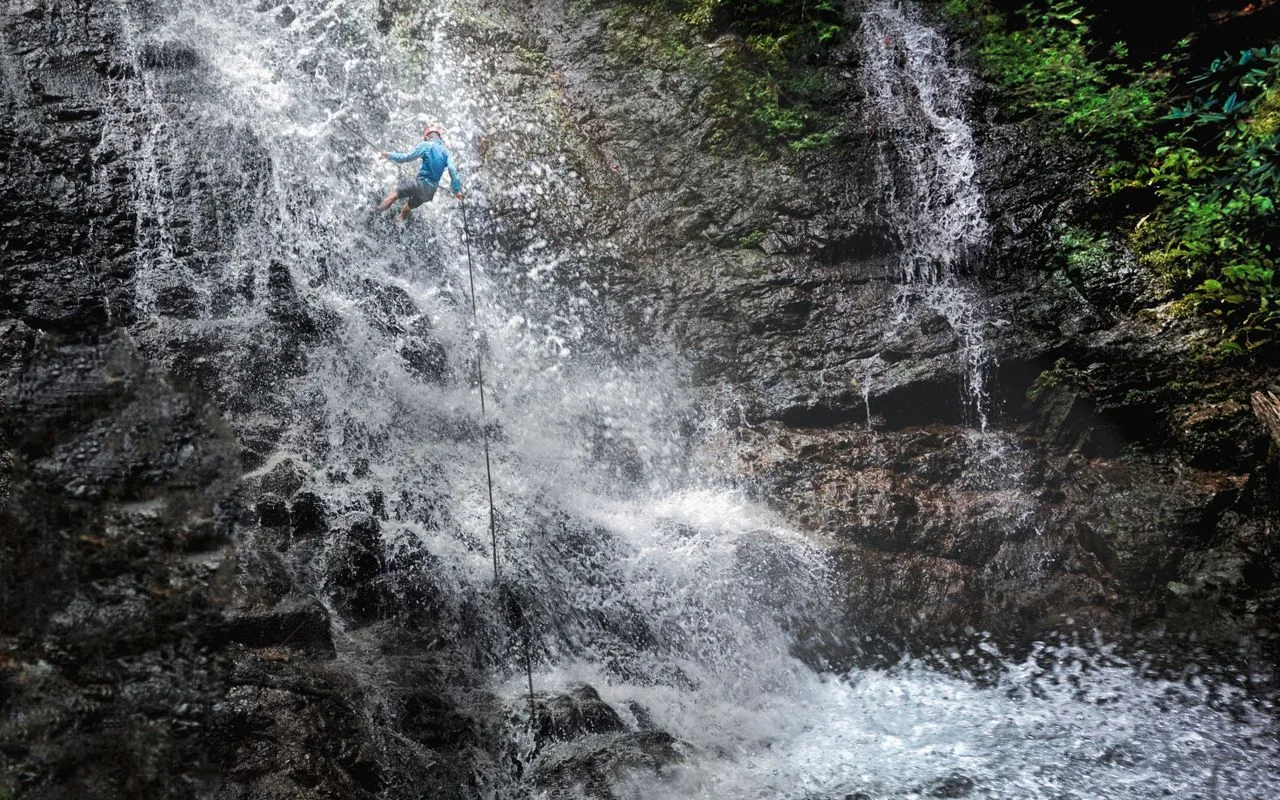
Quick answer: Bali canyoning happens in the Gitgit and Sambangan hills of the north, 2.5–3 hours from Nusa Dua, so expect a 12–13 hour day. Beginner routes need average fitness and a 25 m swim; the advanced Aling Gorge runs only May–October and asks for excellent shape. Book an operator working to ICOpro standards with insurance included, and budget roughly IDR 1,500,000–3,800,000 per person for a full route (short tasters from about IDR 500,000); confirm current rates.
Canyoning is the one north Bali activity that still feels like a proper expedition. You abseil down waterfalls on a rope, jump into plunge pools, slide down water-polished chutes and swim through gorges that no road reaches. The catch, for anyone staying at Villa Soleil in Nusa Dua, is geography: the canyons sit in the Gitgit and Sambangan hills above Singaraja, a solid two and a half to three hours each way. This guide is honest about what the day involves, who it suits, what the reputable operators actually provide, and when it is wiser to leave it off the itinerary.
What canyoning in Bali actually involves
Canyoning (canyoneering, if you learned it in the United States) means descending a river gorge on foot and by rope rather than paddling it. In Bali that translates to a morning briefing at a basecamp, a short walk to the top of a jungle canyon, then two to five hours working downstream: rappelling beside or through waterfalls, jumping from ledges into deep pools, sliding natural water chutes, short down-climbs, a zipline or two on some routes, and plenty of swimming and floating between obstacles. Guides rig every rope, check every harness and give you the option to skip any jump. Nothing is compulsory except the walking and the swimming.
You wear a full wetsuit even in the tropics, because the spring-fed water in the hills is cool and you are in it for hours. Add a helmet, a harness, canyoning boots or trainers and a dry bag, all supplied. Entry-level routes involve rappels of up to 15–20 m and jumps of 5 m; one of the hardest commercial routes in Bali, Aling Gorge, includes a rappel of about 40 m down the face of the Aling-Aling waterfall and optional jumps up to 14 m.
Where the canyons are: Gitgit and Sambangan
Almost all of Bali’s commercial canyoning happens in one pocket of the north: the steep, wet slopes of Sukasada district in Buleleng regency, between the Bedugul highlands and the coast at Singaraja. Gitgit village (home of the well-known Gitgit waterfall) and neighbouring Sambangan, a few hundred metres above sea level, have the combination of year-round spring water, hard volcanic rock and vertical drops that canyoning needs. The routes carry names like Kalimudah, Kerenkali, Blue Gorge, Excalibur, Anahata and Aling Gorge, and most are within a few minutes’ drive of the operators’ basecamps; Blue Gorge is the exception, lying on the Tabanan side of the Bedugul highlands rather than above Singaraja.
The same hills hold Sekumpul and the Sambangan “secret garden” falls, which is why canyoning pairs naturally with a night on the north coast for anyone who wants to slow the trip down rather than do the return leg in one go.
How fit do you need to be?
Less than the photos suggest for the beginner routes, more than the brochures suggest for the advanced ones. Operators publish minimum requirements, and in our reading they are realistic rather than cautious:
- Beginner routes (Kalimudah, Kerenkali): average fitness, able to swim about 25 m in calm water, comfortable walking on wet rock for two to four hours. Minimum age is 12 with the established operator; the newer local outfit sets its own limits per route (see table).
- Intermediate routes (Blue Gorge, Excalibur): comfortable with heights, happy to jump up to 5–8 m (optional), able to sustain two to four hours of effort.
- Advanced (Aling Gorge): operators ask for “excellent shape”, a 50 m swim, no fear of exposure on a 40 m rappel, and a minimum age of 16–18 depending on operator. No prior canyoning is required, but a poor night’s sleep or a hangover will show.
- Everyone: a functioning sense of balance, knees and ankles that tolerate uneven ground, and the honesty to tell the guide if you are struggling.
Rope work is not something you need to have practised; the guides teach the rappel technique at the first drop and control your descent with a belay. What tires people is the accumulation: cold water, repeated climbing in and out of pools and the mental load of committing to jumps.
Operators and safety standards: what to check
Canyoning has no government licensing scheme in Indonesia that guests can easily verify, so the useful benchmark is the International Canyoning Organization for Professionals (ICOpro), the sector’s main training body. The longest-established operator in Gitgit, Adventure and Spirit, runs its trips to ICOpro standards, issues an ICOpro Canyoneer Initiation certificate on beginner routes and states accident insurance cover of up to about US$25,000 per person on most routes (some of its route pages still quote IDR 150,000,000, so confirm the figure when booking); its guides are described as ICOpro-certified and its equipment as CE-certified (the EU standard). A newer local outfit, Bali Canyoning Trip, is also based in Gitgit village, describes its guides as trained in canyon safety and rescue and includes insurance, but does not cite a particular certification body. Other companies advertise online; some are resellers of the two above.
Whoever you book, ask four things before paying: which training standard the guides hold and when they last requalified; the guide-to-guest ratio (one guide to four or five guests is typical on rope sections); whether the price includes insurance and what it covers; and what happens if rain closes the canyon on the day. A reputable operator answers all four without hesitation. Also check that your own travel insurance covers canyoning, since many policies list it as an excluded adventure sport unless you add it. Our health and safety guide covers the general rules for activities in Bali.
Choosing a trip: levels, times and prices
Prices below are drawn from operator rate cards in 2026 and shown as ranges because the established operator quotes in US dollars while newer ones quote in rupiah; confirm current rates and whether Nusa Dua pickup is included when you book.
| Route | Level | Time in canyon | Min. age | Indicative price per person |
|---|---|---|---|---|
| Short taster (Splash-style, Gitgit) | Introductory | About 1 h | 6+ | IDR 500,000–800,000 |
| Kalimudah / Easy Flow | Beginner | 2–3 h | 6–12+ depending on operator | IDR 1,500,000–2,400,000 |
| Kerenkali / Brave Trail | Beginner to intermediate | 3–4 h | 12–16+ depending on operator | IDR 2,500,000–2,900,000 |
| Blue Gorge / Excalibur | Beginner to intermediate | 2–4 h | 12+ (Blue Gorge) / 14+ (Excalibur) | IDR 2,400,000–2,700,000 |
| Aling Gorge | Advanced | 4–5 h | 16–18+ depending on operator | IDR 3,000,000–3,800,000 |
The established operator’s price generally includes return transfers from anywhere in Bali, all equipment, a light breakfast at basecamp, lunch, water and towels, photos and video. It also periodically offers a Sobek rafting trip (Ayung or Telaga Waja) for about US$1 extra on direct bookings (trips run with a minimum of two guests), scheduled on a separate day rather than tacked onto the canyoning; if rafting is the priority, read our separate guide to rafting in Bali, which runs closer to Ubud.
Seasons: when the canyons run
Most beginner and intermediate routes (Kalimudah, Kerenkali, Blue Gorge) operate all year because they are fed by springs rather than run-off; Excalibur is listed from about March to November. A light shower does not close any of them. The advanced Aling Gorge is a different matter: it runs only from about May to October, when flow is low enough to rappel the main waterfall safely. During the wet season (roughly November to March) all operators monitor rain upstream, and a heavy afternoon storm can close a canyon at short notice because of flash-flood risk. Morning starts are partly about that: the descent is usually finished before the daily build-up of cloud.
For the best combination of water clarity, warmth and reliability, aim for May to September. July and August are the busiest months, so book at least a few days ahead for a specific route.
The long day from Nusa Dua
This is the part most listings gloss over. Gitgit is on the far side of the island from Benoa, and the road climbs over the Bedugul pass past Lake Beratan before dropping steeply to the north coast. Allow 2.5–3 hours each way in normal traffic, more if there is a ceremony or roadworks in Tabanan. A typical day looks like this: pickup between roughly 6 and 7 am (confirm the exact time), arrival at basecamp around 9 to 9:30, briefing and kit-up, three to four hours in the canyon, a late lunch, then departure around 3 pm and return to the villa between 6 and 7 pm. Twelve to thirteen hours door to door is normal.
Operators’ free transfers are shared minivans with fixed timings. If you would rather travel in your own vehicle, so you can stop at Ulun Danu Beratan on the way or linger on the north coast afterwards, our host can arrange a private driver for the day for around IDR 900,000–1,300,000 including fuel and long-distance surcharge; confirm the rate when booking. A better plan still, if your itinerary allows, is to split the trip: canyon in the morning, a night in Lovina or Munduk, and dolphins or waterfalls the next day before driving back.
Who should skip it
Canyoning is not a soft-adventure add-on, and a good operator will decline guests it considers unsuitable. Give it a miss if you are pregnant, have a heart condition, uncontrolled blood pressure, epilepsy, recent surgery or a back, knee, shoulder or ankle injury; the repeated jumps and the wet, uneven walking are hard on joints. Weak or nervous swimmers should also pass, because floating through pools in a wetsuit is unavoidable even when jumps are optional. Children under the operator’s minimum age, guests with a real fear of heights, and anyone flying home within 24 hours (the trip leaves most people exhausted) are better served by the Sambangan waterfall walks, where you see the same gorges from the trail.
If the drive is the sticking point rather than the activity, remember that Nusa Dua has plenty of adrenaline close by: parasailing and jet-skis at Tanjung Benoa within 20 minutes, or the cliff surf breaks of the Bukit 30–45 minutes away. The north, though, is where the rope and the waterfall meet, and for fit guests with a free day it remains one of the most memorable things you can do from the villa.
Related reading
- Sekumpul Waterfall: the north Bali giant
- White-water rafting in Bali
- The best waterfalls in Bali
- Lovina and the north coast
Written by the team at Villa Soleil. Message us to plan your stay in Nusa Dua.